Mastering Internal Linking: Pillar and Cluster Strategy for SEO
Effective Internal Linking: Pillar & Cluster SEO Strategy

An effective internal linking strategy for pillar and cluster content (with examples) forms the foundation for a strong website hierarchy where main pages and subtopics mutually reinforce each other. By consistently applying this method, search engines immediately understand the contextual coherence between your guides and specific cluster articles. Implementing this structure ensures that link equity flows efficiently through your site structure, significantly improving search visibility.
- Strengthen the thematic relevance of your most important pillar pages.
- Significantly improve the navigation experience for your website visitors.
- Optimize the indexing of new content by search engines.
- Increase average session duration through relevant internal referrals.
When rolling out your strategy, descriptive anchor texts are essential to clarify the reciprocal relationship between pages. Search engines use these signals to determine authority.

What is an Internal Linking Strategy for Pillar and Cluster Content (with examples)?
An effective internal linking strategy for pillar and cluster content (with examples) forms the backbone of a results-oriented SEO approach. At its core, this concept revolves around organizing content in a way that helps both search engines and users immediately understand the hierarchy and relevance of information. By connecting a central main topic, the pillar page, with more specific subtopics, the cluster content, you build authority. This method ensures that the value of incoming links is efficiently distributed across all related pages, strengthening your website's position in Google's search results.
The principle of an internal linking strategy for pillar and cluster content (with examples) is highly effective: the pillar page provides a broad overview of a main topic, while the various cluster articles delve deeper into the details. The power of this system lies in the reciprocal links. Each cluster article strategically links back to the pillar page, and the pillar page, in turn, links to all relevant clusters. This immediately helps search engines understand that all these pages are thematically related and collectively offer an authoritative answer to the search intent. Without a well-thought-out internal linking strategy for pillar and cluster content (with examples), articles often remain as scattered pieces of information.
The Structure of a Content Cluster
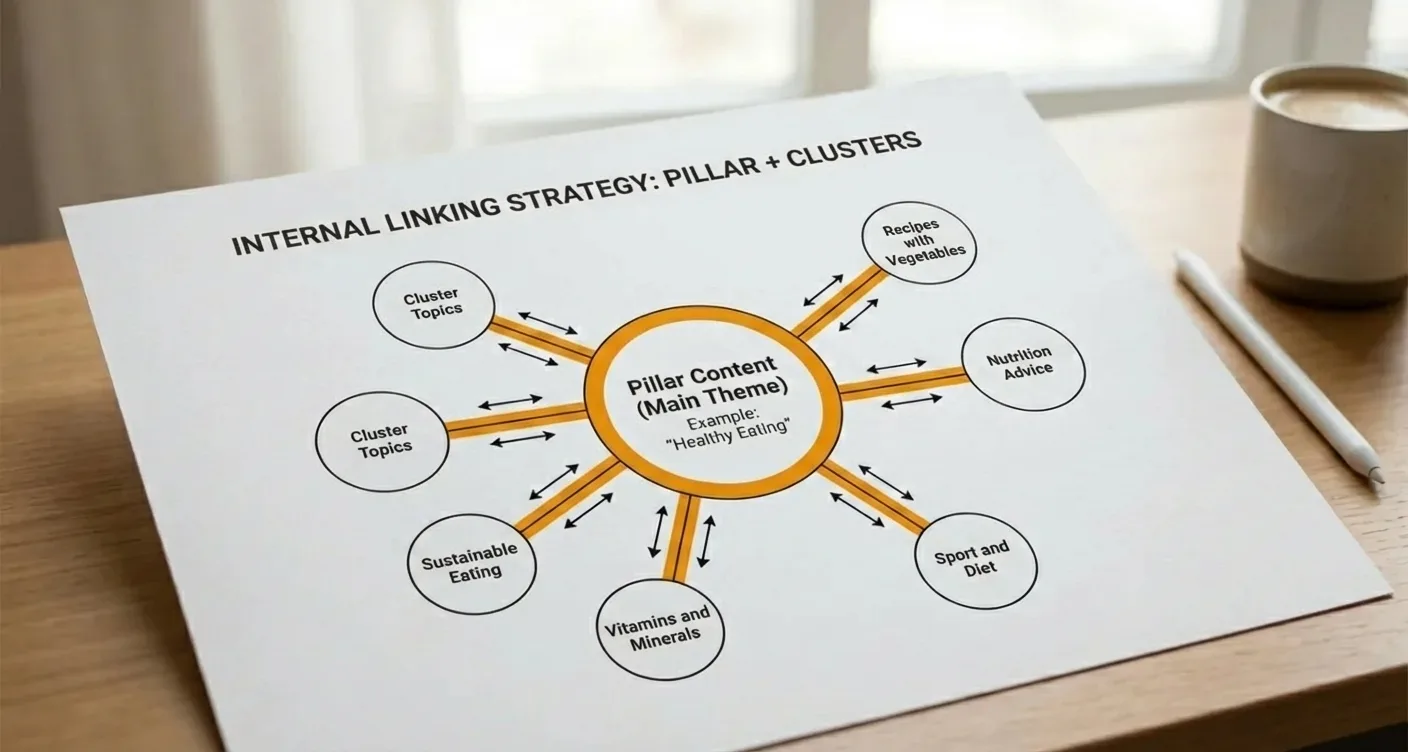
To implement a successful internal linking strategy for pillar and cluster content (with examples), you must understand how the components communicate. The structure is not only for crawlers but also significantly improves the user experience. When a visitor reads about a detail on a cluster page, they can easily return to the pillar page for more context via an internal link. This increases time on site and lowers the bounce rate, sending positive signals to the algorithms that assess webpage quality.
When setting up an internal linking strategy for pillar and cluster content (with examples), it's essential to consistently apply the following elements. First, you need a central pillar page that covers the main topic. Additionally, there are multiple cluster pages, each highlighting a unique aspect. Crucial are the hyperlinks with relevant anchor texts that connect the pages within a logical navigation structure. Implementation requires discipline in the use of anchor texts. Avoid vague terms; instead, use descriptive texts that reveal the content of the target page. This helps search engines better understand the context of the link. For more information on how search engines interpret links, you can consult the official documentation from Google Search Central. By applying this structure, you ensure that the results contribute to stable organic growth in your website traffic.
The Benefits of the Topic Cluster Method for Your SEO Authority
Implementing a structured approach to your content is essential to stand out in search results. By utilizing a well-thought-out internal linking strategy for pillar and cluster content (with examples), you create a logical hierarchy that helps both search engines and users better understand the context of your website. When you build various sub-pages around one central theme, you signal to algorithms that your platform possesses in-depth knowledge, directly contributing to increasing your domain authority and the relevance of your pages within a specific field.
A strong structure ensures that link equity is efficiently distributed across all related articles within your ecosystem.
Improved Search Visibility and User Experience
The core of a successful internal linking strategy for pillar and cluster content (with examples) for advanced marketers lies in facilitating the customer journey. Visitors who land on a specific cluster topic are naturally guided to the overarching pillar page through hyperlinks. This lowers the bounce rate because the reader is constantly offered relevant information that aligns with their search intent. Furthermore, this method helps search engines index new pages faster, as crawlers follow a clear path through the interconnections between the content pieces on your website.
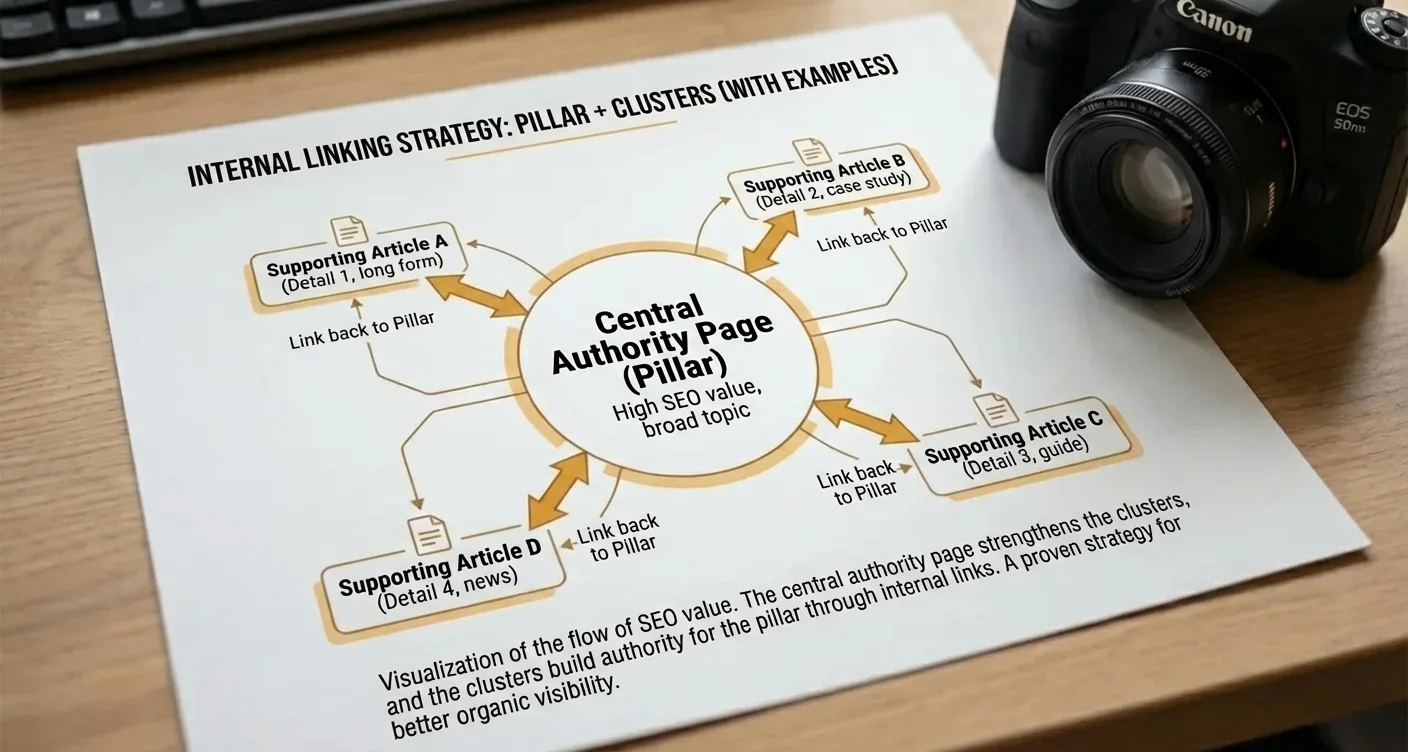
The applying of this method offers various strategic advantages for your online presence:
- Strengthening the semantic relevance of your key keywords.
- Better distribution of the 'link juice' from strong landing pages to deeper content.
- Increased average session duration as users navigate the domain longer.
- Clear signals to Google about which article is the primary source of information for a specific main topic.
"The transition from individual keywords to thematic clusters is the most effective way to build authority in an era where semantic search has become the standard."
When you look at an internal linking strategy for pillar and cluster content (with examples) in practice, you often see that websites adopting this structure are less dependent on external backlinks. This is because the internal relevance is so high that Google more quickly identifies the site as an expert. By consistently linking from clusters to the pillar, and vice versa, you build an indestructible foundation for your long-term organic growth.
Efficiency in Content Management
Beyond the technical SEO benefits, an internal linking strategy for pillar and cluster content (with examples) guide for content creators also helps in planning your editorial calendar. It prevents you from producing redundant content that competes with itself in search results, also known as keyword cannibalization. Instead, each new article fills a specific gap in your knowledge base, steadily increasing your authority per topic without overlap.
For more in-depth information on how search engines connect pages, you can consult the official documentation from Google Search Central. Understanding these fundamentals is crucial for an optimal internal linking strategy for pillar and cluster content (with examples).
Ultimately, this methodology leads to a well-organized website that is valued by both human visitors and digital algorithms.
Step-by-Step Plan for Building a Strong Pillar Page Structure
Building an authoritative website begins with a logical organization of information. An effective internal linking strategy for pillar and cluster content (with examples) ensures that search engines understand the hierarchy of your content. You start by identifying a broad main topic that forms the basis for your pillar page. This topic must be comprehensive enough to support various sub-themes but specific enough to maintain relevance for your target audience. By centering this core page, you create a foundation upon which all supporting articles, also known as cluster content, can rest for optimal indexing.
Internal linking strategy for pillar and cluster content (with examples) is essential for SEO success.
Once the main topic is chosen, the next step is to conduct thorough keyword research to define the clusters. Each cluster article should address a specific aspect of the main topic and hyperlink back to the central pillar page. This creates a web of relevance. In practice, we see that an optimized internal link structure helps distribute link equity across the entire site. It is crucial that the anchor texts you use are descriptive, so both users and crawlers know exactly what to expect on the destination page.
Technical Implementation of Cluster Connections
The technical implementation of an internal linking strategy for pillar and cluster content (with examples) for advanced marketers revolves around consistency and logic. You must ensure that the pillar page links to all cluster pages, and that each cluster page, in turn, links back to the pillar page. This two-way linking confirms the authority of the main page. According to the documentation from Google Search Central, a clear site structure helps search engines discover and understand the interrelationships between pages more quickly.
"A strong internal linking strategy for pillar and cluster content (with examples) acts as a roadmap for search engines, with the pillar page serving as the central hub that brings together all relevant information."
Use the following steps for a flawless implementation of cluster content:
- Identify a broad 'core topic' for the pillar page.
- Write 6 to 10 specific cluster articles that delve deeper into subtopics.
- In each cluster article, place a link with a relevant anchor text to the pillar page.
- Regularly update the pillar page with links to new, relevant cluster content.
- Use SEO tools to verify that the internal linking strategy for pillar and cluster content (with examples) is correctly reflected in the site structure.
Consistency in your internal linking strategy for pillar and cluster content (with examples) approach is key to long-term organic growth.
Finally, monitoring the results is indispensable to see if the chosen structure yields benefits. Analyze which clusters add the most value to the pillar page and adjust where necessary. By regularly checking internal links for broken references and maintaining content relevance, your strategic pillar page architecture remains healthy and competitive in search results. A well-executed internal linking strategy for pillar and cluster content (with examples) is not a one-time task but a continuous process of optimization and refinement within your broader content marketing plan.
How to Effectively Link Between Cluster Content and the Pillar Page
The foundation of strong authority within search engines rests on how you strategically connect your in-depth articles with the central pillar page. A well-considered internal linking strategy for pillar and cluster content (with examples) ensures that search engines immediately understand your website's hierarchy. When you consistently link back to the pillar page from each specific cluster article, you send a powerful signal about which topic is most important within your domain. This process of distributing 'link equity' is essential for ranking on broad and high-traffic competitive search terms.
The core of a successful implementation is consistency in the anchor texts you use for your internal references. When building this network, it's crucial that links not only go from the clusters to the pillar but also vice versa. In a good setup, the pillar page contains an overview of all subtopics, with each link guiding the reader to a specific level of detail. This significantly improves the user experience, as visitors can follow logical paths through your areas of expertise without getting lost in incoherent information. This structure helps users stay on your site longer, which increases dwell time.
To maintain a natural flow, you should vary your phrasing while adhering to the strategy. For example, use optimized terms to demonstrate relevance to algorithms. An effective approach includes the following elements for maximum impact:
- Preferably place links to the pillar page within the first two paragraphs of your cluster content for rapid indexing.
- Use descriptive anchor texts that exactly match the focus of the pillar page for contextual clarity.
- Ensure that cluster articles also link to each other where logically relevant for the reader's information needs.
By consistently applying this method, you build an indestructible content ecosystem that both users and crawlers value. For more technical background on how Google indexes structures, you can consult the Google Search Central guide for additional guidelines.
Practical Examples of Successful Internal Link Structures
Implementing a well-thought-out internal linking strategy for pillar and cluster content (with examples) begins with understanding the hierarchy within a website. In practice, we see that websites claiming authority on specific topics often utilize a central 'pillar' page that interconnects all subtopics. For instance, a garden supply webshop might have a main page on 'sustainable gardening,' with dozens of cluster articles on composting, rainwater harvesting, and organic seeds directly linking back to this central hub. This method ensures that search engines understand the contextual relevance of the entire section and optimally distribute link value across the various pages within the domain.
Internal linking strategy for pillar and cluster content (with examples) helps strengthen domain authority and search visibility.
The Power of Contextual Relevance in Clusters
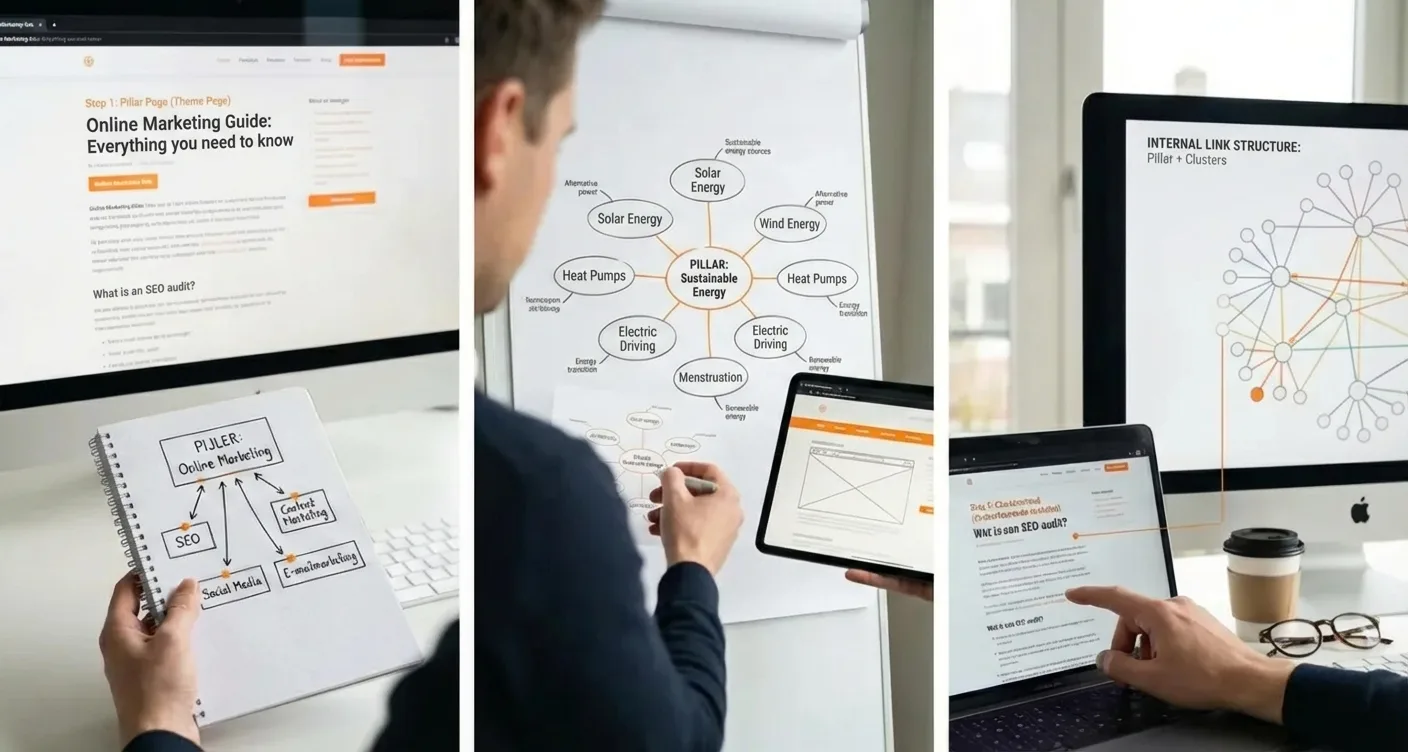
When analyzing a successful internal linking strategy for pillar and cluster content (with examples), it's noticeable that anchor texts are chosen with great specificity. Instead of generic terms, experts use descriptive words that tell the user and the search engine exactly what to expect on the next page. An effective implementation ensures that 'link juice' flows seamlessly from the deeper cluster pages to the pillar page, significantly increasing the chances of higher rankings in search results for competitive search terms within the niche. This creates a logical web of information that is valuable to both bots and humans.
- Pillar Page: A comprehensive guide on a broad main topic.
- Cluster Content: Specific articles that delve deeper into subtopics.
- Hyperlinks: Two-way connections between the pillar and each cluster article.
- Anchor Texts: Use of relevant keywords for maximum SEO value.
"A strong internal structure acts as a roadmap for search engines, with the pillar page forming the central hub."
Another example of an internal linking strategy for pillar and cluster content (with examples) can be found with educational platforms. They often group courses around a core theme, with each individual lesson module functioning as a cluster page that supports the authority of the pillar page. This approach keeps visitors on the website longer, which improves the user experience. For more technical details on site structure, you can refer to Google Search Central. Consistency is essential with this internal linking strategy for pillar and cluster content (with examples).
A strong internal linking strategy for pillar and cluster content (with examples) is essential for SEO success. It logically structures your website for both visitors and search engines.
By placing relevant internal links between your pillar page and supporting articles, you strengthen the authority of your most important topics. This ensures that Google better understands and values the interconnectedness of your content.
Start optimizing your site structure today by applying this proven method to your own content. Analyze which topics can serve as pillars and strategically connect them with specific cluster content to systematically improve your organic search visibility. Do you need help implementing an effective internal linking strategy for pillar and cluster content (with examples)? Contact our specialists directly for a comprehensive audit of your link profile and immediately discover new growth opportunities for your website in search results.
Frequently Asked Questions
What is an internal linking strategy for pillar and cluster content?
This is an SEO method where a central 'pillar page' offers in-depth information on a main topic, while related 'cluster content' addresses specific subtopics. An effective internal linking strategy for pillar and cluster content (with examples) ensures that all pages are interconnected to build authority.
How do you apply this strategy to an existing website?
You start by identifying your main topics and grouping existing articles around a central pillar page. By creating hyperlinks from the sub-pages to the pillar and vice versa, you strengthen the structure of your internal linking strategy for pillar and cluster content (with examples).
Why is the pillar-cluster structure important for SEO?
It helps search engines like Google better understand your website's context and hierarchy. By grouping relevant content, you distribute link equity more efficiently and increase the likelihood that your website will be seen as an authority within a specific field.
When should you add new content to an existing cluster?
You add new content whenever there are relevant subtopics or keywords that are not yet extensively covered within the current cluster. Every new page must link directly back to the pillar page to maintain the thematic relevance of the entire cluster.
How SEO Supercharged helps you here
SEO Supercharged is fully online (service area: worldwide, online), so you can use it from anywhere.
The platform is built for SEO Specialists, Content Marketers, Website Administrators, Digital Marketing Agencies, E-commerce Entrepreneurs, Copywriters, Marketing Managers, Bloggers and Publishers.
You can use it for, among other things, Internal Link Audit & Analysis, Pillar & Cluster Mapping Session, Content Architecture Blueprint, Anchor Text Optimization Plan, Internal Link Implementation, Pillar Page Optimization, Monthly Link Equity Monitoring.
Want to tackle this directly? Plan your structure with the Sitemap Architect, or start a free SEO analysis.
Related articles
- WordPress Pillar Content: The Complete Guide to Categories, Canonicals, and Internal Linking
Discover how to build a robust WordPress pillar content strategy using categories, canonicals, and internal links to boost your Google rankings and AI.
- Blog Category SEO: Naming, URL Structure, and Indexing Strategy
Master blog category SEO! Learn how naming, URL structure, and indexing boost traffic & rankings. Get expert tips to optimize your content hierarchy today.
- Internal Link Audit: Which Links Maximize Your SEO Value?
Discover how to conduct an internal link audit to identify high-value links, distribute SEO authority effectively, and boost your rankings. Read our guide!
- Canonical Tag in WordPress: When to Use It (and When Not To)
Learn all about canonical tags in WordPress: when to use them, when to avoid them. Prevent duplicate content issues, consolidate link equity, and improve.
- Sitemap Planning: How to Build a Content Map Before Publishing
Master sitemap planning to build a robust content map before publishing. Improve your SEO structure, prevent issues, and optimize your site for success.