How to Prevent Keyword Cannibalization?
Keyword Cannibalization: How to Detect & Fix It | SEO Guide

Keyword cannibalization: how to identify and fix it is a crucial process to prevent multiple pages on your website from competing with each other. When different URLs target the same search term, Google struggles to understand which page deserves priority. This leads to lower rankings and fragmented authority. By performing a thorough audit and strategically optimizing internal links, you ensure the right page ranks highest.
Systematically addressing this issue strengthens your domain's SEO value. Use Google Search Console to detect duplicate rankings and apply the following strategies:
- Identify conflicting URLs using specialized tools.
- Merge similar content to consolidate authority.
- Use canonical tags and 301 redirects as solutions.
- Optimize your internal link structure, focusing on resolving keyword cannibalization.

What is Keyword Cannibalization and Why is it Harmful?
While optimizing your website, you might unknowingly become your own competitor. This phenomenon is called keyword cannibalization. It occurs when multiple pages target the exact same search term. Instead of Google designating one strong page, the search engine becomes confused. This splits rankings across different URLs, resulting in lower positions. Understanding how to detect and fix keyword cannibalization is essential for any webmaster looking to protect their organic visibility.
Simply put, your own pages are eating each other's strength. This fragments authority, preventing you from ever reaching your content's full potential.
The Negative Impact on Your SEO Performance
The damage extends beyond just a lower position. When Google has to choose between similar pages, it might display the 'wrong' page, one that converts less effectively. Moreover, your crawl budget is wasted as bots spend time indexing duplicate intentions. The process of identifying and fixing keyword cannibalization for better rankings begins with understanding that more pages on the same topic aren't always better. Often, one high-quality page is far more powerful than three smaller articles fighting for priority.
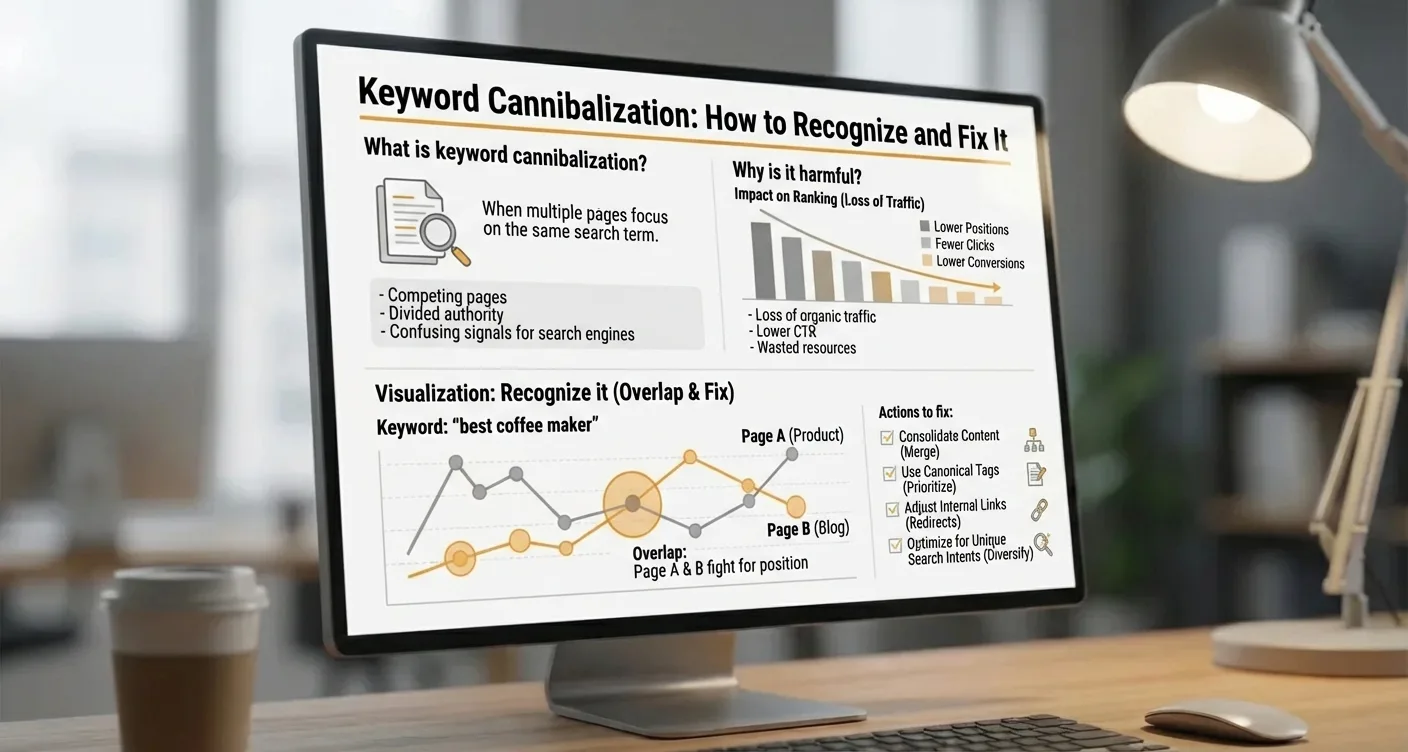
Furthermore, it weakens your internal link structure. If external websites link to different pages for the same topic, the link equity is divided. As a result, no single page reaches the threshold for top three positions. For those striving for affordable search engine optimization for your website, eliminating this internal competition is one of the most cost-effective strategies.
- Loss of authority: You spread your backlink power across multiple URLs.
- Search engine confusion: Google doesn't know which page is the most relevant resource.
- Lower conversion rate: Visitors may land on a page that isn't optimally aligned.
- Crawl inefficiency: You waste valuable search engine bot time.
"Keyword cannibalization is like a team where players snatch the ball from each other instead of working together to score against the competition."
It's crucial to remember that the step-by-step guide to identifying and fixing keyword cannibalization begins with a thorough audit. Many entrepreneurs believe they are spreading their chances, but in practice, this backfires. By learning about the process of identifying and fixing keyword cannibalization, you can intervene effectively. Want to learn more about the basics? Visit Google Search Console for technical insights. Correcting these errors often leads to a rapid rise in search results.
Ultimately, a healthy SEO strategy revolves around relevance and clarity. Systematically addressing the keyword cannibalization problem is the key to success.
How to Effectively Identify and Fix Keyword Cannibalization
When you notice different pages competing for the same position, you have a serious SEO problem. The process of identifying and fixing keyword cannibalization effectively starts with analyzing your rankings. If Google can't choose which page is most relevant, the search engine divides authority across multiple URLs, causing them all to rank lower. It's essential to understand that more pages on the same topic often lead to internal competition that hinders your organic growth.
Effectively identifying and fixing keyword cannibalization requires a keen eye for detail and the use of tools like Google Search Console to identify duplicate impressions.
Identification Methods for Duplicate Search Terms
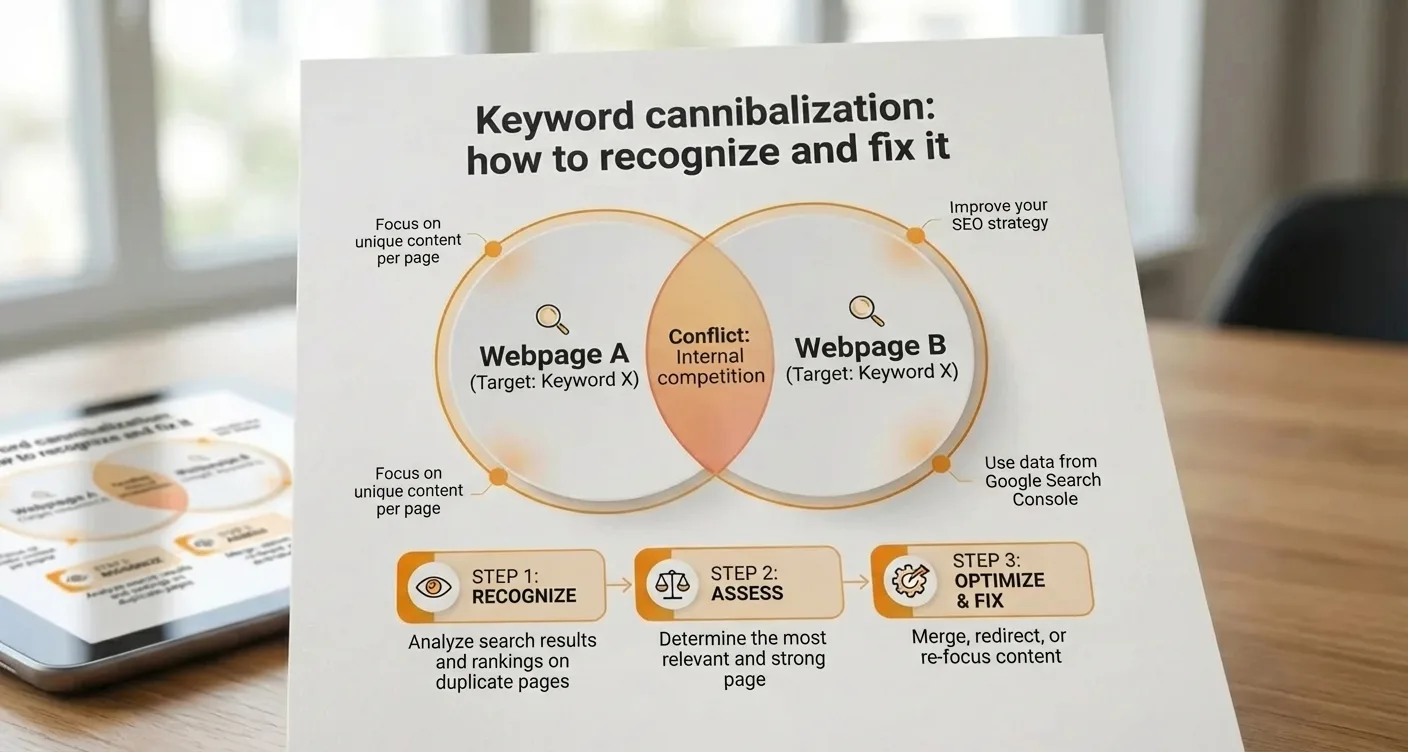
To work effectively, you need to examine your click-through rates (CTR) and the stability of your rankings. Do you see two pages constantly swapping positions? There's a high chance the search engine is confused. You can manually check this by entering the search query "site:yourdomain.com keyword" into Google. The results that appear at the top will show you how the search engine ranks your pages. If the wrong page is ranking highest, it's time for action.
"Systematically addressing internal competition ensures that the most valuable page receives all the link equity, which is crucial for a healthy SEO strategy."
When performing advanced keyword cannibalization identification and fixing, it's advisable to also check your technical settings. Sometimes the cause lies in an incorrect WordPress configuration where tags or categories unintentionally index and compete with main articles.
Practical Solutions and Recovery Strategies
Once the culprits are identified, you can apply various methods. The most common solutions within the scope of effectively tackling keyword cannibalization are:
- Merging similar articles into one strong 'pillar page'.
- Applying 301 redirects from the weaker page to the main page.
- Adjusting the internal link structure to prioritize the correct page.
- De-optimizing secondary pages by modifying titles and headings.
- Using canonical tags to designate the source page to search engines.
The process of resolving keyword cannibalization doesn't stop with the fix; continue to monitor the results using resources like Search Engine Journal. By consistently checking, you prevent new content from causing keyword cannibalization issues again.
The Most Common Causes of Duplicate Rankings
The emergence of internal competition is rarely a conscious choice. It often creeps in due to a lack of a central content strategy or technical imperfections. When multiple pages compete for the same search term, Google becomes confused about which URL holds the most authority. This phenomenon, known as keyword cannibalization, causes valuable link equity to be fragmented across different weaker pages.
In practice, an unclear site structure is often the main culprit behind SEO problems.
Overlap in Content and Intent
A common cause is publishing multiple articles that cover the same topic without a unique angle. Consider a webshop that optimizes both a category page and a blog for the exact same term. As a result, the search engine doesn't know whether the user wants to buy or is looking for information. Understanding how to effectively address duplicate content and keyword overlap is essential to prevent your own pages from pushing each other down. Without tight control, keyword cannibalization remains a recurring stumbling block.
Additionally, technical factors play a significant role. When filter systems or tags are not correctly configured, the website automatically generates numerous URLs with virtually identical content. Therefore, it's crucial to look for solutions like filters without an SEO disaster. If you ignore these technical aspects, resolving keyword cannibalization becomes an impossible task.
Poor Internal Link Structure
The way you link internally sends signals about your site's hierarchy. If you link to different pages with the same anchor text, you unintentionally create confusion. Here are some factors that contribute to this problem:
- Using identical keywords in the title tags of different pages.
- A lack of canonical tags to designate the preferred version.
- Outdated content that isn't updated or merged.
- Too much focus on quantity instead of quality when writing.
According to experts at Search Engine Journal, it's essential to perform regular audits. The process of identifying and fixing keyword cannibalization begins with a thorough inventory of your rankings. By maintaining consistency in your metadata, you compel Google to display the correct page.
"Consistency in your SEO architecture is the only way to prevent your own pages from hindering each other's success."
Ultimately, fixing keyword cannibalization is about making clear choices for your visitors.
Step-by-Step Guide to Detecting Internal Competition
Identifying conflicting pages is the first step toward a healthy website structure. To work effectively, you must understand that search engines sometimes struggle to determine which page is most relevant. When you have multiple pages competing for the same position, we speak of keyword cannibalization. This process begins with a content audit. By using Google Search Console, you can see if different URLs generate traffic for the exact same keywords. This is a clear signal that your strategy needs adjustment to prevent your own pages from pushing each other down. It's essential to regularly check for internal competition among different landing pages to maintain your SEO value.
Using Search Queries and Tools

An effective method is to perform a "site:domain.com keyword" query in Google. If multiple results appear that seem almost identical, then you have a problem. Critically examine the titles and meta descriptions. Besides manual checks, you can use specialized software to discover patterns. Consider exporting your keyword positions to a spreadsheet. Sort this data by keyword and analyze whether the ranking URL fluctuates. This phenomenon, where Google constantly switches between two pages, is a classic symptom of internal conflict. It leads to instability in your rankings and a fragmentation of your authority. By structurally monitoring this data, you can proactively intervene before overall visibility is jeopardized.
"Detecting internal competition requires a keen eye for the search intent behind each unique page on your website."
Once duplicate content is identified, you must decide which page will be the 'master'. The final phase is evaluating the performance of each page. Look at which URL has the best conversion rate and the most backlinks. In many cases, solving these problems is simply a matter of merging weaker articles into one powerful knowledge hub. For technical support, you can look into our WordPress services. Don't forget to consult external resources, such as Google Search Central, to learn how their algorithm handles duplicate intent. A thorough analysis prevents you from losing valuable rankings due to unnecessary internal conflict. Ultimately, success revolves around creating a clear hierarchy that both the user and the search engine understand.
- Export ranking data from Search Console.
- Identify overlapping keywords per URL.
- Analyze the click-through rate (CTR) of competing pages.
- Determine the most relevant page based on conversion.
By consistently following this step-by-step plan, you'll transform a messy site structure into an optimized whole that's ready to dominate. Keep monitoring your data to promptly identify new conflicts.
Proven Strategies to Permanently Resolve Cannibalization
When you notice multiple pages competing for the same position, it's time for action. The most effective method is content consolidation. By merging weaker articles with a strong 'pillar page', you bundle authority in one place. This process is essential within the guide to identifying and fixing keyword cannibalization, as it gives the search engine a clear signal about which page deserves absolute priority for a specific search term.
Simply deleting duplicate content is often not enough; you must retain its value through strategic 301 redirects to the main page.
Technical Optimization and Internal Link Structure
Another powerful technique is to adjust your internal link structure to clarify the hierarchy. Use specific anchor texts that point to the desired landing page and avoid linking to competing pages with the exact same keyword. The guide to advanced keyword cannibalization detection and resolution emphasizes that the canonical tag (rel="canonical") also provides a solution when you want to retain similar pages but instruct Google which version should be indexed.
"Effective SEO isn't about the number of pages, but about the unique value each individual URL adds to the domain."
Sometimes the best solution is to completely change a page's focus. By rewriting the headings, metadata, and text content for a specific long-tail keyword variation, you prevent direct internal competition. This is a crucial part of keyword cannibalization prevention and fix strategies. For technical support, you can look into our WordPress services to improve your site structure.
- Merging overlapping articles into one comprehensive dossier.
- Setting up 301 redirects from old URLs to the new authoritative page.
- Optimizing meta titles to differentiate search intent.
- Using the Noindex tag for pages that are useful but don't need to rank.
Monitoring your results using tools like Google Search Console is indispensable. This allows you to see directly if the chosen keyword cannibalization resolution method is yielding results.
Preventing Future SEO Problems with a Content Map
Systematically preventing duplicate content starts with robust planning and a clear content map. When you create new pages without a central overview, you run the risk of different articles competing for the same position. This phenomenon, known as keyword cannibalization, can fragment authority. A content map functions as a blueprint where you define the primary keyword and intent for each URL. This allows you to see if a new topic is already covered by an existing page.
By maintaining consistency, you ensure that search engines know exactly which page is most relevant. An effective content map is a dynamic tool that grows with your website. It helps you identify gaps in your content and eliminate overlaps before they cause damage. For those managing a professional webshop, this overview is essential to keep product pages and blogs separate. For example, you might consider a pro webshop package to establish a technically strong foundation. In practice, a clear hierarchy significantly reduces the chance of problems.
"A well-organized content map is the foundation of every successful SEO strategy and prevents you from unconsciously becoming your own competitor in the search results."
Follow these steps to keep your content map up-to-date:
- Accurately inventory all existing URLs and their corresponding focus keywords.
- Group related topics under an overarching 'pillar page' for better structure.
- For each new article, check if the keyword cannibalization identification and fix method has already been applied.
- Use tools like Google Search Console to monitor whether multiple pages rank for the same terms.
The regular execution of an audit is crucial for long-term success. Without periodic checks, cannibalization often slips into your website unnoticed via old archives. By using your content map as a guide, you maintain control over your organic visibility and strengthen the relevance of each individual page. Ultimately, SEO revolves around clarity for both the user and the search engine, with smart strategies helping to ensure that clarity.
Resolving keyword cannibalization is essential for a healthy SEO strategy. By eliminating internal competition, you give your most important pages the space to rank optimally in Google. The process begins with a thorough content audit. Use tools like Search Console to identify duplicate rankings. Once you've found the culprits, you can take action by merging pages, setting up 301 redirects, or optimizing the internal link structure. This ensures greater authority and clarity for search engines.
Continue to monitor your content to prevent future conflicts and ensure each page serves a unique search intent. Do you want to see immediate results in your organic rankings? Start cleaning up your website today and notice how your traffic increases through a streamlined structure. Do you need help with an in-depth analysis? Contact our specialists for advice on your growth.
Frequently Asked Questions
What exactly is keyword cannibalization?
Keyword cannibalization occurs when multiple pages on the same website compete for the same search term in Google. In the article 'How to Identify and Fix Keyword Cannibalization,' we explain that this dilutes your pages' authority and can harm your search engine rankings.
How can you detect keyword cannibalization on your website?
You can identify this by checking Google Search Console to see if multiple URLs receive impressions for the exact same keyword. By following the steps outlined in 'How to Identify and Fix Keyword Cannibalization,' you'll quickly see which pages are competing with each other.
Why is it harmful to your SEO strategy?
It confuses search engines because they don't know which page is most relevant to the user. This results in rankings being split across multiple pages, preventing any single page from achieving a top position.
When should you merge pages to solve this problem?
You should merge pages when two or more articles offer nearly identical information and target the same keywords. By consolidating the content onto one strong page and setting up 301 redirects, you strengthen your website's relevance and authority.
How SEO Supercharged helps you here
SEO Supercharged is fully online (service area: online, worldwide), so you can use it from anywhere.
The platform is built for SEO specialists at marketing agencies, In-house SEO managers of large e-commerce platforms, Content marketing strategists, Independent website owners and bloggers, Marketing managers at mid-sized companies, Freelance copywriters focusing on SEO, Growth hackers in the tech sector, Web developers interested in search engine optimization.
You can use it for, among other things, Keyword Cannibalization Audit, Content Consolidation Plan, Keyword Mapping & Architecture, Search Intent Analysis, Internal Link Hierarchy Optimization, Rankings Cleanup & Recovery.
Want to tackle this directly? Plan your structure with the Sitemap Architect, or start a free SEO analysis.
Related articles
- WordPress Pillar Content: The Complete Guide to Categories, Canonicals, and Internal Linking
Discover how to build a robust WordPress pillar content strategy using categories, canonicals, and internal links to boost your Google rankings and AI.
- Mastering Internal Linking: Pillar and Cluster Strategy for SEO
Learn the best internal linking strategy for pillar and cluster content with examples. Instantly boost your SEO structure, domain authority, and organic.
- Blog Category SEO: Naming, URL Structure, and Indexing Strategy
Master blog category SEO! Learn how naming, URL structure, and indexing boost traffic & rankings. Get expert tips to optimize your content hierarchy today.
- Internal Link Audit: Which Links Maximize Your SEO Value?
Discover how to conduct an internal link audit to identify high-value links, distribute SEO authority effectively, and boost your rankings. Read our guide!
- Canonical Tag in WordPress: When to Use It (and When Not To)
Learn all about canonical tags in WordPress: when to use them, when to avoid them. Prevent duplicate content issues, consolidate link equity, and improve.