Blog Category SEO: Naming, URL Structure, and Indexing Strategy
Optimize Blog Category SEO & Indexing for More Traffic

Blog Category SEO: Naming, URL Structure, and Indexing is essential for creating a logical site structure that helps search engines and users understand your content faster. By correctly applying this strategy, you prevent keyword cannibalization and ensure your articles reach their full ranking potential. A thoughtful approach forms the backbone of a discoverable knowledge hub.
- Use relevant keywords for clear category names.
- Keep URL paths short and free of unnecessary subfolders.
- Manage indexing to effectively prevent duplicate content.
Optimizing these elements requires a balance between technical prowess and user-friendliness. When the structure is consistently implemented, your domain's authority improves. This ensures efficient navigation and higher relevance in search results.
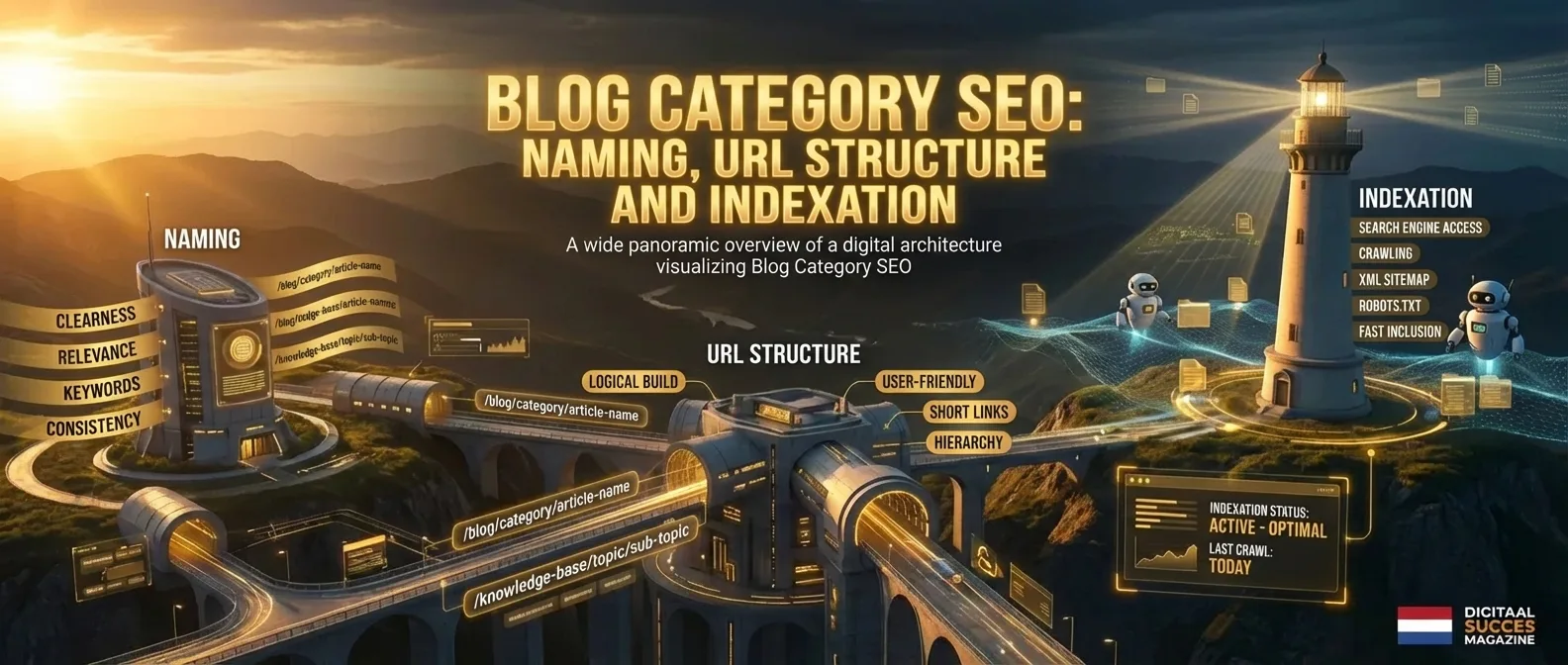
The Importance of Blog Category SEO: Naming, URL Structure, and Indexing
When discussing search engine optimization for blogs, the focus often lies on individual articles. However, a crucial aspect frequently overlooked is the website's architecture. The way you group content directly influences how search engines assess your platform's relevance and authority. A well-thought-out approach to Blog Category SEO: Naming, URL Structure, and Indexing ensures that both users and crawlers effortlessly find their way. Without a strong foundation, valuable articles risk getting lost, diminishing organic visibility and the long-term user experience.
A clear hierarchy is essential for successful Blog Category SEO: Naming, URL Structure, and Indexing strategies within competitive markets.
The foundation of a category page begins with its semantic value for your domain. Instead of merely viewing categories as folders, they should function as authoritative landing pages. By choosing the right terms, you send a powerful signal about the context of your posts. This process of Blog Category SEO: Naming, URL Structure, and Indexing requires a balance between readability and technical optimization. When a category page is well-optimized, it can rank independently for broader search terms, generating a steady stream of traffic without each individual post having to do the heavy lifting.
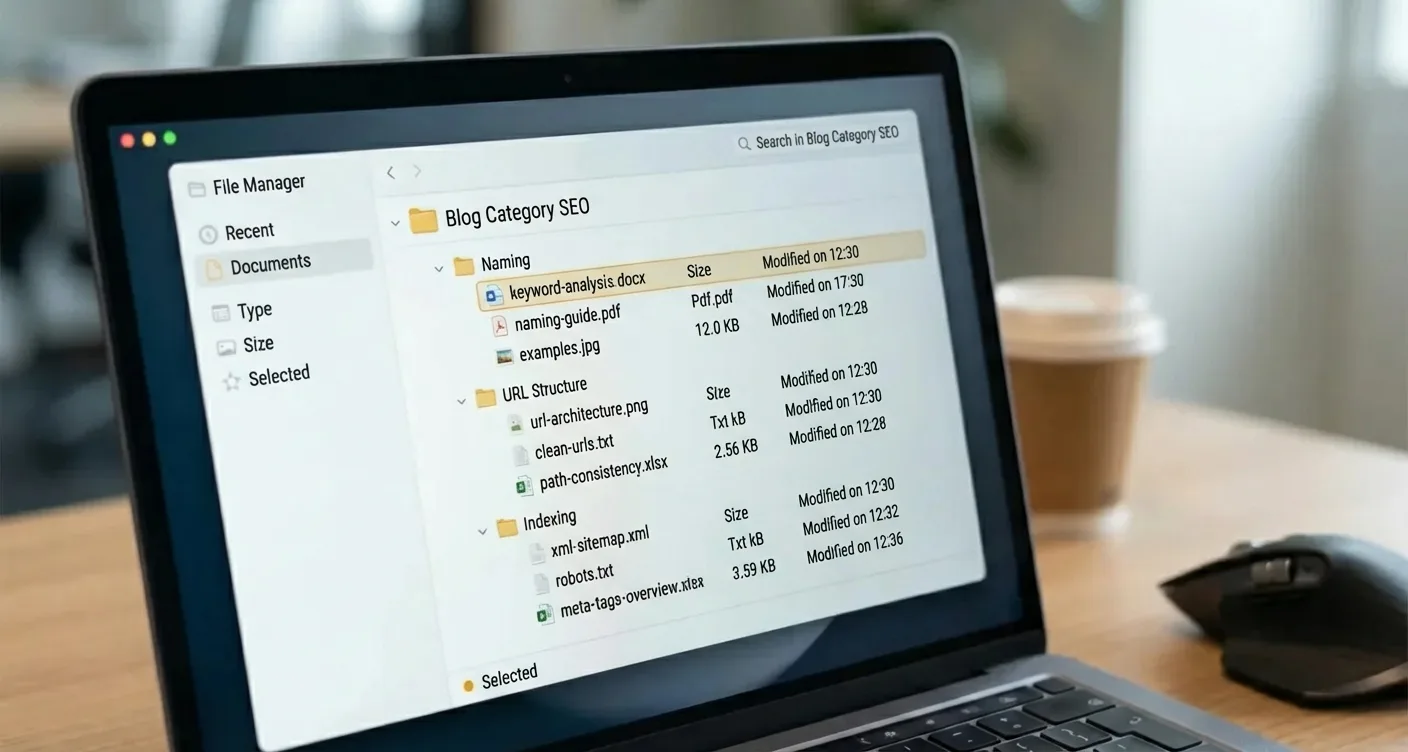
Consistently applying Blog Category SEO: Naming, URL Structure, and Indexing best practices for websites helps build thematic relevance.
The technical setup determines how efficiently your 'crawl budget' is spent. If the structure is unclear, crawlers can get stuck or skip important pages.
The Power of Logical Naming and Taxonomy
Category naming is the first step. It's tempting to use creative names, but from an SEO perspective, clarity is superior. The name should immediately communicate what visitors can expect. When implementing Blog Category SEO: Naming, URL Structure, and Indexing techniques, it's wise to conduct keyword research into terms your target audience uses. A category named "Savings" is less effective than "Personal Finance" if the latter has higher search volume. The goal is for the category to serve as the 'umbrella' under which articles are logically grouped, creating a natural flow that search engines appreciate.
Good taxonomy ensures that the internal linking structure is strengthened, significantly boosting the indexing of blog categories.
Beyond naming, URL structure plays a vital role. A clean, descriptive URL tells the crawler exactly what the page is about. Avoid numbers or unnecessary parameters. A structure like /blog/topic/ is stronger than /category?id=123. This aspect of Blog Category SEO: Naming, URL Structure, and Indexing leads to a better click-through rate because users trust a URL that reflects their search query. Moreover, a logical structure makes it easier to implement breadcrumbs, which improves navigation for mobile users and can reduce bounce rates.
According to Google Search Central guidelines, a logical site structure is one of the most important factors for discoverability.
"Well-organized categorization acts as the backbone of your content strategy, with each link serving as a signpost to expertise."
Indexing management is the final pillar. Not every category page needs to be indexed, especially if it contains too little unique content. However, for a robust Blog Category SEO: Naming, URL Structure, and Indexing approach, it's advisable to index important categories and provide them with a unique introductory text. This prevents 'thin content' issues. You can control which parts of your taxonomy are visible via meta tags and robots.txt. The goal is to create high-quality landing pages, each serving a specific segment, thereby sustainably increasing your total organic reach.
Consider the following elements when setting up your categories:
- Use keywords that cover the scope of all underlying articles.
- Keep URL slugs short, powerful, and free of stop words.
- Add unique content to category pages to increase their value.
- Check that the URL structure for SEO is consistent across the entire website.
- Monitor indexing status via Search Console to resolve errors promptly.
By taking these aspects of Blog Category SEO: Naming, URL Structure, and Indexing seriously, you lay a foundation that will yield results for your digital growth for years to come.
Best Practices for Logical Category Structure and URL Paths
A thoughtful hierarchy forms the backbone of any website. When you start with Blog Category SEO: Naming, URL Structure, and Indexing, it's essential to use a tree structure that is easy to understand. Start with broad main categories and segment them only if sufficient unique content is available. A flat structure is often preferred because it limits 'crawl depth' and more efficiently passes authority from the homepage. By incorporating relevant terms into slugs, you create strong contextual relevance for Google.
Blog Category SEO: Naming, URL Structure, and Indexing requires a consistent approach where you avoid unnecessary words in your URL paths for maximum clarity.
Optimizing URL Paths and Readability
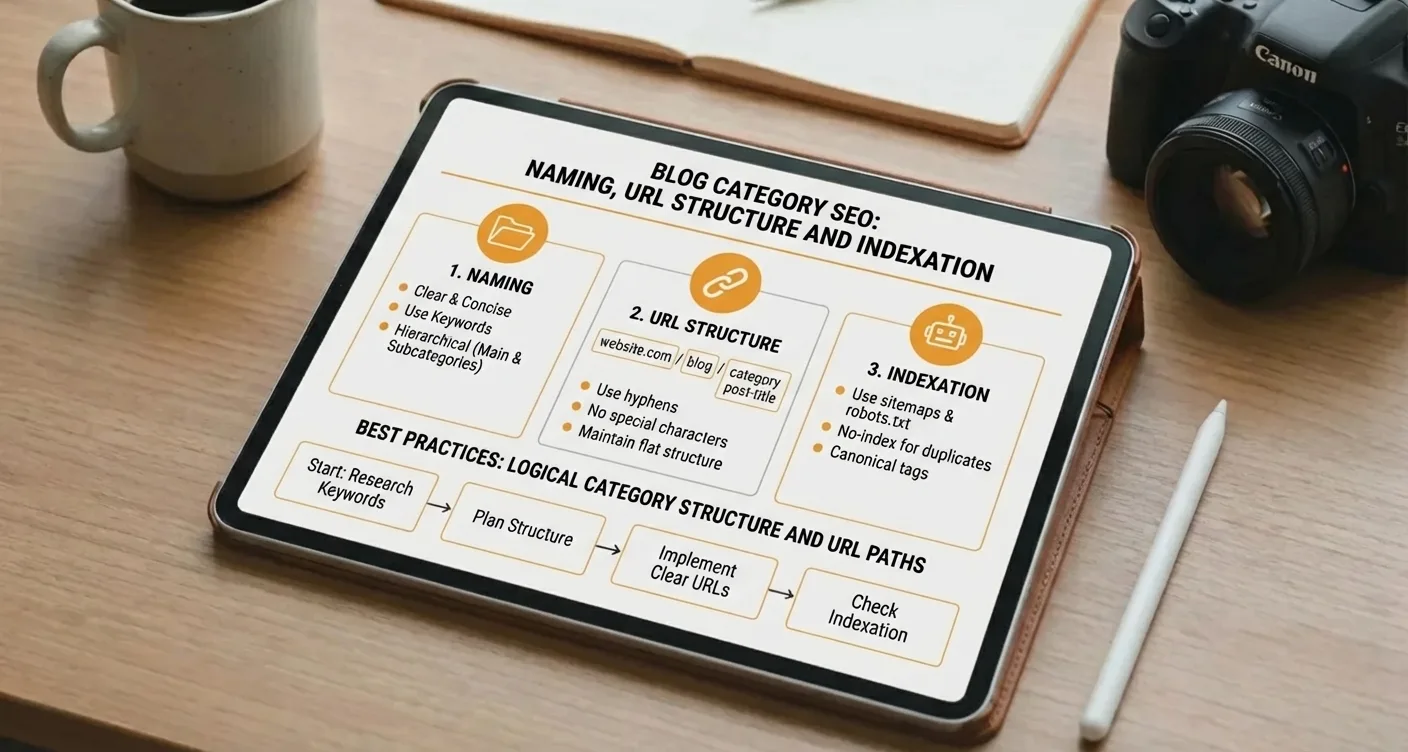
The technical configuration of paths determines how search engines understand the relationship between articles. An effective strategy for Blog Category SEO: Naming, URL Structure, and Indexing uses short, descriptive URLs that reflect the hierarchy without unnecessary folders. Use hyphens to separate words and ensure the category URL aligns with search intent. It's advisable to include the category slug in the blog post URL, provided this doesn't make the link unnecessarily long. This helps build a logical breadcrumb trail, which improves navigation and internal link value.
"A logical URL structure is not just a technical requirement, but an essential component of the user experience that directly contributes to higher organic positions in search results."
Consistency in your Blog Category SEO: Naming, URL Structure, and Indexing for e-commerce websites ensures a predictable pattern for crawlers.
When implementing Blog Category SEO: Naming, URL Structure, and Indexing guidelines, you can follow these steps for optimal setup:
- Choose static URLs instead of dynamic parameters.
- Keep category names short and concise (maximum 2-3 words).
- Ensure each category page contains unique introductory text for better indexing.
- Monitor performance via Google Search Console to prevent errors.
Remember that the Blog Category SEO: Naming, URL Structure, and Indexing approach requires regular maintenance to prevent tag proliferation.
Managing Indexing and Preventing Duplicate Content in Blog Categories
Correctly managing indexing is crucial for a healthy website architecture. When you start with Blog Category SEO: Naming, URL Structure, and Indexing, you must prevent category pages from competing with individual articles. This often happens when introductory texts on overview pages are too long, confusing search engines about which page is most relevant. By making smart choices, you ensure that your domain's authority is effectively distributed without creating internal friction between content types.
Prevent Duplicate Content with Canonical Tags
The strategy surrounding Blog Category SEO: Naming, URL Structure, and Indexing requires a strict approach to duplicate content, especially for paginated series where the same snippets can repeatedly appear within your CMS environment.

To maximize the value of overview pages, it's essential to show only unique fragments instead of the full text. This improves the user experience and strengthens the Blog Category SEO: Naming, URL Structure, and Indexing strategy by focusing on the category's unique value. Additionally, use the correct meta robots tags to determine which archive pages appear in search results. In practice, many experts choose the following steps:
- Use 'noindex, follow' for less relevant subcategories or tags.
- Implement unique meta descriptions for each main category.
- Ensure the URL structure remains logical and hierarchical for search engines.
- Add a short, unique introduction at the top of each category page.
The Role of Pagination and Internal Links
A good, advanced Blog Category SEO: Naming, URL Structure, and Indexing method also considers how pagination is handled. It's wise to link to the category's main page as a source of authority. For more technical details on how search engines handle complex site structures, you can consult the Google Search Central guidelines. By maintaining consistency in your Blog Category SEO: Naming, URL Structure, and Indexing approach, you help crawlers understand the context faster. This results in better display of sitelinks, which can improve click-through rates. Ultimately, Blog Category SEO: Naming, URL Structure, and Indexing optimization is about balancing user-friendliness and technical perfection.
Optimizing your blog categories is essential for a strong site structure. A thoughtful approach directly improves your content's discoverability.
By ensuring consistency in naming and a logical hierarchy, search engines better understand your website's context. Focus on relevant keywords in Blog Category SEO: Naming, URL Structure, and Indexing and prevent duplicate content by using smart indexing settings. This creates a clear user experience and higher positions.
Want to increase your website's authority? Start refining your category pages today by adding unique texts and strategically placing internal links. An optimized structure forms the foundation for long-term organic success. Do you need help implementing these SEO strategies or want a comprehensive audit of your current URL structure? Contact our specialists directly for a no-obligation consultation and elevate your online visibility.
Frequently Asked Questions
What is the importance of good naming for blog categories?
Clear naming helps search engines and users immediately understand your website's hierarchy. By using relevant keywords in your Blog Category SEO: Naming, URL Structure, and Indexing, you improve the relevance of your overview pages.
How do you optimize the URL structure of a blog category?
Keep the URL short, descriptive, and free of unnecessary numbers or characters. A logical structure strengthens your Blog Category SEO: Naming, URL Structure, and Indexing, letting both Google and visitors know exactly what content to expect.
Why should blog categories be indexed by search engines?
Indexing ensures that category pages appear as collection points in search results, generating additional organic traffic. It also prevents valuable content from remaining hidden from potential readers.
When is it wise to merge categories?
This is advisable when you notice that different categories have too much overlap or contain too little unique content. Merging prevents 'keyword cannibalization' and strengthens the authority of the remaining main category.
How SEO Supercharged helps you here
SEO Supercharged is fully online (service area: worldwide, online), so you can use it from anywhere.
The platform is built for Content Managers, SEO Specialists, Affiliate Marketers, E-commerce Store Owners, Blogger Entrepreneurs, Small and Medium-sized Businesses (SMBs), Digital Marketing Agencies, Content Strategists, Web Developers.
You can use it for, among other things, Blog Category Keyword Analysis, URL Structure Optimization, Category Indexing Check, Taxonomy Strategy Session, Internal Link Audit for Blogs, SEO-Friendly Naming Scan.
Want to tackle this directly? Plan your structure with the Sitemap Architect, or start a free SEO analysis.
Related articles
- WordPress Pillar Content: The Complete Guide to Categories, Canonicals, and Internal Linking
Discover how to build a robust WordPress pillar content strategy using categories, canonicals, and internal links to boost your Google rankings and AI.
- Mastering Internal Linking: Pillar and Cluster Strategy for SEO
Learn the best internal linking strategy for pillar and cluster content with examples. Instantly boost your SEO structure, domain authority, and organic.
- Internal Link Audit: Which Links Maximize Your SEO Value?
Discover how to conduct an internal link audit to identify high-value links, distribute SEO authority effectively, and boost your rankings. Read our guide!
- Canonical Tag in WordPress: When to Use It (and When Not To)
Learn all about canonical tags in WordPress: when to use them, when to avoid them. Prevent duplicate content issues, consolidate link equity, and improve.
- Sitemap Planning: How to Build a Content Map Before Publishing
Master sitemap planning to build a robust content map before publishing. Improve your SEO structure, prevent issues, and optimize your site for success.