Planning Topic Clusters: From Pillar to 20 Clusters in 1 Hour
Topic Cluster Planning: Pillar to 20 Clusters in 1 Hour
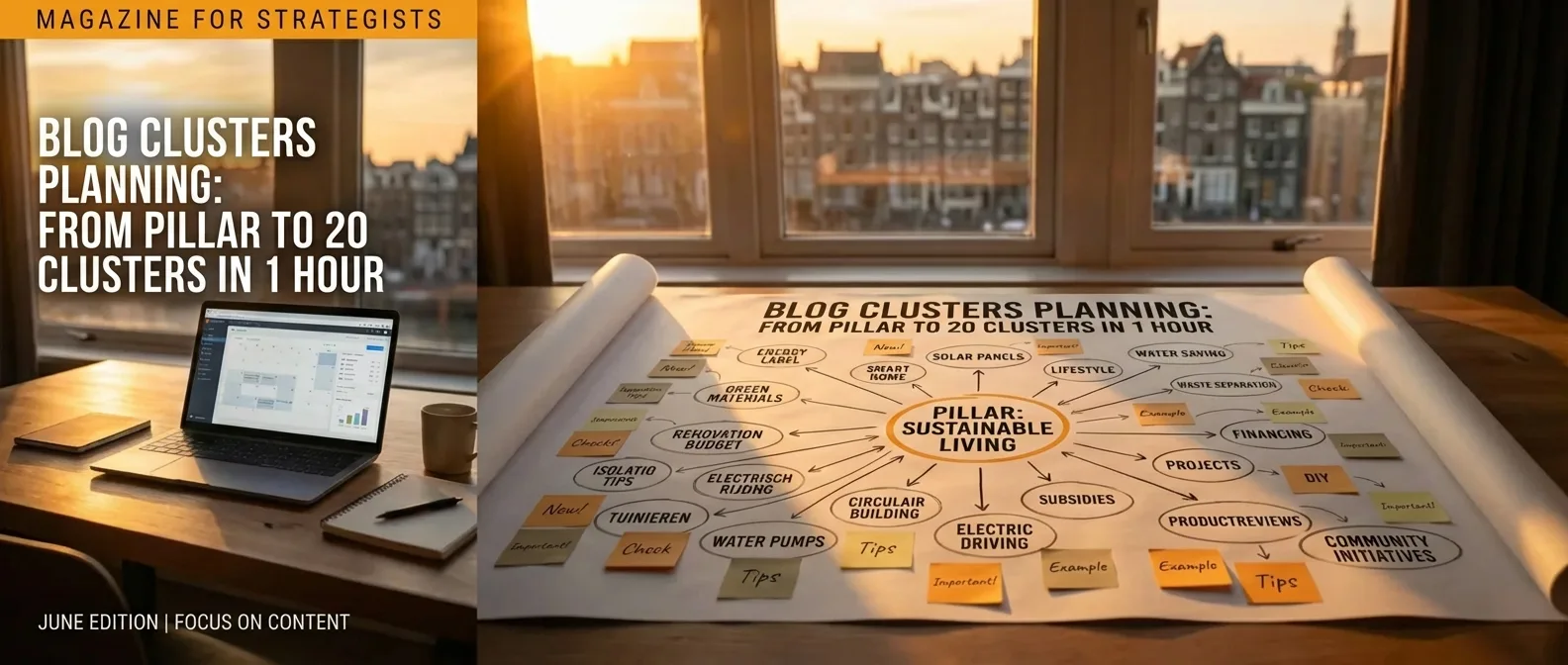
Planning topic clusters: from pillar to 20 clusters in 1 hour is the most efficient method to build authority within Google. By creating a structured network of relevant content, you transform a main topic into a content map that strengthens your online visibility. With this workflow, strategic planning becomes achievable for every website owner striving for results.
This process ensures a logical hierarchy that helps both users and search engines understand your expertise. Key points include:
- Immediately identify your central pillar page.
- Generate twenty subtopics within sixty minutes.
- Significantly strengthen your internal linking structure.
- Dominate search results through thematic relevance.
Consistency is essential for success in rolling out your content strategy.
The Foundation of a Strong Content Strategy with Topic Clusters
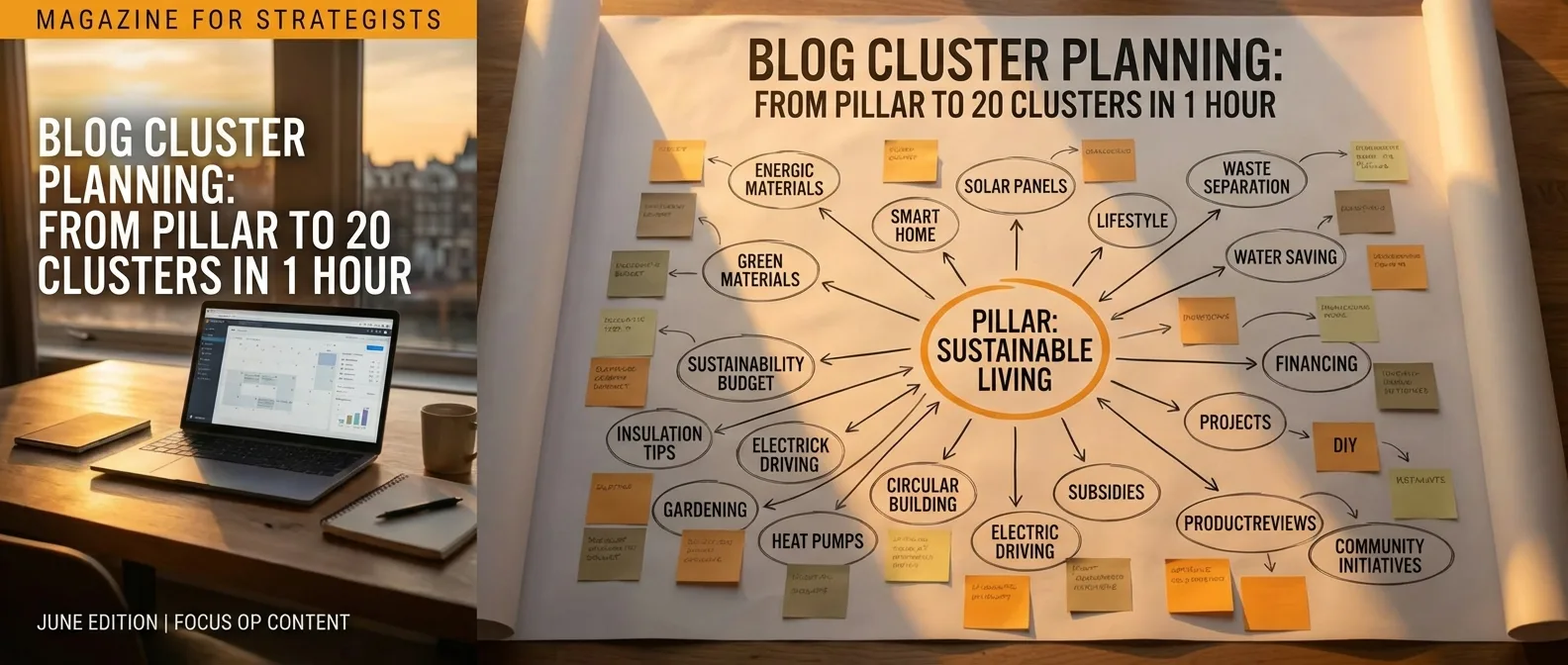
In today's digital landscape, creating isolated blog posts is no longer enough to build authority. Google's algorithms have evolved from recognizing individual keywords to understanding the context between different topics. This makes the concept of topic clusters essential. The process of planning topic clusters: from pillar to 20 clusters in 1 hour allows you to weave a structured web of information that precisely communicates your expertise. By connecting a central 'pillar' page with relevant subtopics, you create a synergy that enhances your domain's search visibility.
Success depends on thorough preparation and a logical hierarchy within your content.
When you start with planning the topic cluster: from pillar to 20 clusters in 1 hour for advanced SEO specialists, you'll find that execution speed is linked to the clarity of your main topic. A strong foundation ensures that each subsequent step feels organic, increasing efficiency without sacrificing content quality.
The Anatomy of an Effective Topic Cluster
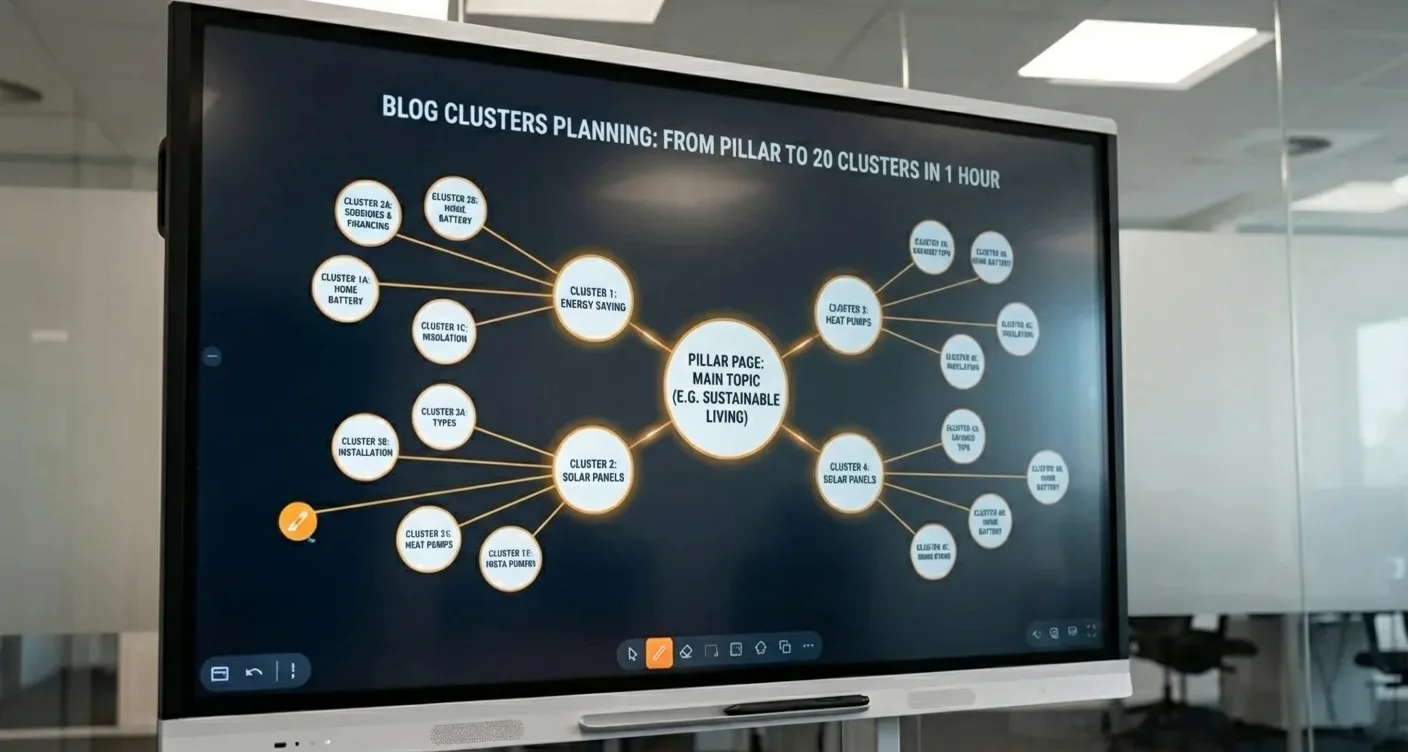
A topic cluster consists of three parts: the pillar page, the cluster content, and internal links. The pillar page serves as the central hub covering a broad topic. The surrounding cluster articles then delve deep into specific sub-themes. In the topic cluster planning: pillar to 20 clusters in 1 hour process, the art lies in quickly identifying these sub-themes by looking at the questions your target audience asks. This approach ensures you rank for a spectrum of related terms, strengthening your authority. It's a strategic way to scale your content production.
"Content clusters are not just an SEO tactic; they are a way to improve the user experience by providing answers to every possible follow-up question from the visitor."
Implementing this structure requires a shift in your mindset towards thematic depth.
By using topic cluster planning: from pillar to 20 clusters in 1 hour strategies for maximum organic growth, you can develop a complete roadmap in a short timeframe. This saves brainstorming time and ensures that every new article directly contributes to the SEO value of your existing pages through a smart linking structure.
Why Speed and Structure Go Hand in Hand
Many content creators get stuck in the analysis phase. The goal of topic cluster planning: from pillar to 20 clusters in 1 hour in practice is to break through this paralysis by using proven frameworks. Once you understand the logic behind the pillar-cluster method, you can recognize patterns in search data. This allows you to rapidly group topics based on search intent. Moreover, tight planning helps you identify gaps in your offerings, allowing you to purposefully work on affordable search engine optimization for your website without wasting resources.
The benefits of a well-planned cluster are numerous:
- Increased 'dwell time' as visitors click through to related articles.
- A lower bounce rate by directly answering specific sub-questions.
- Faster indexing of new pages due to the strong internal link structure.
- Higher authority scores for your main keywords through the accumulation of relevance.
It is essential to understand that the topic cluster planning: from pillar to 20 clusters in 1 hour methodology is about systematizing your creativity. According to information from HubSpot, this structure helps search engines understand the semantic relationship between content pieces. By following this logic, you build a foundation that is resilient to algorithm updates. You create an ecosystem where each article supports the others, leading to a dominant position. Therefore, planning topic clusters: from pillar to 20 clusters in 1 hour with a focus on relevance is the most efficient path to sustainable online success.
Step-by-Step Guide: Planning Topic Clusters: From Pillar to 20 Clusters in 1 Hour
The process of planning topic clusters: from pillar to 20 clusters in 1 hour begins at the core of your expertise. You start with a broad main topic, the pillar page, which forms the basis for all underlying content. By working systematically, you can roll out a complete content strategy within sixty minutes that appeals to both search engines and readers. The secret lies in identifying specific questions your target audience asks, linking each sub-theme to the central authority. This ensures a logical structure that optimally distributes internal link value.
Speed and efficiency are crucial when you choose the topic cluster planning: from pillar to 20 clusters in 1 hour strategy to increase your online visibility.
Brainstorming and Categorizing Subtopics
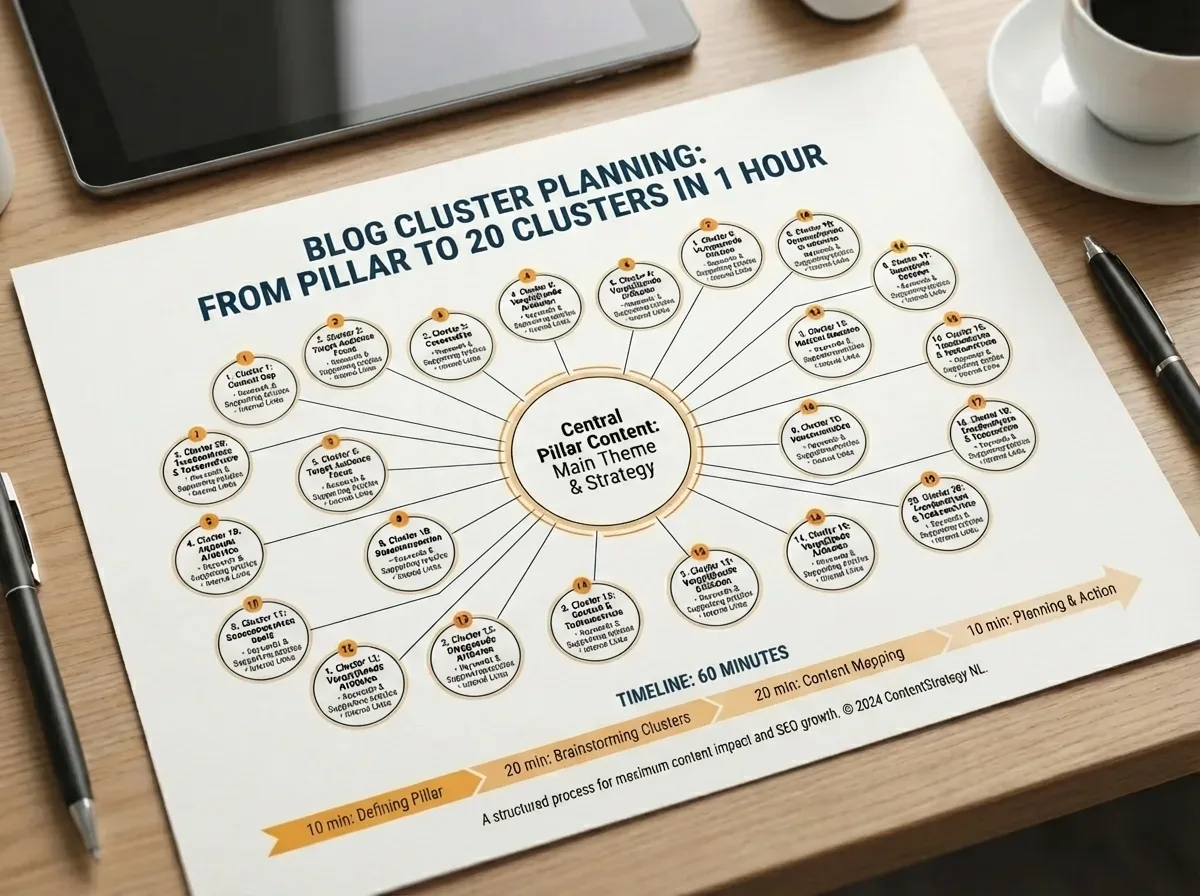
Once the pillar is established, divide your time into fifteen-minute blocks. Use tools like AnswerThePublic to quickly find twenty relevant sub-questions. In practice, grouping these questions around user intent yields the best results. Also, pay attention to the technical presentation, such as responsive web design, so your clusters remain easily readable on any device.
"Effective topic cluster planning: from pillar to 20 clusters in 1 hour requires a sharp focus on the interconnectedness between different articles."
Follow these steps for a streamlined execution:
- Define your central pillar topic within five minutes.
- Identify twenty specific long-tail keywords through keyword research.
- Create an overview of the internal link structure between the clusters.
- Draft a short summary for each cluster topic.
By applying this method of topic cluster planning: from pillar to 20 clusters in 1 hour for advanced users, you create an authority network. It enables you to efficiently plan topic clusters: from pillar to 20 clusters in 1 hour without losing time on endless brainstorming sessions.
Consistency is the most important success factor here.
Optimizing Internal Link Structure for Maximum Authority
A strong internal link structure is the foundation of any successful SEO strategy. When you start with planning topic clusters: from pillar to 20 clusters in 1 hour, it is essential to understand how the authority of your main page flows to the underlying articles. By strategically linking between your pillar content and the specific cluster pages, you create a web of relevance that helps search engines understand your website's hierarchy. This process ensures that not only your main topics but also the in-depth sub-sections become more discoverable.
The process of planning topic clusters: from pillar to 20 clusters in 1 hour requires a sharp focus on the interconnectedness of your content topics.
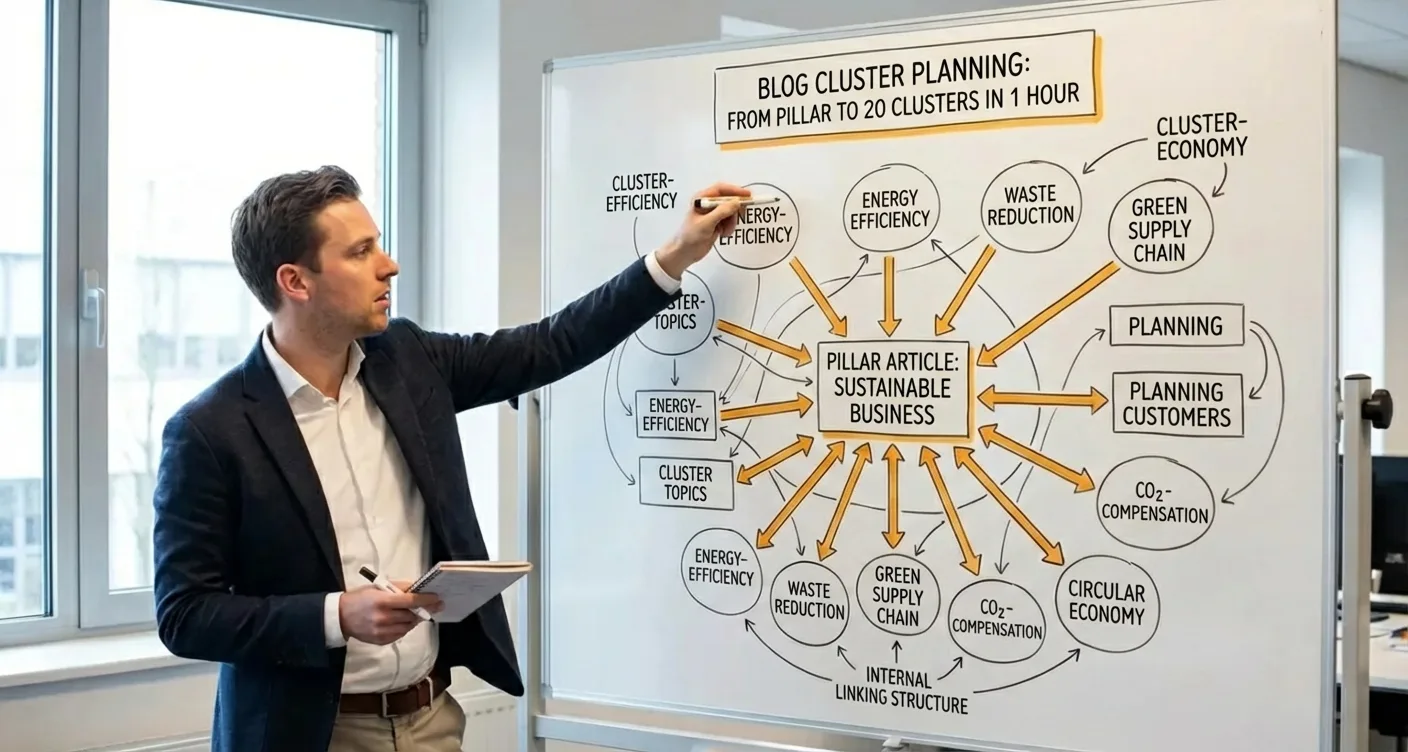
The Power of Silo Architecture in Clusters
Within an effective silo architecture, the pillar page functions as the central hub. When executing topic cluster planning: from pillar to 20 clusters in 1 hour, you must ensure that each cluster page links back to the main page. This reaffirms the pillar's authority. Simultaneously, the cluster pages reinforce each other by linking internally where relevant. This method of topic cluster planning: from pillar to 20 clusters in 1 hour strategy ensures a natural user experience and efficient distribution of 'link juice' across your domain.
"A well-structured cluster tells search engines exactly what topic you dominate."
For technically perfect execution, you can look at our WordPress services for optimal support.
Practical Steps for Link Distribution
- Identify the main keywords for each cluster.
- Use descriptive anchor texts for every internal link.
- Check if the pillar page is accessible from the main menu.
- Monitor performance using tools like Google Search Console for better indexing.
Consistently applying the topic cluster planning: from pillar to 20 clusters in 1 hour methodology helps build an online reputation. By adopting this structure, you prevent valuable content from becoming 'orphan pages' and getting isolated. Ultimately, topic cluster planning: from pillar to 20 clusters in 1 hour is about building a logical ecosystem that effortlessly guides visitors to the right information.
Ready to transform your SEO strategy? Topic cluster planning: from pillar to 20 clusters in 1 hour is the ultimate method for rapid growth.
By building smart structures, you significantly strengthen your website's authority. You learn how to link relevant subtopics to a central pillar page, helping search engines better understand the interconnectedness of your content. This process saves valuable time and ensures a constant flow of new content ideas that directly contribute to your online visibility.
Frequently Asked Questions
What is the main advantage of planning topic clusters: from pillar to 20 clusters in 1 hour?
The biggest advantage is the immense time savings and the improved SEO structure for your website. By using this method, you quickly create a logical network of relevant content that strengthens your authority within Google.
How do you start effectively organizing your content strategy?
You begin with a central main topic, the so-called pillar page, and then identify subtopics directly related to it. When planning topic clusters: from pillar to 20 clusters in 1 hour, you focus on finding specific search queries that each deserve their own cluster article.
Why is meticulous planning essential for your internal link structure?
Good planning ensures that all cluster articles naturally link back to the main page. This helps search engines better understand the context of your website and increases the likelihood of higher positions in search results.
When is the ideal time to add new clusters to your blog?
It is ideal to do this as soon as you notice that a main topic is gaining traction, but not all subtopics have been covered yet. By periodically adding new clusters, you keep your content current and remain relevant to your target audience.
How SEO Supercharged helps you here
SEO Supercharged is fully online (service area: in the cloud), so you can use it from anywhere.
The platform is built for Independent copywriters and content creators, SME business owners with their own webshop, Digital marketing agencies in Flanders, SEO specialists and consultants, Marketing managers at Belgian scale-ups, Bloggers and affiliate marketers, Start-up founders in the tech sector, E-commerce managers of large retail chains, Communication officers at local governments.
You can use it for, among other things, AI SEO tooling audit, Implementation of AI content workflows, Strategic selection of the best AI SEO generator, Prompt engineering for Belgian SEO copy, Automation of SEO metadata via AI, Quality control for AI-generated texts, AI SEO workshop for marketing teams.
Want to tackle this directly? Plan your structure with the Sitemap Architect, or start a free SEO analysis.
Related articles
- Sitemap Architect: Build a Site Structure That Ranks (SEO, AI, GEO)
Learn to use Sitemap Architect for a content map boosting rankings, internal links, indexing & AI answers. Templates, checklists, pitfalls included.
- Why You Should Build a Sitemap and Website Structure First for SEO
While content is key, effective SEO starts earlier. Discover why building a solid sitemap and clear website structure is the foundational step for improved search rankings.
- Scalable SERP Meta Optimization: Titles and Descriptions that Drive Clicks
Master scalable SERP meta optimization. Learn to craft click-worthy titles & descriptions that boost CTR, improve SEO strategy, & drive organic traffic. Get.
- Why WordPress XML Import Best Practices (and Pitfalls) Are Essential
Learn everything about WordPress XML import. Discover best practices and common pitfalls. Prevent errors and optimize your data transfer today. Read our.
- Multilingual Sitemaps: URL Structure & Hreflang Strategy for Global SEO
Master multilingual sitemaps, URL structure, and hreflang strategy for superior international SEO. Optimize your global website to attract more visitors now!