Scalable SERP Meta Optimization: Titles and Descriptions that Drive Clicks
Scalable SERP Meta Optimization: Titles & Descriptions
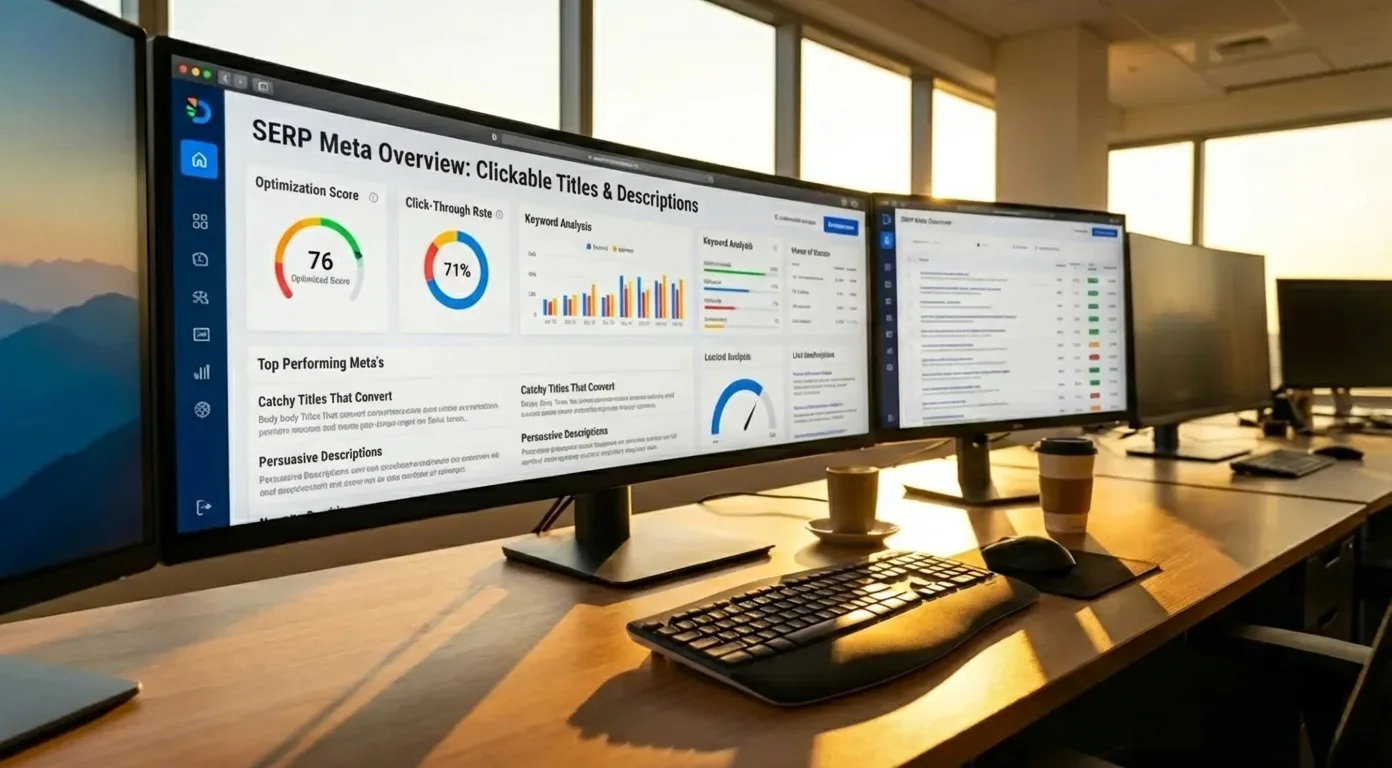
Optimizing scalable SERP meta: titles and descriptions that drive clicks is crucial for a higher click-through rate (CTR), all without time-consuming manual effort. By combining automation with smart templates, this approach ensures consistent brand representation and maximum visibility. This directly leads to improved organic performance and a more efficient workflow.
When working with automated meta tags, relevance remains the biggest challenge. Effective strategies demand a balance between algorithms and human persuasive power. The process revolves around understanding user intent by cleverly deploying variables. Don't forget that results must be continuously tested for sustained success.
- Utilize dynamic variables for unique titles.
- Focus on action-oriented descriptions.
- Regularly monitor CTR via Search Console.
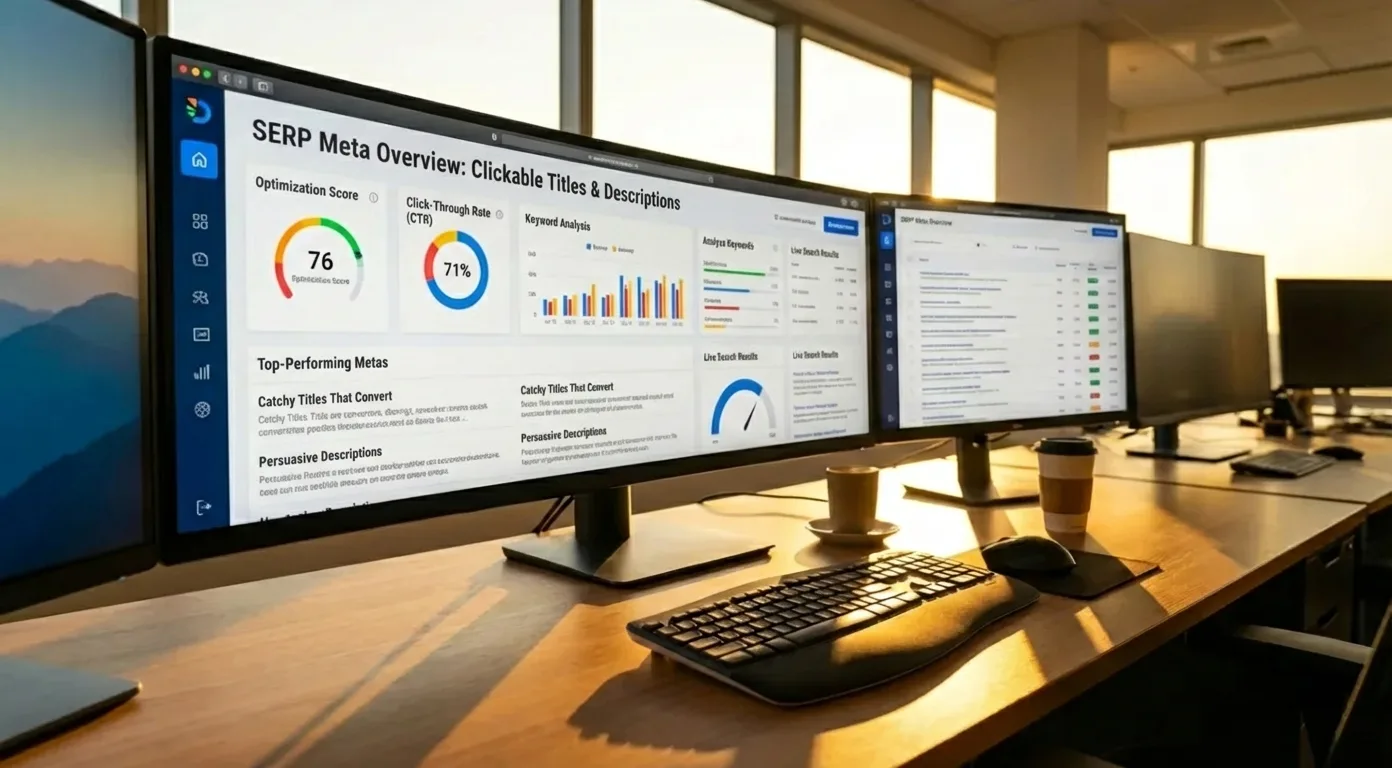
Why Scalable SERP Meta Optimization for Click-Worthy Titles and Descriptions is Essential
In today's digital landscape, the first impression a user gets is often the text within Google's search results. When managing thousands of pages, manually optimizing every single snippet becomes impossible. This is why scalable SERP meta optimization for click-worthy titles and descriptions is crucial for modern enterprises. It allows you to maintain consistency while maximizing your click-through rate (CTR). Without a systematic approach, large websites risk their content remaining invisible due to generic texts that fail to entice searchers to click further.
Implementing a strategy for scalable SERP meta optimization with click-worthy titles and descriptions ensures that every page is fully optimized for both algorithms and human psychology. Automation in SEO is now an absolute necessity for anyone looking to compete in saturated markets. By leveraging smart templates, you can generate snippets that are specific enough to demonstrate relevance, yet broad enough to efficiently deploy across thousands of URLs.

This process helps prevent duplicate content issues and ensures that search engines understand the unique value of each subpage. Furthermore, a scalable strategy allows you to react faster to trends without manually editing every meta field. A thoughtful approach to scalable SERP meta optimization with click-worthy titles and descriptions often includes dynamic fields like product names, powerful action words, and continuous A/B testing of different formats to determine the highest CTR.
For those seeking support, affordable search engine optimization for your website can be a good starting point. According to the guidelines from Google Search Central, it is crucial that titles accurately reflect the content to enhance user experience and strengthen your brand's authority.
Automation and Templates for Large-Scale Meta Optimization
When managing thousands of pages, manual input is no longer an option. Implementing scalable SERP meta optimization with click-worthy titles and descriptions requires a clever combination of variables and logic. By utilizing dynamic fields such as product names and prices, you create a system that automatically generates relevant content. This ensures that each page remains unique without every detail needing manual adjustment. The goal is a balance between efficiency and persuasiveness, where the search engine understands the page and the user is enticed.
Dynamic Variables and Structure
Using a fixed structure helps maintain your brand voice while working on scalable SERP meta optimization strategies for click-worthy titles and descriptions for large webshops.
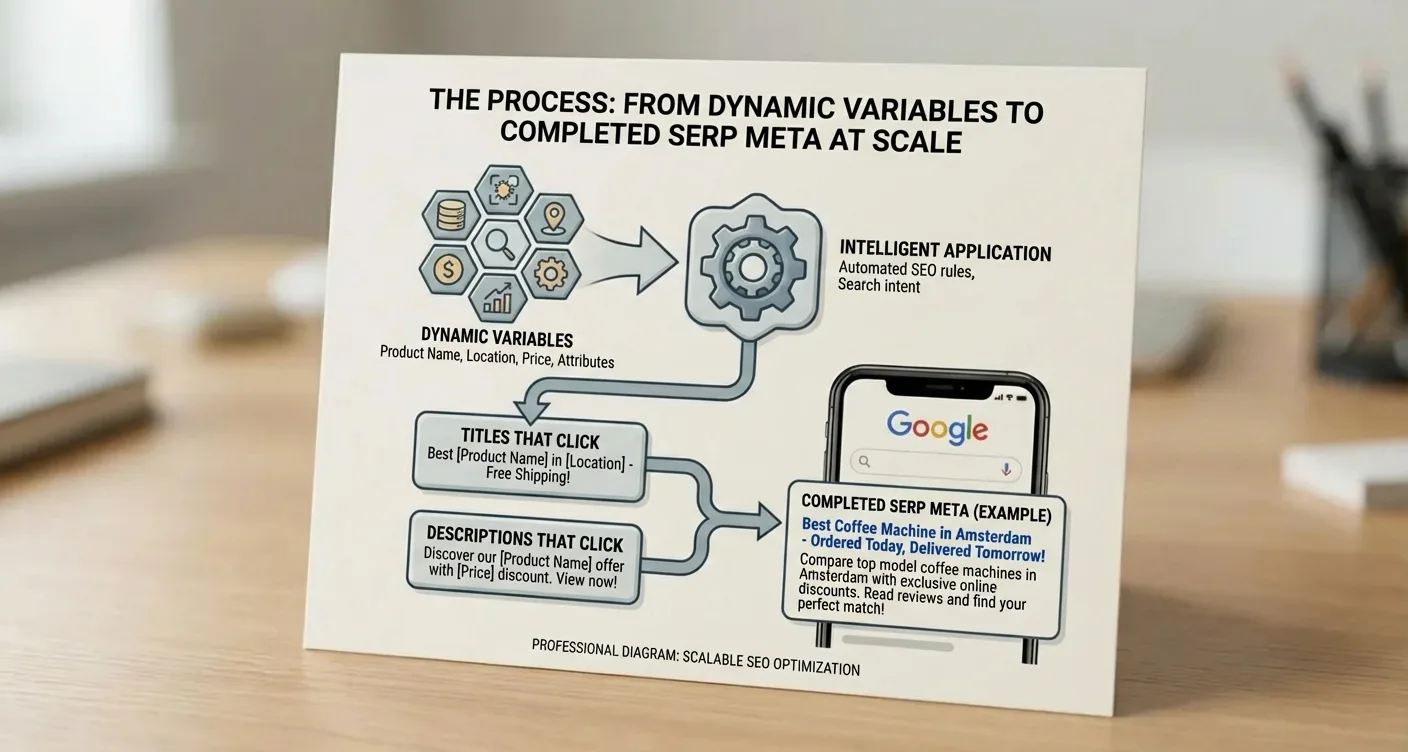
For effective execution of scalable SERP meta optimization for e-commerce: titles and descriptions that drive clicks, you can include the following elements in your templates:
- Use of [Product Name] combined with [Brand] for maximum relevance.
- Add action-oriented words like 'Order now' or 'Discover'.
- Integrate Unique Selling Propositions (USPs) such as 'Free shipping' within the meta description.
"Automation is not the end of creativity, but the foundation upon which large-scale relevance is built in search results."
A crucial part of this process is your platform's technical foundation. A well-optimized WordPress website design often provides the necessary plugins to easily manage these variables. Without a strong technical structure, even the best automated scalable SERP meta optimization method for click-worthy titles and descriptions will fail due to slow loading times or poor indexing.
Quality Control in Automation
While scripts automate much of the work, human oversight remains essential to prevent errors in scalable SERP meta optimization for click-worthy titles and descriptions. Regularly check that the generated texts are not truncated and that variables are correctly populated by using tools such as Google Search Console for monitoring.
Best Practices for Testing and Improving Your Click-Through Rate
Optimizing your organic results requires a systematic, data-driven approach. To effectively implement scalable SERP meta optimization with click-worthy titles and descriptions, it's essential to understand which elements trigger your target audience. By utilizing Search Console data, you can identify pages that rank highly but exhibit a low CTR. This is the ideal starting point for experiments. Monitoring these variables ensures that you continuously refine your strategy for scalable SERP meta optimization with click-worthy titles and descriptions based on actual user interactions.
Testing is not a one-time task, but an ongoing process of refinement. When rolling out this strategy for e-commerce, it's crucial to weigh various variables. Consider, for example, the use of powerful action words versus interrogative headlines. A structured approach helps you recognize patterns that can be applied across the entire website. Don't forget that the technical foundation, such as excellent WordPress speed optimization, indirectly impacts how users experience your site.

Use the following checklist to streamline your process:
- Analyze current CTR in Google Search Console for specific search terms.
- Vary the length of your meta descriptions to prevent truncation.
- Implement advanced methods by using dynamic variables in your templates.
- Monitor the impact of changes for at least two weeks for reliable results.
- Test different calls-to-action (CTAs) to see which generate the highest engagement.
"Successful SEO revolves around the balance between algorithm-friendliness and human relevance in every clickable line of text."
Ultimately, these strategies are all about relevance. For more in-depth information about search engine optimization, you can refer to the Google Search Central documentation. By combining these best practices with a strong technical foundation, you'll create sustainable growth in organic traffic. Continue to experiment and constantly adapt your texts based on seasonal trends and changing user behavior.
Optimizing metadata is essential for online success.
By using smart automation and data-driven templates, you can significantly increase your CTR without manual effort. Implementing scalable SERP meta optimization for click-worthy titles and descriptions ensures a consistent brand experience and improved visibility in search engines.
Start today by systematically improving your click-through rates by combining dynamic variables with powerful action words. Analyze your current performance in Search Console, identify patterns that work, and roll them out across your entire domain to stay ahead of your competition. Want to see immediate results in your organic traffic? Contact our specialists now for a customized growth plan for your website.
Frequently Asked Questions
What is the importance of optimizing scalable SERP meta with click-worthy titles and descriptions?
Optimizing metadata at scale ensures that thousands of pages perform better in search engines simultaneously. By focusing on scalable SERP meta optimization with click-worthy titles and descriptions, you significantly increase your click-through rate (CTR) without having to manually adjust each page.
How can you effectively generate metadata for thousands of pages simultaneously?
You can do this by using variables and templates that automatically insert product names, categories, or locations. In this way, you create scalable SERP meta optimization with click-worthy titles and descriptions, while maintaining relevance for both the user and the search engine.
Why should you use dynamic variables in your meta descriptions?
Dynamic variables ensure that the content remains specific and current for the user's search query. This increases the trustworthiness of the search results and encourages the user to click your link faster instead of a competitor's.
When is it necessary to review your scalable meta strategy?
It is advisable to review your strategy when search engine algorithms change or when the CTR of your most important pages begins to decline. Regular A/B testing helps determine whether your templates are still eliciting the desired action from your target audience.
How SEO Supercharged helps you here
SEO Supercharged is fully online (service area: online, worldwide), so you can use it from anywhere.
The platform is built for SMB entrepreneurs with growth ambitions, Marketing managers at mid-sized organizations, E-commerce operators and webshop owners, SaaS companies and tech startups, B2B service providers and business consultants, Content and communication specialists, International exporters and global brands, Local entrepreneurs with a digital focus, Digital marketing agencies and agency owners.
You can use it for, among other things, GEO-Strategy & AI Audit, Hybrid SEO & GEO Content Creation, LLM Visibility Analysis, Structured Data & Schema Optimization, Brand Authority & Citation Building, E-E-A-T Content Optimization.
Want to tackle this directly? Plan your structure with the Sitemap Architect, or start a free SEO analysis.
Related articles
- Sitemap Architect: Build a Site Structure That Ranks (SEO, AI, GEO)
Learn to use Sitemap Architect for a content map boosting rankings, internal links, indexing & AI answers. Templates, checklists, pitfalls included.
- Why You Should Build a Sitemap and Website Structure First for SEO
While content is key, effective SEO starts earlier. Discover why building a solid sitemap and clear website structure is the foundational step for improved search rankings.
- Why WordPress XML Import Best Practices (and Pitfalls) Are Essential
Learn everything about WordPress XML import. Discover best practices and common pitfalls. Prevent errors and optimize your data transfer today. Read our.
- Multilingual Sitemaps: URL Structure & Hreflang Strategy for Global SEO
Master multilingual sitemaps, URL structure, and hreflang strategy for superior international SEO. Optimize your global website to attract more visitors now!
- Service Page Structure: From 6 Topics to 30 Pages Without Overlap
Optimize your service page structure: scale from 6 core topics to 30 unique pages without overlap. Learn to expand content and boost SEO. Read our guide!