Core Web Vitals Content
Core Web Vitals Content: Optimize for Google SEO Success

is essential for a superior user experience and higher Google rankings. By focusing on page load speed, interactivity, and visual stability, you ensure visitors stay longer and convert faster within your digital environment. An effective strategy combines technical precision with valuable information for the end-user.
When you start optimizing, it's crucial to understand how Google evaluates pages for user experience. Websites that take their content seriously often show a lower bounce rate. It's not just about text, but also about the technical presentation to the browser.
🚀 Largest Contentful Paint (LCP)
Improving the Largest Contentful Paint (LCP).
✨ Cumulative Layout Shift (CLS)
Minimizing Cumulative Layout Shift (CLS).
⚡ First Input Delay (FID)
Optimizing First Input Delay (FID).
📈 Authority & Visibility
Increasing overall authority and online visibility.

What is the Impact of Core Web Vitals Content on SEO?
The digital world is constantly changing, and Google places increasingly higher demands on how websites perform. When we talk about the influence of Core Web Vitals content on website visibility, we are referring to the symbiosis between technical speed and information quality. It's no longer enough to simply write good texts; how this text is loaded and presented to the end-user has become crucial for a high position in the search results. Search engines prefer pages that are immediately usable without annoying shifts or long waiting times for visitors.
Fast loading times lead to a lower bounce rate and a better user experience for every visitor.
The Relationship Between Page Load Speed and Textual Relevance
Optimizing your website for Google's three key pillars—LCP, FID, and CLS—directly impacts how your articles are valued. If a page's Core Web Vitals content responds slowly, users will leave the site prematurely, sending a negative signal to search engine algorithms. This involves balancing visual elements with the textual content visitors actually want to consume. A well-structured page ensures the most important information is visible first, immediately confirming the content's relevance to the user.
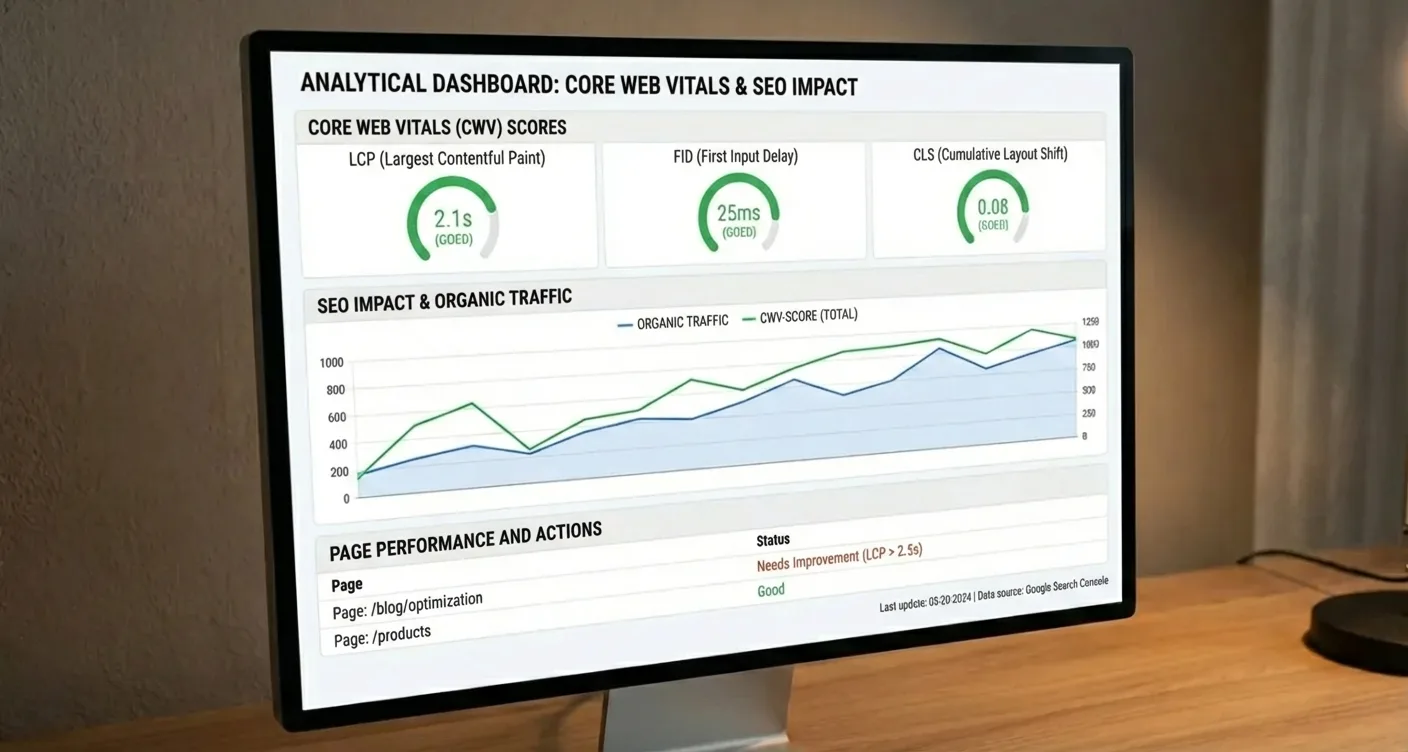
Implementing a strong Core Web Vitals content strategy for websites is essential for long-term success. Here are some key aspects that influence SEO value:
🎯 LCP Determination
The Largest Contentful Paint (LCP) determines how quickly the main text or image is displayed.
👆 FID Interactivity
First Input Delay (FID) measures the interactivity of buttons and links within the content.
🚫 CLS Stability
Cumulative Layout Shift (CLS) prevents text from jumping while a reader tries to follow the article.
✅ Technical Authority
Good technical performance strengthens the authority of the written information.
Why Technical SEO Matters
"The website's underlying technology forms the foundation upon which content quality can shine in search results."
In practice, we see that websites investing in both technology and content tend to appear higher. It is therefore wise to look into affordable search engine optimization to find this balance. When Core Web Vitals content optimization is executed correctly, Google understands that the page is not only informative but also technically superior. This results in sustainable organic traffic growth, as the search engine trusts that the user will have a flawless experience on your domain.
💡 The Core Principle
Ultimately, it's about providing value to the end-user without technical barriers on the web.
ℹ️ Important Consideration
It's important to understand that Google uses these metrics as a 'tie-breaker'. If two pages offer qualitatively equivalent information, the page with the best Core Web Vitals content scores will be preferred in ranking. This means that technical details often tip the scales in competitive markets. For more in-depth information on technical guidelines, you can consult the official Google Web Vitals documentation. By consistently monitoring and improving, you ensure that your Core Web Vitals content strategy always remains up-to-date with the latest industry standards.
The Three Pillars of Core Web Vitals Explained
To objectively measure user experience on a website, Google introduced three specific metrics that collectively form the core of a healthy website. These statistics look at the speed with which key elements load, how quickly the page responds to a click, and whether the layout remains stable during scrolling. Optimizing Core Web Vitals content is now an essential part of any modern SEO strategy, as search engines favor pages that perform flawlessly for the end-user.
⚡ First Pillar: LCP
The first pillar is Largest Contentful Paint, which simply measures when the largest visible element on the screen has fully loaded.
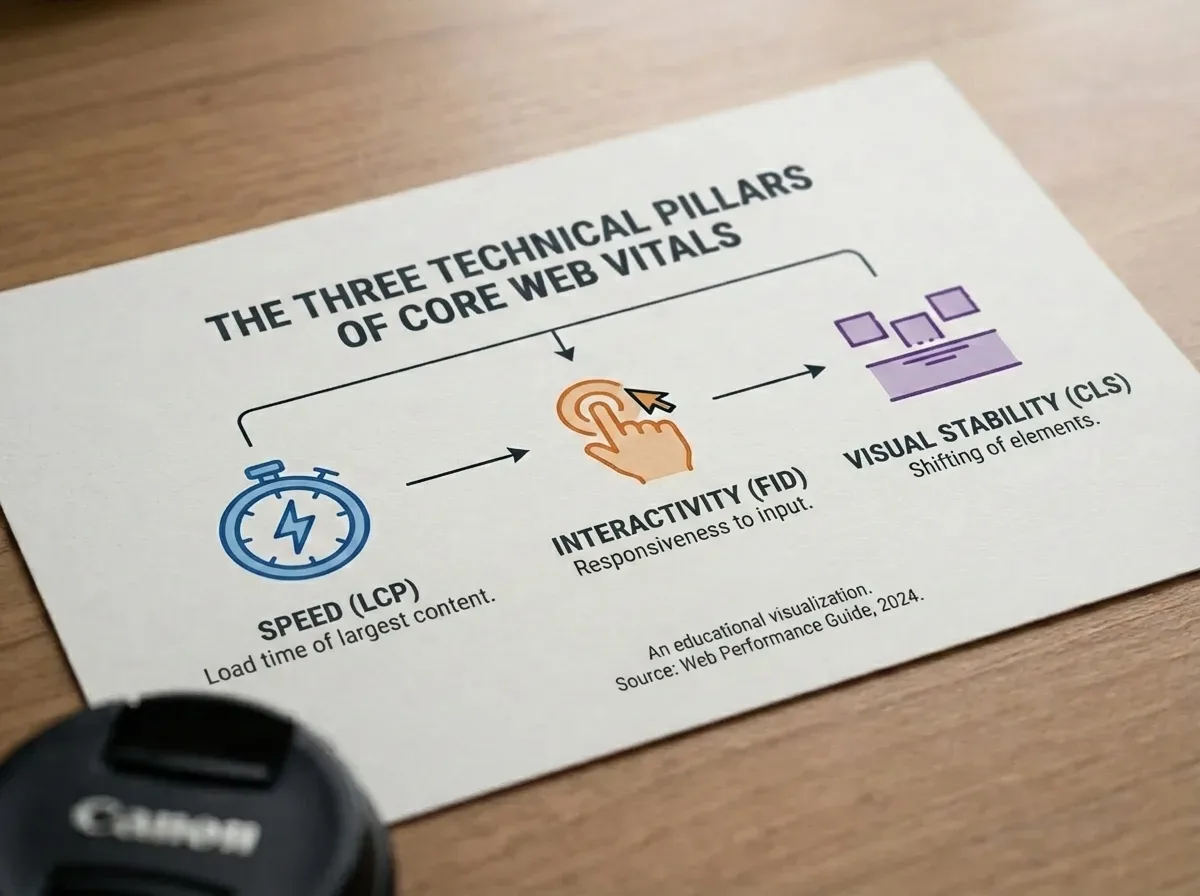
Largest Contentful Paint (LCP) focuses on the perceived loading speed of a page. In practice, this means Google looks at the moment the most important Core Web Vitals content becomes visible to the visitor, such as a large image or a text block at the top of the page. When a server responds slowly or when heavy scripts block rendering, the visitor experiences a delay that can be frustrating. Improving this metric often starts with optimizing images and efficiently configuring the hosting environment to minimize response time.
Interactivity and Page Responsiveness
In addition to loading speed, the extent to which a page immediately responds to user actions is crucial for a good score. The Interaction to Next Paint (INP) is the successor to the old FID measurement and looks at the overall delay that occurs when someone clicks a button or navigates through a menu. A website that appears visually ready but doesn't respond to touches creates a poor experience with the Core Web Vitals content on the platform. This problem is often caused by too much JavaScript occupying the browser, causing interactions to be queued.
Speed is Not a Luxury
"A fast website has become not just a luxury, but a necessity to capture the attention of modern internet users and maximize conversions."
Minimizing unnecessary scripts significantly helps improve the interface's responsiveness for mobile visitors.
Visual Stability While Browsing
The third pillar is Cumulative Layout Shift (CLS), a metric that measures whether elements on the page unexpectedly shift during loading. Nothing is more annoying than text suddenly moving down because an advertisement or image loads at the top, causing the user to accidentally click the wrong link. For strong Core Web Vitals content optimization, it is essential that developers specify fixed dimensions for media elements. This ensures the browser reserves space in advance, keeping the layout stable and allowing the visitor to read undisturbed without visual interruptions.
✅ Actions for Core Web Vitals Improvement
Understanding these technical aspects is the first step towards a better position in search results. For those serious about improvements, various WordPress SEO tips to rank higher on Google directly influence how search engines evaluate your Core Web Vitals content for advanced websites. By consistently monitoring via the Google PageSpeed Insights tool, you can make targeted adjustments that elevate the user experience. Ultimately, Core Web Vitals content is about providing a seamless, fast, and reliable environment for every visitor who discovers your website.
How to Improve Your Content's Loading Speed
Optimizing loading speed is a fundamental part of a modern SEO strategy. When we talk about Core Web Vitals content, we mean not only the textual information but also its technical presentation to the end-user. A slow website causes frustration, directly leading to a higher bounce rate and lower positions in search results. To enhance the user experience, administrators must critically examine how heavy elements such as images, scripts, and stylesheets are loaded. By removing unnecessary bloat and applying modern compression techniques, you lay a solid foundation for a fast and accessible website valued by both people and search engines.
Fast loading times begin with efficient server response and minimizing overall page size for a better Core Web Vitals content score.
Image and Media Optimization
Images often constitute the largest portion of data load on a web page. To improve Core Web Vitals content performance, it's essential to use modern file formats like WebP or AVIF, which offer superior compression without noticeable quality loss. Additionally, 'lazy loading' plays a crucial role; this loads images only when they enter the user's viewport. This saves bandwidth and significantly accelerates the initial display of the page. Don't forget to specify explicit dimensions for your media elements to prevent unexpected layout shifts, which is essential for a stable visual experience while browsing.

Design Meets Technology
"Implementing an effective Core Web Vitals content strategy for websites requires precise alignment between design and technology."
Technical Refinement and Caching
Beyond media optimization, your code's technical structure determines speed. Combining and minifying CSS and JavaScript files reduces the number of HTTP requests a browser needs to make. Caching at both server and browser levels ensures returning visitors can load your Core Web Vitals content much faster, as static components are stored locally. Using a Content Delivery Network (CDN) can shorten the distance between the server and the visitor, optimizing response time worldwide. For complete control over how your site performs on various devices, you can conduct a responsive web design check to identify bottlenecks.
✅ Achieving Green Scores
A structured approach helps achieve green scores in tools like Google PageSpeed Insights.
Speed as Brand Experience
"Speed is not merely a technical metric, but an essential component of brand experience and the trust a visitor places in your digital platform."
To successfully complete Core Web Vitals content optimization, you can follow these steps for a smoother user experience:
✅ Optimization Steps
By consistently implementing these technical improvements, you ensure your Core Web Vitals content always performs optimally under diverse conditions.
Optimizing Interactivity and Visual Stability
Improving user experience isn't just about raw speed; it's primarily about how a visitor perceives the interface while browsing. When we look at Core Web Vitals content, we see that Interaction to Next Paint (INP) and Cumulative Layout Shift (CLS) are crucial for visitor retention. A website that unexpectedly shifts while text is being read causes immediate frustration and a higher bounce rate. By giving elements like images and advertisements predefined dimensions, you prevent the layout from shifting during loading, which is essential for a stable display.
💡 Trust Through Stability
A stable layout ensures buttons don't shift just before a user clicks them, directly increasing the site's overall reliability. This builds trust with the end-user.
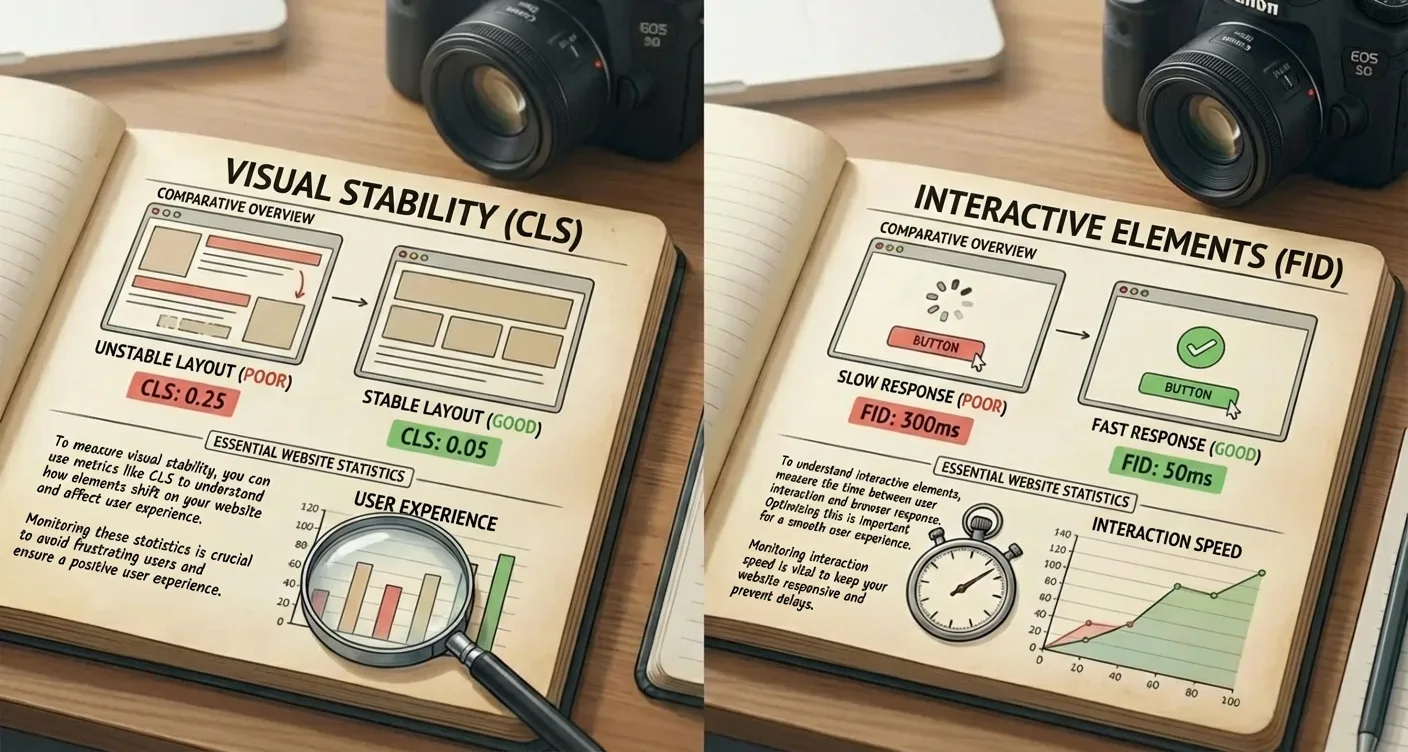
Minimizing the Impact of Cumulative Layout Shift
To achieve a high score within an effective strategy, it is necessary to address technical bottlenecks that cause visual instability. Often, these problems are caused by dynamic content loading into the document without reserved space. Implementing aspect-ratio boxes for media elements is a highly effective method to remedy this. Additionally, it's wise to inline critical CSS so the top of the page renders correctly immediately without large shifts occurring later due to delayed stylesheet activation.
The Power of Stability
"Visual stability is the silent power behind a professional website; it ensures the user maintains control over navigation."
For complex technical issues with your site's rendering, you can turn to WordPress repair services for direct support in resolving errors.
Improving Interactivity and Responsiveness
Besides stability, the responsiveness of elements is crucial for the success of your mobile optimization. Users expect a click on a menu or form to yield immediate results. Long JavaScript tasks can block the main thread, delaying interaction. Breaking these tasks into smaller chunks allows the browser to respond faster to user input. Monitoring these interactions is a regular part of modern web management.
✅ Interactivity Checklist
Consistently tracking these technical aspects contributes to a healthy score. For more in-depth information on web standards, you can consult the Google Web Vitals documentation for current guidelines.
Measuring and Monitoring Your Core Web Vitals Content Scores
Consistently analyzing your performance is essential to maintaining a high-quality user experience. When you seriously engage with Core Web Vitals content, it's important to understand that search engines constantly monitor how quickly and stably your pages load for real visitors. By regularly using tools like Google Search Console and PageSpeed Insights, you gain a clear overview of where technical bottlenecks lie. Monitoring this data allows you to intervene proactively before your search rankings are negatively affected by technical flaws or slow loading times of heavy media elements.
The Right Tools for Data Analysis
⚡ Measure & Validate
Use reliable measurement tools to accurately map and validate the impact of your Core Web Vitals content optimization for mobile users.
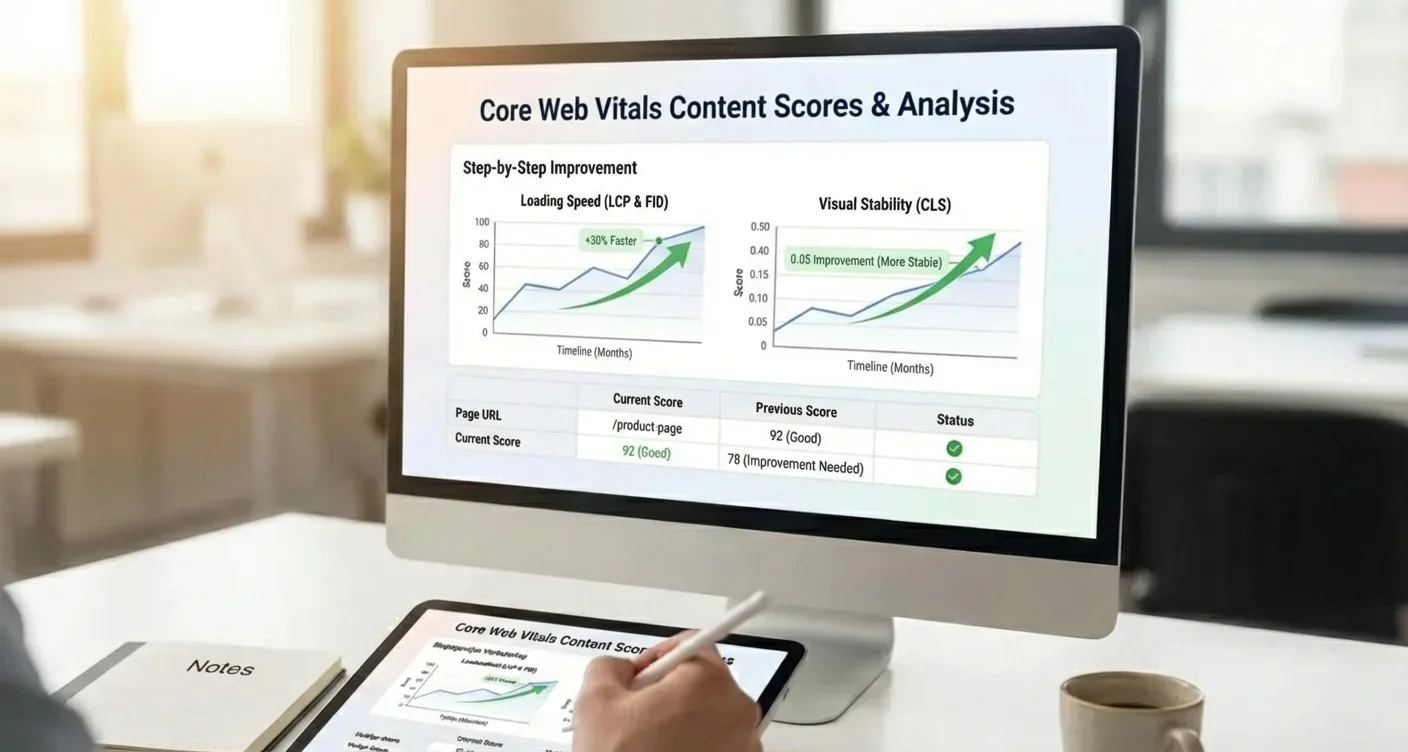
To get a complete picture of your performance, you should combine both field data and lab data. Field data reflects the actual experience of your visitors over the past 28 days, while lab data gives you immediate feedback during the development process. It is advisable to generate a report weekly to spot trends. Pay specific attention to Largest Contentful Paint (LCP), as this is often directly related to how your most important content is presented to the end-user on different devices.
Implementing Structural Improvements
After analysis comes the implementation phase, where you make technical adjustments to your website architecture to structurally increase your scores.
✅ Improvement Actions
Continuous Process
"Continuously monitoring Core Web Vitals content is not a one-time task, but an ongoing process of refinement and technical precision."
For more in-depth information on how search engines interpret these signals, you can consult the official documentation on Web.dev for the most current guidelines. By following this methodology, your website will remain competitive in an increasingly fast-paced digital landscape. Always critically evaluate your own strategy for long-term success and optimal conversion.
Optimizing your website is essential for online success.
✨ Conclusion: Why Core Web Vitals Are Important
By focusing on the right Core Web Vitals content, you not only improve the user experience but also directly strengthen your position within Google's search results. A fast, stable, and interactive website ensures visitors stay longer and convert faster.
Ready to Boost Your SEO?
In short, technically perfecting your platform is no longer a luxury in today's digital landscape. When you consistently invest in high-quality Core Web Vitals content, you build a solid foundation that can withstand future algorithm updates. Ensure minimal load time, guaranteed visual stability, and flawless interactivity for every end-user.
Start Today →Analyze your scores and implement improvements immediately.
Frequently Asked Questions
❓ What are Core Web Vitals and why are they important for my website?
Core Web Vitals are a set of specific factors Google uses to measure a web page's user experience based on speed, interactivity, and visual stability. Optimizing these metrics is essential because they directly influence the position of your Core Web Vitals content in search results.
❓ How can I improve my content's loading speed for a better score?
You can improve loading speed by optimizing images, utilizing browser caching, and removing unnecessary JavaScript. Faster loading times ensure your Core Web Vitals content performs better in the Largest Contentful Paint (LCP) measurement.
❓ Why does visual stability affect the quality of the user experience?
Visual stability, measured via Cumulative Layout Shift (CLS), prevents elements from unexpectedly shifting while a user reads text. This creates a frustration-free experience, which is crucial for retaining visitors on your page.
❓ When did Google start factoring these signals into rankings?
Google has already fully integrated these signals into their algorithm as part of the 'page experience' update. Therefore, it is necessary to continuously monitor your pages via Google Search Console to remain competitive.
Service & Contact
Location: High on Google
Service Area: In the Cloud
Services: Core Web Vitals Content Audit, LCP Content Optimization, CLS Layout Stabilization, Media Performance Scan, Technical Content Strategy, Page Speed Content Check, Mobile User Experience Analysis
Target Audience: SEO Specialists, Web Developers and Software Engineers, E-commerce Managers and Webshop Owners, Digital Marketing Agency Owners, UX/UI Designers, SMB Entrepreneurs with an Online Focus, Content Marketers and Copywriters, IT Project Managers, Affiliate Marketers, Data Analysts
Related articles
- Webpage Audit: From 'Why Isn't My Page Ranking?' to Actionable Fixes
Learn how a Webpage Audit quickly identifies why your page isn't ranking and reveals the most impactful fixes. Includes a checklist, prioritization guide.
- Boost Your Google Rankings: Get a Professional SEO Audit
Want more organic traffic? Get a professional SEO audit to uncover all improvement areas. Start boosting your Google rankings today!
- Multilingual Technical SEO Audit: Optimize Your Global Strategy
Boost your global search visibility with a multilingual technical SEO audit. Find critical improvement areas & optimize your international website now!
- Prioritizing Your Audit Action Plan: A Step-by-Step Guide
Learn how to effectively prioritize your audit action plan for maximum business impact. Optimize processes, allocate resources wisely, and achieve better.
- Audit Content Overlap Solutions: Boost Your SEO Performance
Discover effective content overlap audit solutions to stop keyword cannibalization. Improve your SEO rankings and read our guide for immediate results!