Sitemap Planning: How to Build a Content Map Before Publishing
Sitemap Planning: Build Your Content Map Before Publishing
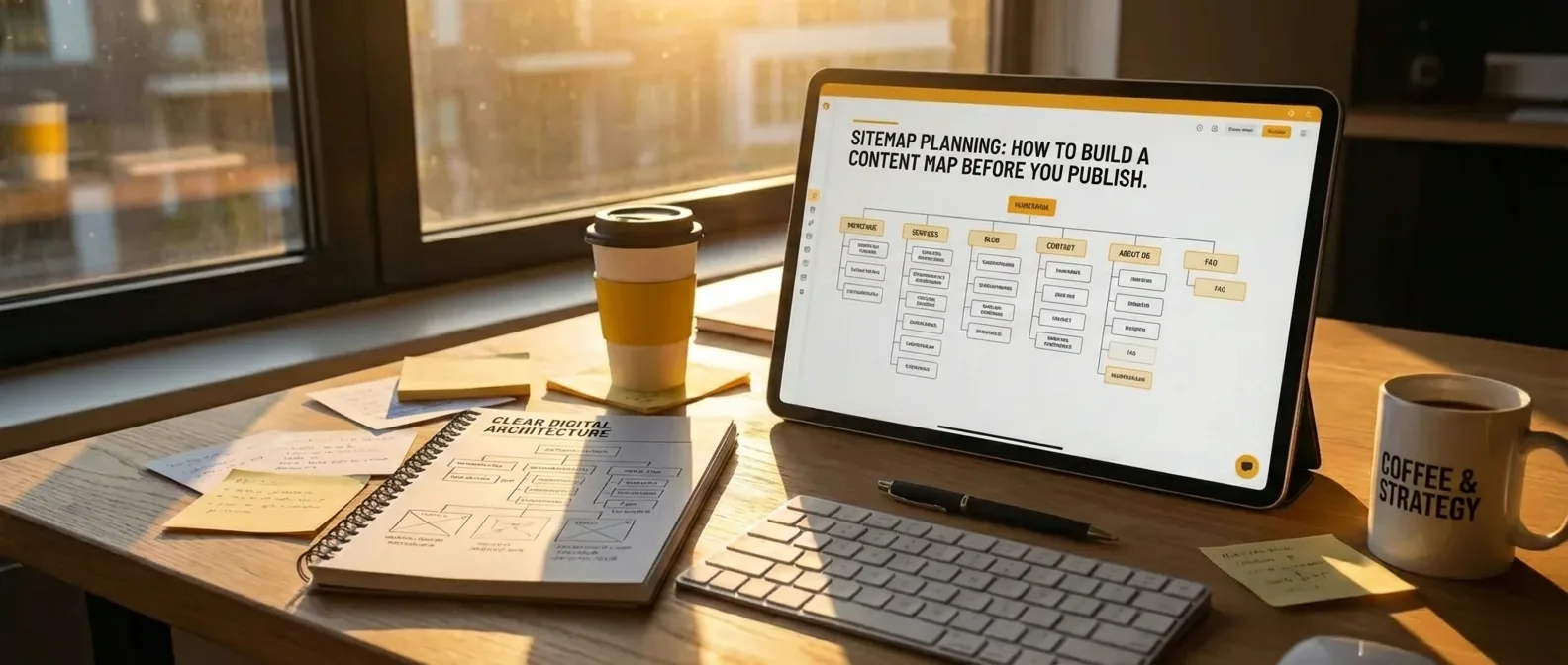
Sitemap planning—the process of building a content map before you publish—is the essential first step to ensure a logical website structure and guide search engines effectively. By creating a blueprint in advance, you prevent valuable pages from getting lost in a confusing hierarchy. A strong strategy ensures that every piece of content serves a specific purpose, which enhances the user experience.
This process helps visualize the customer journey before the first word appears on screen. A well-thought-out approach prevents duplicate content and ensures clear navigation. In practice, a visual overview helps to identify gaps in information faster.
- Visually map out all main categories and subpages.
- Prioritize content based on relevance and search volume.
- Optimize the internal link structure for maximum authority.
- Check the logical flow for the end-user.

Why Sitemap Planning: Building a Content Map Before You Publish is Essential
The success of a website doesn't start with writing, but with well-thought-out architecture. Many administrators publish pages without an overarching vision. Sitemap planning—building a content map before you publish—is the method to prevent chaos and ensure hierarchy. By pre-determining how topics are connected, you create a foundation that is understandable for both visitors and search engines. Without this preparation, you risk information getting buried, which negatively impacts the user experience.
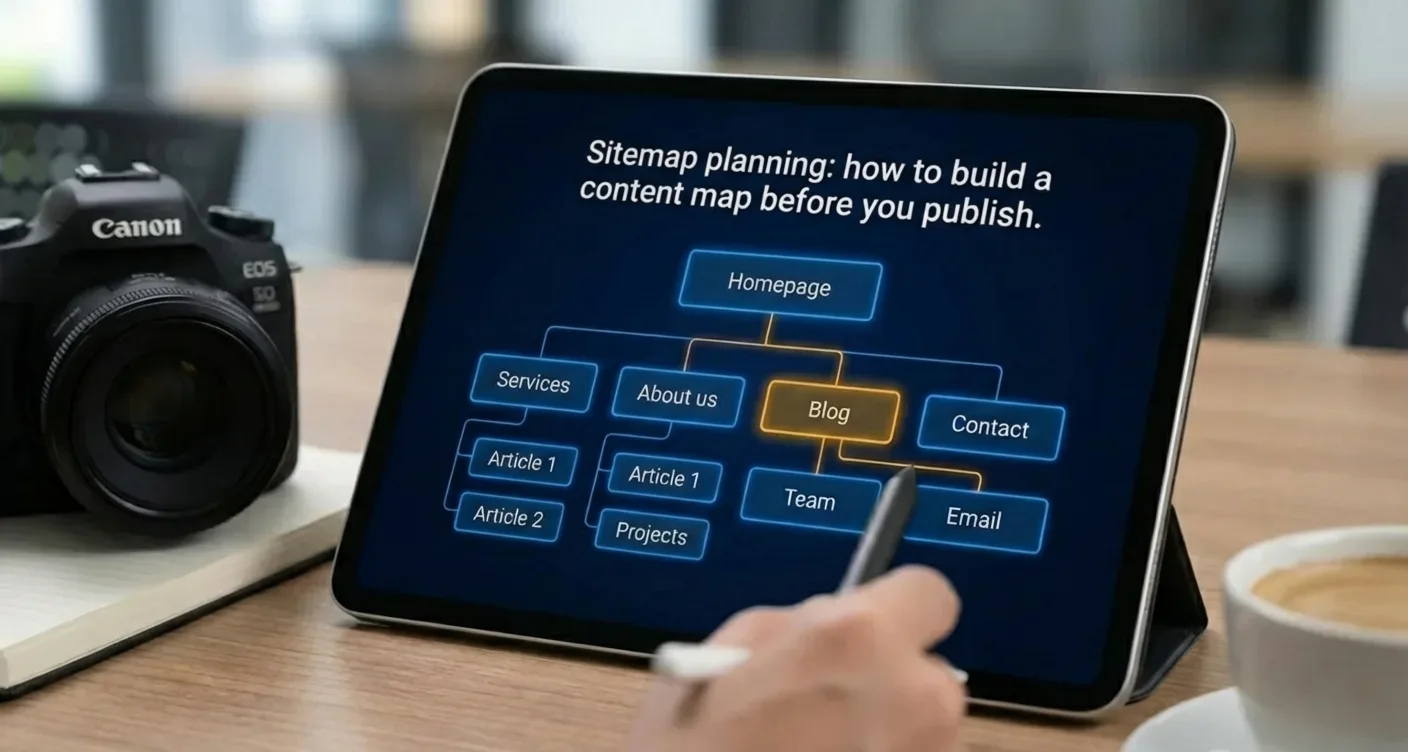
Effective Sitemap Planning: Building a Content Map Before You Publish ensures that every page serves a purpose within the website's authority. A content map functions as a navigation chart for your digital ecosystem. When you start with this strategy, you map out the customer journey even before technical implementation. This process helps identify gaps and prevents duplicate content from competing with each other in search results. Moreover, a visual representation makes internal linking opportunities immediately apparent, which is crucial for distributing link equity.
"A website without prior planning is like building a house without a blueprint; the result is often unstable and inefficient."
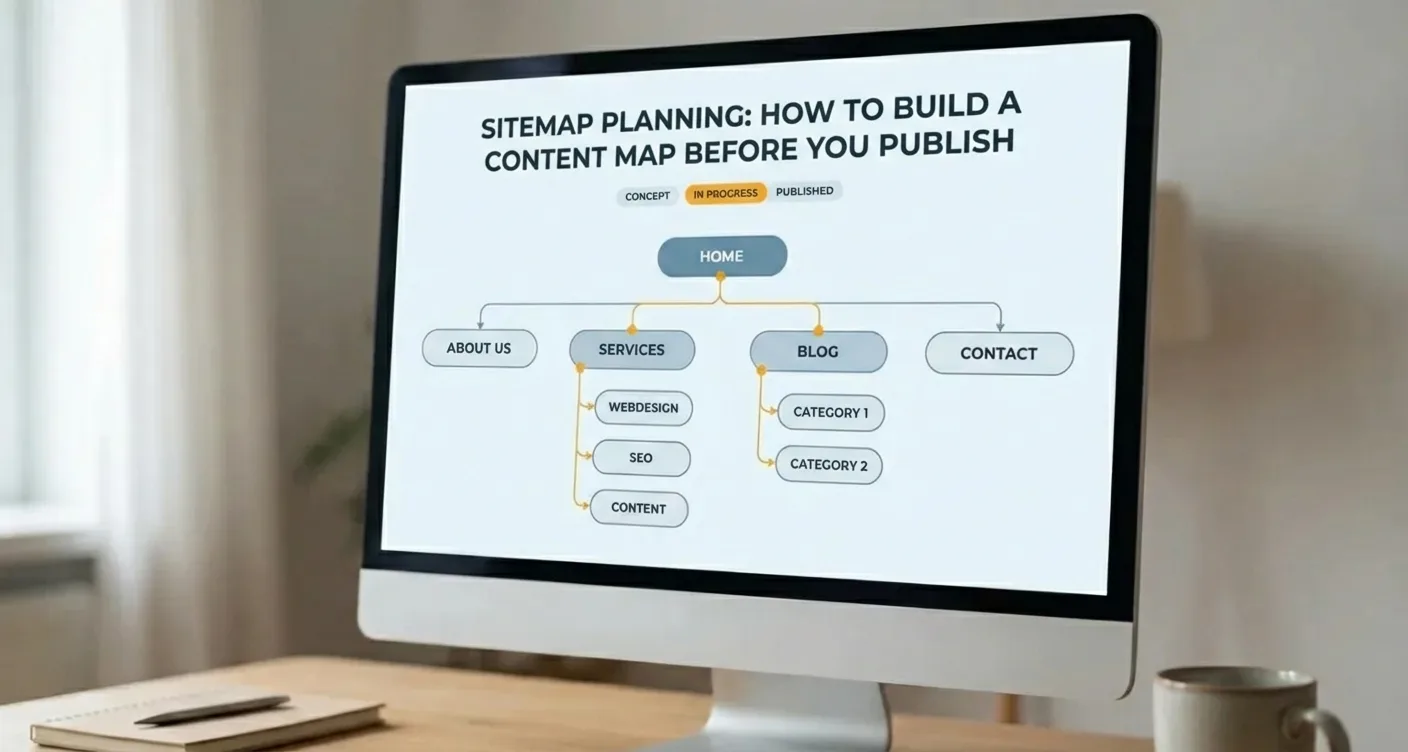
Implementing this methodology allows teams to collaborate more efficiently on complex projects. Good preparation offers several advantages:
- Improved indexing by search engines like Google.
- Logical navigation structure for a lower bounce rate.
- Targeted content creation based on relevant search intent.
- Optimal distribution of authority across all subpages.
- Clear visualization of the domain's future growth.
Ultimately, Sitemap Planning: Building a Content Map Before You Publish is essential for anyone striving for a sustainable online presence. By investing time in the preliminary phase, you save hours of correction work. You can read more about technical guidelines in the Google Search Central documentation. With strong planning, you lay the foundation for growth.
Step-by-Step Plan for Designing a Logical Site Structure
Creating a solid foundation begins with preparation, where you define the hierarchy of pages. An effective Sitemap Planning: Building a Content Map Before You Publish ensures that search engines and visitors navigate your domain effortlessly. By first defining main categories, you prevent important pages from being too far from the homepage. This is crucial, as too great a distance negatively impacts authority and discoverability within search results.
A good structure forms the backbone of your online presence and determines how effectively search engines understand your content. It is the blueprint for SEO success.
Content Inventory and Categorization
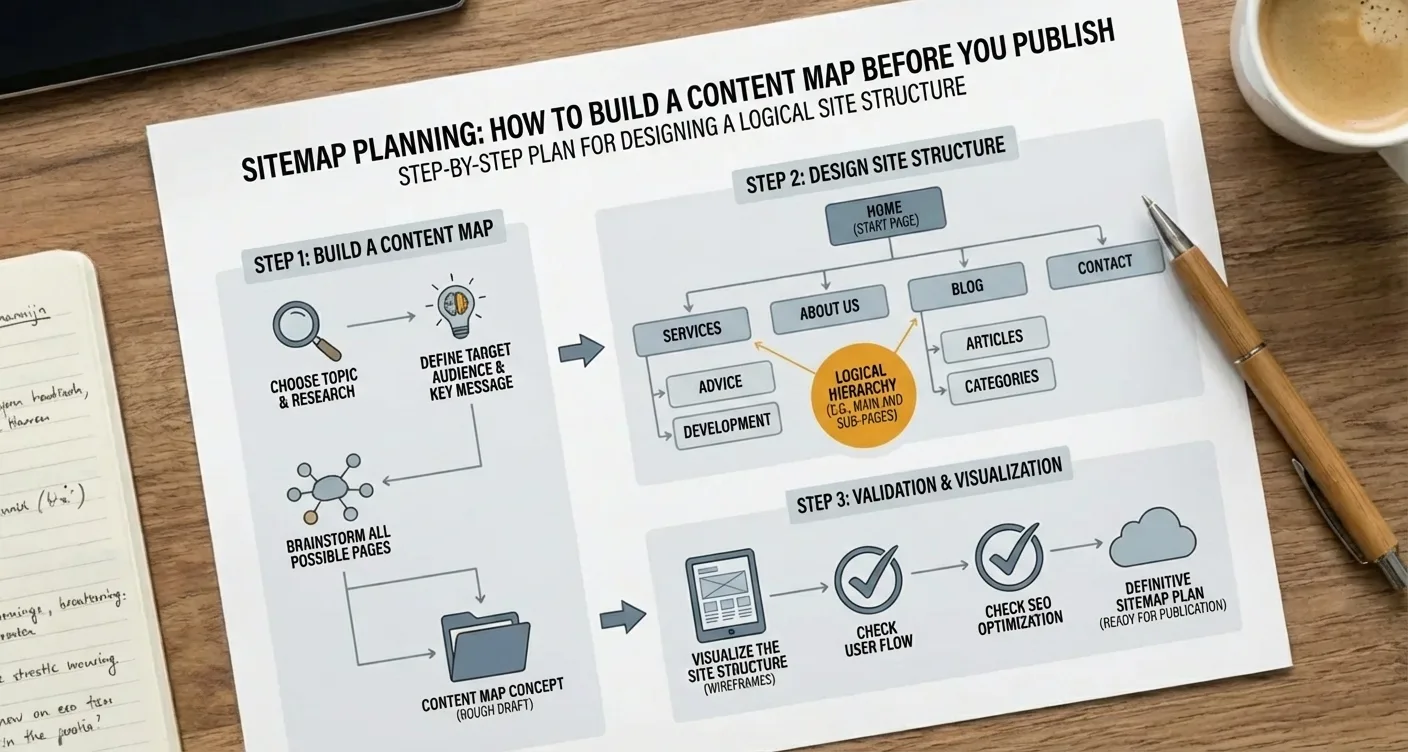
Before you start building, create an overview of all topics. During the Sitemap Planning: Building a Content Map Before You Publish phase, you group related topics into silos that reinforce each other. This process helps you discover gaps in time and avoid harmful duplicate content. Use tools like mind maps to visually map out how sections are connected via strategic internal links.
"A logical site structure is not only pleasant for the user but also forms the blueprint with which Google determines the relevance of your website."
When executing your planning, it is essential to go through the following steps:
- Identify the main pillar pages that serve as the foundation for your core topics.
- Create a list of supporting articles that delve deeper into specific sub-themes.
- Determine the internal linking strategy to optimally distribute authority between these pages.
- Check if every page is reachable within a maximum of three clicks from the homepage.
Consult the Google Search Central guidelines for optimizing your crawlability. A well-thought-out method helps you establish a scalable architecture. Once the strategy is in place, you can focus on the writing process. Without a plan, you risk a messy website that performs poorly in search engines.
The Benefits of a Visual Content Map for Your SEO Strategy
Implementing a visual structure provides clarity for website owners and search engines. When you start with Sitemap Planning: Building a Content Map Before You Publish, you create a blueprint that immediately clarifies the coherence between pages. This process prevents topics from becoming isolated. By working visually, you quickly identify gaps and see how the internal link structure can strengthen page authority within the SEO context.
Good preparation ensures a logical hierarchy that improves user experience and helps crawlers index your site more efficiently.
Improving Efficiency and Internal Link Structure
When executing Advanced Sitemap Planning: Building a Content Map Before You Publish, you often discover duplicate content before it goes live. This saves time and resources. A visual map serves as a reference point for the team, ensuring everyone understands how new articles contribute to the site structure. It allows you to make strategic choices about which pages should receive the most internal links.
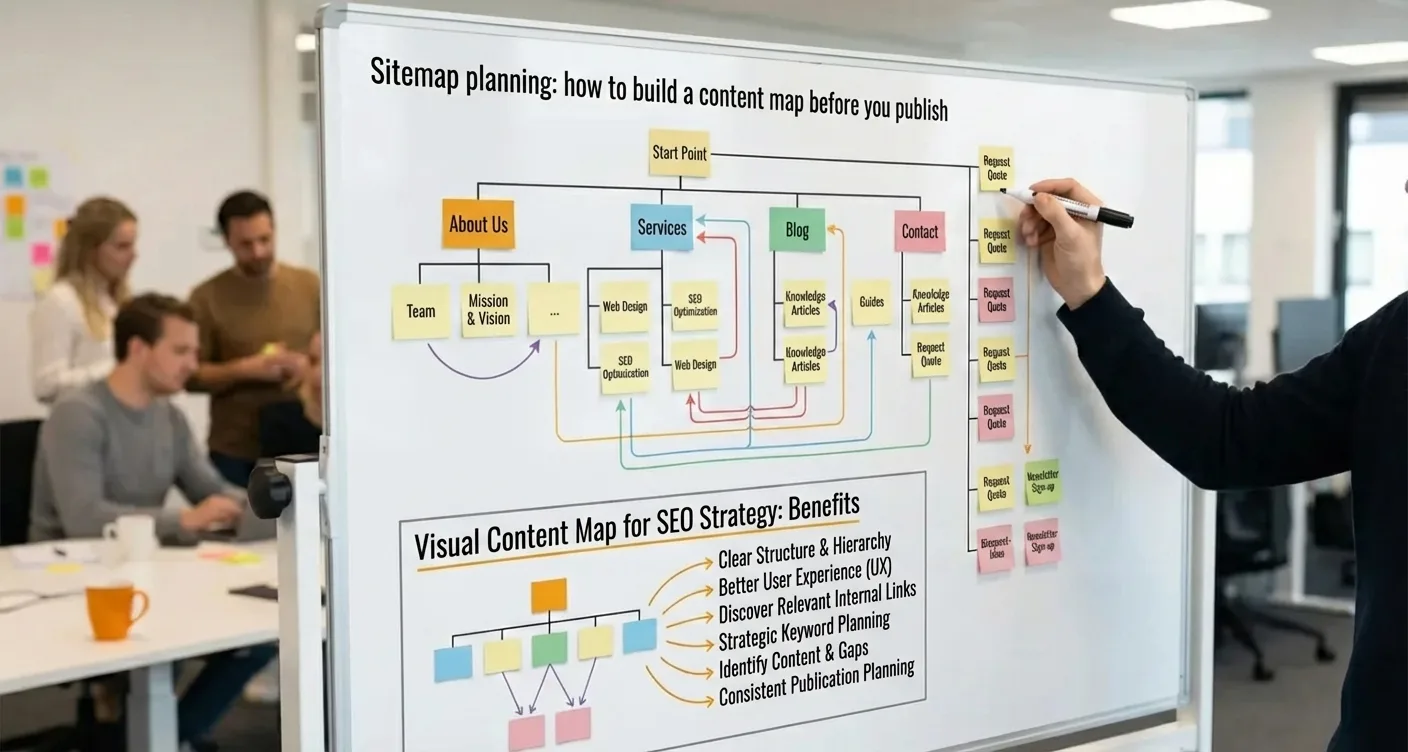
The benefits of this method directly contribute to healthy digital growth:
- Better visualization of the Sitemap Planning: Building a Content Map Before You Publish strategy.
- Faster identification of 'orphan pages' that receive no internal links.
- Logical grouping of topics via topic clusters.
- Easier consultation with stakeholders about the website's direction.
"A visual representation of your content architecture is essential to monitor and strengthen the semantic relevance of your domain."
The process surrounding Sitemap Planning: Building a Content Map Before You Publish – A Step-by-Step Plan for Success helps you set priorities. Instead of publishing randomly, you work purposefully on an authoritative network. According to experts at Search Engine Journal, a well-thought-out site structure is a foundation for organic success.
Ultimately, a consistent Sitemap Planning: Building a Content Map Before You Publish approach leads to a website ready for the future.
A strong foundation is crucial for success. By investing time upfront in sitemap planning—building your content map before publishing—you prevent errors and duplicate content. A well-planned content map serves as a blueprint for your website. It helps organize information and ensures that search engines understand the relevance between pages. As a result, content is indexed faster, and your domain's authority rises within search results.
Start outlining your website structure today. Analyze keywords, group topics into silos, and visualize the internal link structure before pages go live. Need help optimizing your navigation? Contact our specialists for a consultation and elevate your discoverability. This way, you achieve sustainable growth and maximum online visibility.
Frequently Asked Questions
What is the main benefit of sitemap planning?
Sitemap Planning: Building a Content Map Before You Publish ensures a logical hierarchy and a better user experience. It helps you identify gaps in your content and prevents important pages from getting buried in the navigation.
How do you start creating an effective content map?
You start by inventorying all intended topics and categorizing them into main and sub-themes. For sitemap planning: building your content map before publishing, it is essential to visually outline the internal link structure before technical implementation begins.
Why is a content map crucial for your SEO strategy?
A content map helps search engines understand the context and relevance of your website faster. By planning upfront, you prevent keyword cannibalization and ensure that your domain's authority is optimally distributed across the most important pages.
When should you revise the sitemap during the publishing process?
It is advisable to revise the sitemap whenever you add a new content cluster or shift your website's focus. By keeping your content map dynamic, your website's structure remains scalable and organized for both visitors and crawlers.
How SEO Supercharged helps you here
SEO Supercharged is fully online (service area: worldwide, online), so you can use it from anywhere.
The platform is built for SEO Specialists, Content Strategists, Web Designers, Marketing Managers, Aspiring Bloggers, E-commerce Entrepreneurs, Copywriters, Website Owners, Digital Agencies, UX/UI Designers.
You can use it for, among other things, Sitemap Architecture Scan, Content Mapping Strategy, URL Structure Design, Internal Link Audit, SEO Hierarchy Planning, Pre-Publishing Content Check, Keyword-Sitemap Integration.
Want to tackle this directly? Plan your structure with the Sitemap Architect, or start a free SEO analysis.
Related articles
- WordPress Pillar Content: The Complete Guide to Categories, Canonicals, and Internal Linking
Discover how to build a robust WordPress pillar content strategy using categories, canonicals, and internal links to boost your Google rankings and AI.
- Mastering Internal Linking: Pillar and Cluster Strategy for SEO
Learn the best internal linking strategy for pillar and cluster content with examples. Instantly boost your SEO structure, domain authority, and organic.
- Blog Category SEO: Naming, URL Structure, and Indexing Strategy
Master blog category SEO! Learn how naming, URL structure, and indexing boost traffic & rankings. Get expert tips to optimize your content hierarchy today.
- Internal Link Audit: Which Links Maximize Your SEO Value?
Discover how to conduct an internal link audit to identify high-value links, distribute SEO authority effectively, and boost your rankings. Read our guide!
- Canonical Tag in WordPress: When to Use It (and When Not To)
Learn all about canonical tags in WordPress: when to use them, when to avoid them. Prevent duplicate content issues, consolidate link equity, and improve.