Branding for Conversion: How Your Brand Boosts SEO and Revenue
Branding for Conversion: Boost SEO, Trust & Revenue
Branding is often treated as merely the “pretty layer”: a logo, some colors, a font, and you’re done. SEO, on the other hand, is often seen as the technical work: keywords, content, links. In reality, they are two sides of the same coin. Branding influences how people perceive and choose you. SEO determines whether people find you at all. And the bridge between them is called: behavior.
Google and AI systems are getting better every day at recognizing one simple truth:
people don’t click on the best page, people click on the page they trust.
Branding is how you build that trust before someone ever sees your site. And conversion is what you get when that trust aligns with what you deliver.
⚡ In this guide, you'll learn:
- which branding elements directly influence your SEO (CTR, dwell time, branded search),
- why AI visibility is also a “brand signal”,
- how your brand structurally increases your conversions,
- and how to make this scalable with your Branding Designer + your content workflows.
TL;DR: The Branding-SEO-Conversion Chain
Branding primarily influences SEO through four key levers:
📝 CTR
People choose your snippet faster.
📝 Recognition
Branded searches increase.
📝 Trust
People stay, read, convert.
📝 Consistency
Google/AI understands who you are and what you stand for.
When branding is on point, your SEO becomes more cost-effective and stable. And as SEO grows, your brand gains recognition faster. It's a feedback loop. The good kind.
Why Branding Increases Your Google CTR (Without Moving Up a Single Position)
Imagine you're ranked at position 4. You can do two things:
⏳ Fight Longer
Spend months trying to climb to position 2.
📈 Work Smarter
Increase your CTR to get MORE traffic from the same position.
Branding primarily helps with the latter. People are more likely to click on:
- names they recognize
- brands that appear professional
- companies that feel “real” (not a generic template vibe)
CTR Isn't Just Text — It's Expectation
Your snippet (title + meta description) is a promise. Your branding is the reputation behind that promise. Even if someone doesn't “know” your brand, they often sense:
- this is sleek and consistent
- this is messy or generic
- this is serious or questionable
A brand that communicates consistently can safely make “strong promises” in titles/meta descriptions without resorting to clickbait. Because the page delivers.
Branding Builds Branded Search (and Branded Search is SEO Gold)
Branded search = people searching for your brand name or a combination with your service:
- “SEO Supercharger sitemap architect”
- “SEO Supercharger SERP optimizer”
- “WPWebdesign SEO generator”
Why this is gold:
🚀 High CTR
Branded searches have a high Click-Through Rate.
💰 High Conversion
These visitors are often already convinced and ready to convert.
🛡️ Competition-Proof
Your competitors will struggle to intercept branded searches.
💡 Authority Signal
Google sees your brand as a significant entity/source around a topic.
🔑 Key Takeaway
The better your branding + content work together, the more you become a “name” instead of “just another website”.
Branding Boosts Trust (and Trust Boosts Conversions AND Rankings)
Trust is measurable behavior:
📉 Lower Bounce Rate
Provided the visitor's intent matches the content.
⏱️ Longer Dwell Time
Visitors stay longer on your page.
📄 More Pages Per Session
They explore more content on your site.
🔄 Returning Visitors
People come back to your brand more often.
✅ Higher Conversion
Ultimately, this results in more conversions.
Google doesn't say “we measure your color.” But Google does measure what people do. And branding influences what people do because branding sets expectations.
The Quick Trust Check
When someone spends 8 seconds on your site, they sense:
- is this professional?
- is this clear?
- is this trustworthy?
This is due to:
- tone of voice
- layout consistency
- typography
- contrast and readability
- navigation (especially: “where am I?”)
- microcopy (small texts that provide assurance)
Branding isn't about “making things prettier.” Branding is about removing friction.
Branding Helps AI Understand You (AIO: Answer & Authority)
AI systems choose sources that have:
🗣️ Clear Sender
Are clear about “who is speaking.”
📝 Consistency
Use consistent terminology.
🏗️ Structured
✅ Trustworthy
Show reliable signals (about us, contact, expertise, policies).
🔗 Coherent
Are internally coherent (same terms, same definitions).
A consistent brand creates coherence. And coherence is precisely what AI (and Google) needs to “cite” you or use you as a source.
What AI Likes to See (Branding Signals)
✍️ Consistent Name
No variations mixed up.
💡 Clear Service
Consistent service offerings (same terms for features).
ℹ️ About Us Page
A clear “About / company” page.
📞 Good Contact Info
Clear contact options.
📚 Real Case Studies
Real case studies/examples.
🧩 Recognizable Style
A recognizable style in explanations (same structure per article).
The Real Secret: Branding = Positioning (and Positioning = SEO Scope)
Branding isn't just visual. It's primarily:
what are you good at, for whom, and what is your promise?
If your positioning is vague, your SEO will also be vague:
- you write about everything
- you target all keywords
- your content becomes generic
If your positioning is sharp:
- you choose topics smartly
- you create pillar hubs that align with your offering
- your internal linking reinforces one narrative
- your conversion feels logical
“We make websites” (vague)
vs
“We build SEO-driven content machines (Sitemap Architect + SEO Generator)” (sharp)"
The latter can dominate because it claims a clear topic.
Website Branding: What Truly Drives Conversion
Here are the branding elements that have the most impact on SEO + conversion:
✨ One Recognizable Visual Identity
No design randomness, but a consistent style.
- fixed colors (accent + neutrals)
- fixed typography
- consistent spacing
- iconography in one style
🗣️ Matching Tone of Voice
Alignment with your target audience.
- clear, not verbose
- advisory, not pushy
- specific, not generic
✍️ Friction-Reducing Microcopy
Examples:
- “Your sitemap plan ready in 2 minutes”
- “No installation required”
- “Export to WordPress”
- “Your data remains tenant-secure”
Small phrases, big impact.
🤝 Trust Anchors
Elements that provide assurance.
- clear “About Us” with real context
- clear contact information
- policies (privacy/terms) that aren't shady
- case studies or examples (even small ones)
🎯 Consistent CTAs
Not 12 different buttons.
A brand that converts has:
- 1 primary action (per page)
- 1 secondary action
- repetition without confusion
Branding + SEO in Practice: Your “Brand Assets” as Content Multipliers
When your branding is in order, you can create content more efficiently:
- every blog post feels like “from the same team”
- every pillar has the same structure and style
- every CTA feels logical
- your SERP snippet can use the same promise-style
This is precisely where your tools integrate perfectly:
The Branding Designer Approach (How You Make This Scalable)
A branding tool is only valuable if it provides output you can use everywhere.
What You Absolutely Want to Generate (for Real Conversion)
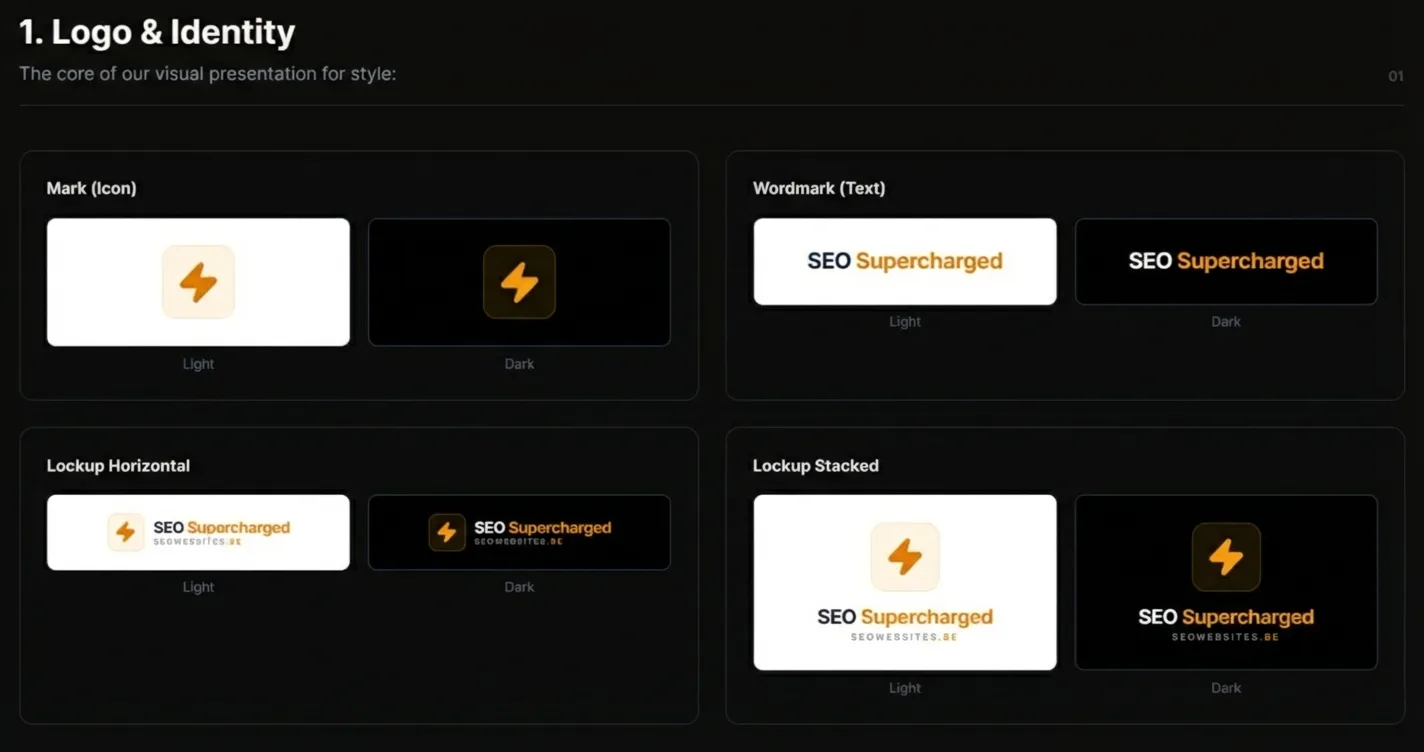
🌈 Logo Variants
Light/dark, different sizes.
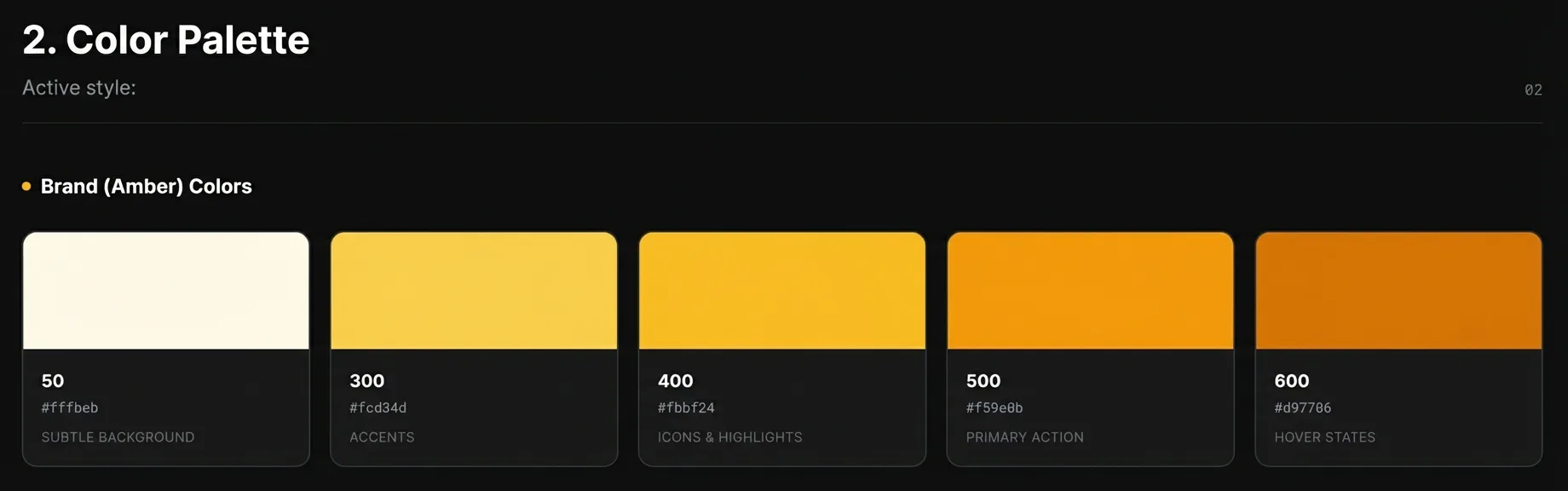
🎨 Color Palette
Primary, accent, neutrals, for a consistent look and feel.
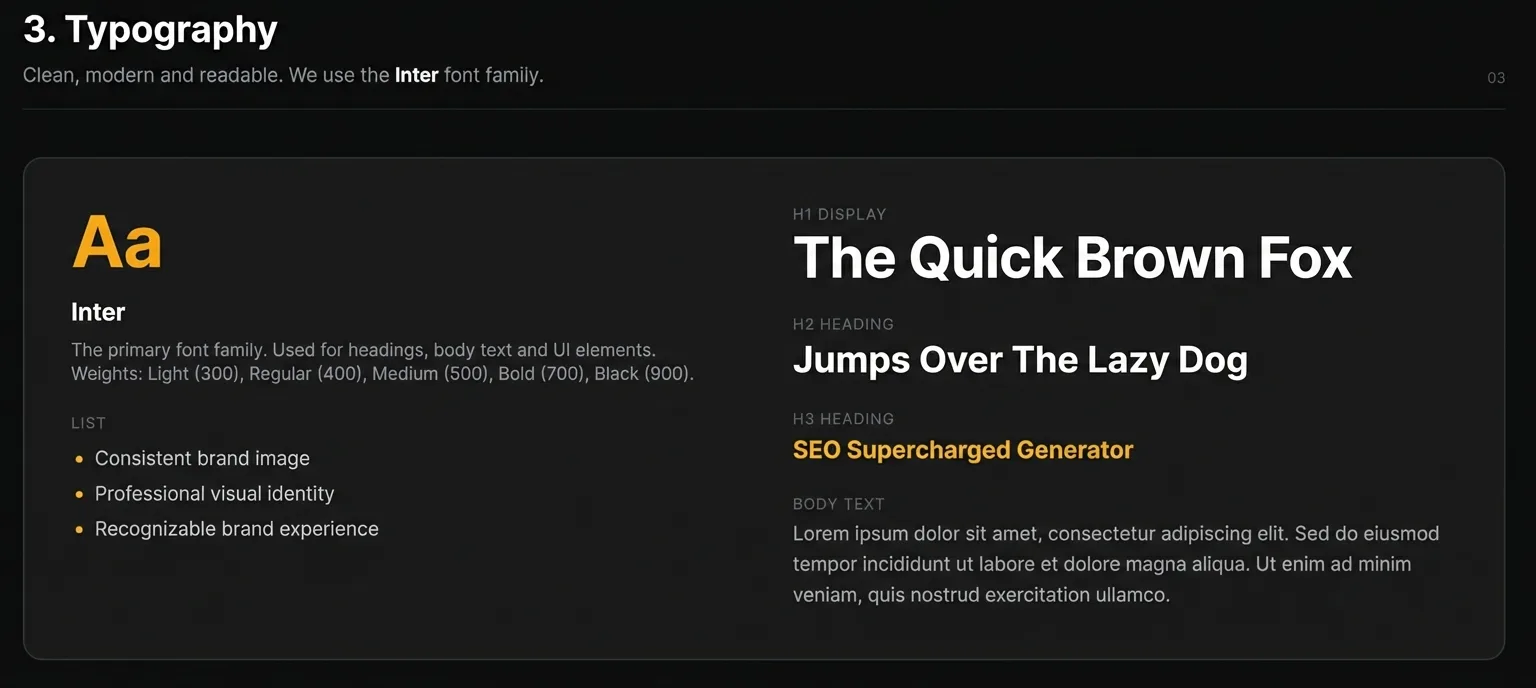
✍️ Typography
Consistency in headings and body text for readability.
✨ Icon Set / Style
Uniform icons to strengthen brand identity.
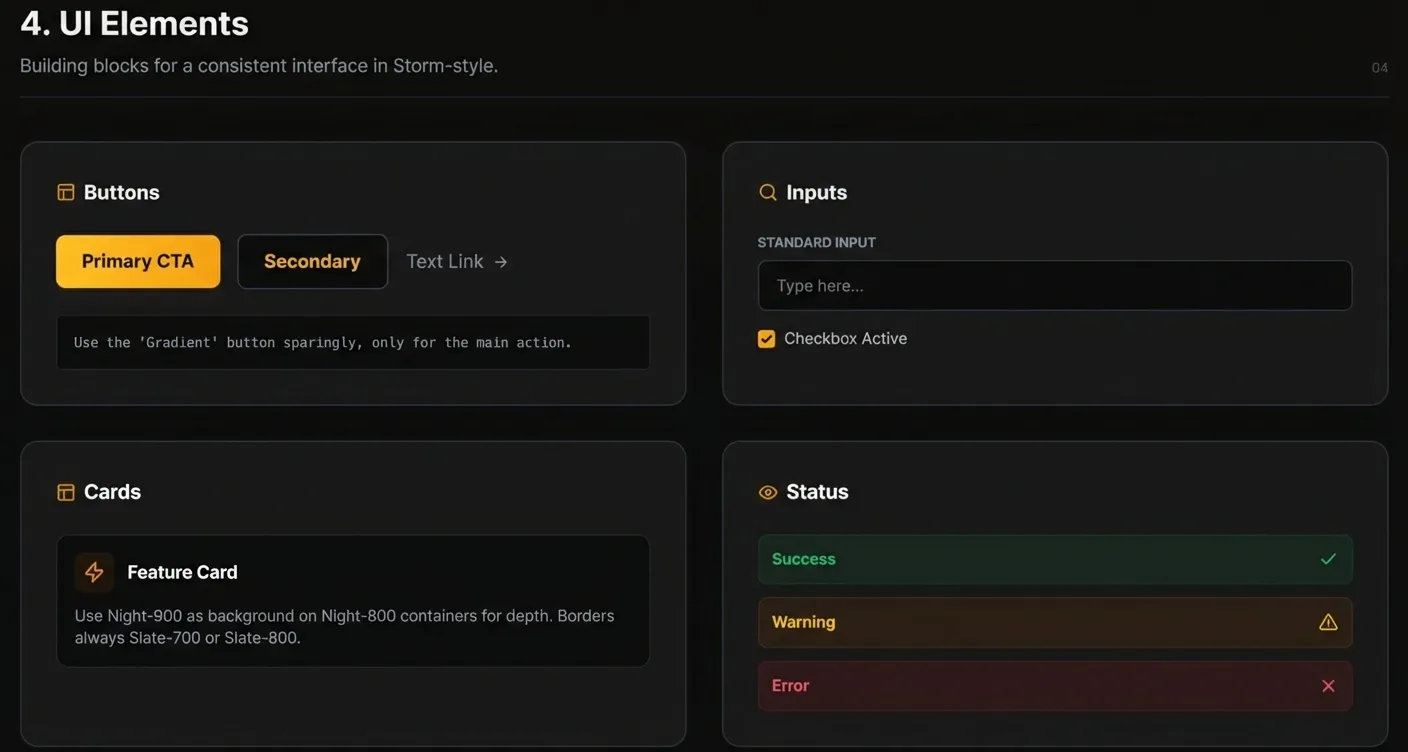
🧩 Component Styling
Rules for buttons, cards, alerts, and other UI elements.
📸 Image Style Guide
Guidelines for photography style or illustration style.
🗣️ Tone of Voice Guide
3–5 rules + examples for consistent communication.
And Most Importantly: Consistent Application
Branding doesn't work as a “one-time setup.” It works as a system that you implement across every page.
Common Mistakes (and Why They Cost You SEO & Revenue)
⚠️ Mistake 1: Branding = just a logo
Consequence: The site remains generic and forgettable. CTR and trust suffer.
⚠️ Mistake 2: Too many conflicting styles
Consequence: Distraction → less trust → lower conversion.
⚠️ Mistake 3: Tone of voice changes per page
Consequence: Visitors perceive “different authors/companies.” AI/Google see less coherence.
⚠️ Mistake 4: CTAs scattered everywhere
Consequence: Decision fatigue → less action.
⚠️ Mistake 5: Your brand promise isn't visible in your snippet
Consequence: Your content is good, but your CTR lags behind.
Quick Brand-to-SEO Checklist (Copy/Paste)
- Your brand name is consistent (same spelling everywhere)
- Your top 3 promises are on your homepage + service pages + snippets
- Your site has one visual style (typography, spacing, buttons)
- Your content uses consistent terms for the same features
- Every page has one primary CTA
- Your snippets (title/meta description) match your brand tone
- Your “About Us” and contact pages inspire trust
- Your blog/pillar pages follow one consistent structure (TL;DR, steps, checklist, FAQ)
- Your images match your brand (no random stock mix)
- Your conversion path is short and clear (not 7 clicks)
Tool CTA Blocks (Copy/Paste)
🚀 Build a Brand That Converts
With Branding Designer, you create a consistent visual identity + tone of voice that you can implement everywhere: website, blog, snippets, and assets.
Open Branding Designer →✨ Turn Your Brand Into a Content Machine
Plan your topics and hubs with Sitemap Architect and generate consistent content with SEO Generator (in the same brand tone).
Open Sitemap Architect → Open SEO Generator →FAQ (Concise, AI-Friendly)
❓ Can branding really improve my SEO?
Indirectly, yes, and that's its power: better CTR, more trust, increased branded search, and stronger engagement signals boost your SEO performance.
❓ What's the fastest branding element with SEO impact?
Consistent positioning + snippets. If you promise more clearly and remain recognizable, CTR often increases faster than rankings.
❓ Is branding more important than content?
No. Branding without substance is packaging without a product. But content without branding is often invisible or forgettable. Together, they act as an amplifier.
❓ How do I keep branding consistent across all pages?
With a brand system (tokens + component rules + tone of voice) and a generator/validator that reuses those rules. That's precisely why a Branding Designer + SEO workflow is so powerful.
Conclusion: Branding is Your SEO “Force Multiplier”
SEO brings people to your door. Branding determines whether they come in, stay, and buy. When your branding is right, your SEO becomes not only more effective but also more affordable: you fight less for every click because people choose you faster.
And once you're chosen, your site converts better. That's the whole trick: less obsession with “more traffic,” more focus on “more trust per visitor.” That's where revenue comes from.
Related articles
- Case Study: Implementing the 'Corporate Trust' Style Without Clutter
Explore our 'Corporate Trust' style guide. Learn to implement a professional, clutter-free design that builds authority and trust. Get practical tips for.
- Guide, Don't Shout: Crafting Effective, Subtle CTAs
Discover how subtle CTAs boost conversions without being pushy. Read our expert guide to optimize your website, enhance user experience, and achieve better.
- Brand Kit Essentials: Logo, Colors, Icons, and Application
Unlock the power of brand kit essentials: logo, colors, icons, and their application. Build a strong, consistent brand identity with our comprehensive guide!
- Visual Consistency on Your Website: The Key to Building Trust and Credibility
Boost brand recognition and conversions with consistent web design. Learn how a cohesive visual identity builds user trust and professionalism. Read our guide!
- Service Page Hero Sections: 5 Proven Layouts
Discover the best service page hero sections: 5 proven layouts to boost conversions. Optimize your website and attract more clients now!