Planning Geo-Targeted Content (Location, Language, Intent): Avoiding Duplicate Content
Plan Geo-Targeted Content: Avoid Duplicate Content for SEO

Planning geo-targeted content (location, language, intent) without duplicate content requires a smart strategy centered on delivering unique value per region to prevent search engine penalties. By specifically tailoring content to local nuances, you can effectively plan geo-targeted content (location, language, intent) without duplicate content and expand your organic reach. It's all about combining technical precision with relevant, location-specific information for the end-user.
Successfully planning geo-targeted content (location, language, intent) without duplicate content begins with understanding local search intent.
Do you want to plan geo-targeted content (location, language, intent) without duplicate content for international SEO? Then focus on canonical tags and unique local landing pages.
- Use hreflang tags for language variations.
- Create unique local content for each region.
- Avoid direct copies of primary pages.
- Optimize your geo-targeting strategy to prevent duplicate content.

The Fundamentals of Geo-Targeted Content Planning: Avoiding Duplicate Content
Effectively utilizing local landing pages requires a well-thought-out strategy centered on relevance. When we plan geo-targeted content (location, language, intent) without duplicate content, it's essential that search engines recognize unique value for each specific region or language combination. Simply copying texts and only changing the place name inevitably leads to indexing issues. By focusing on the specific needs of a local target audience, you create a strong foundation for organic growth within diverse geographic markets.
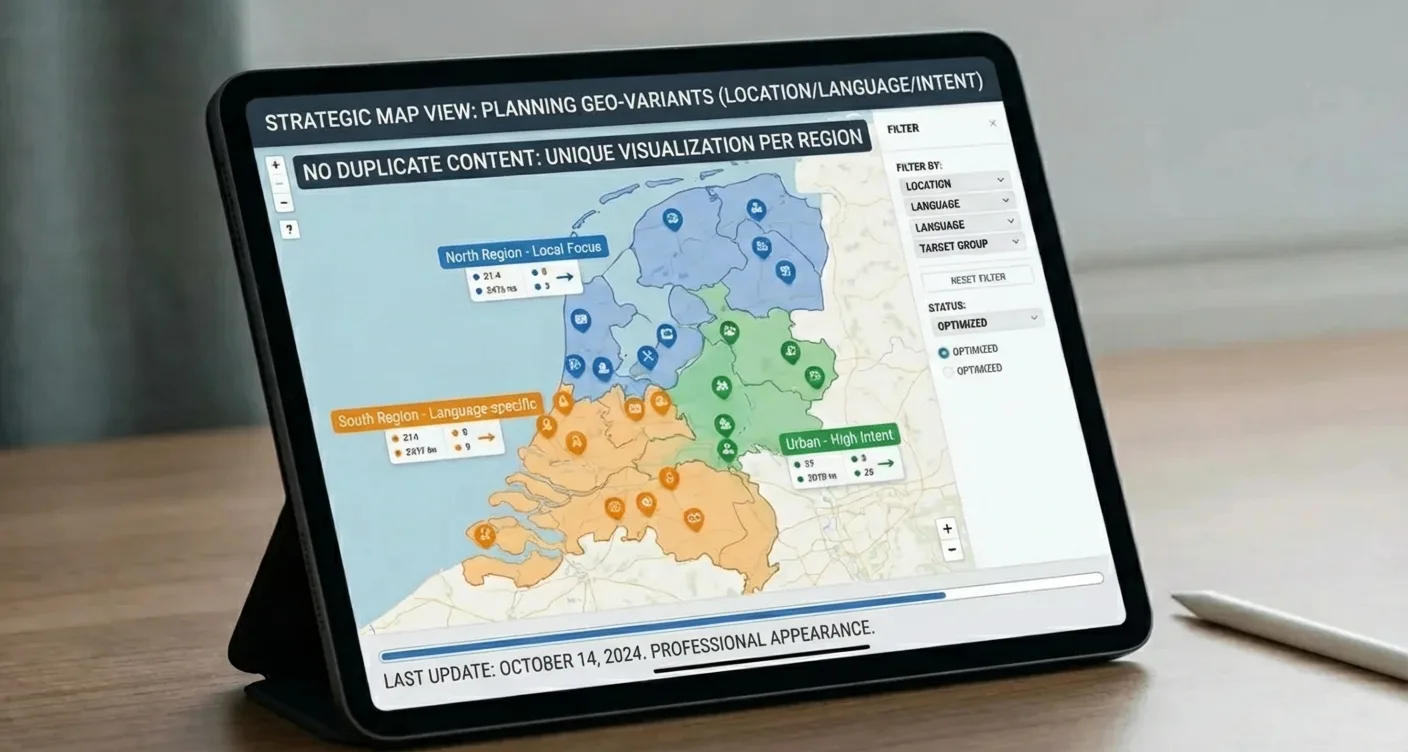
Local Relevance and Unique Value
Successfully planning geo-targeted content means each page gains its own character by weaving local nuances and specific search intent into the texts. When optimizing your website, it's wise to leverage affordable search engine optimization to ensure a robust technical structure. This process always begins with precisely mapping keywords for each location.
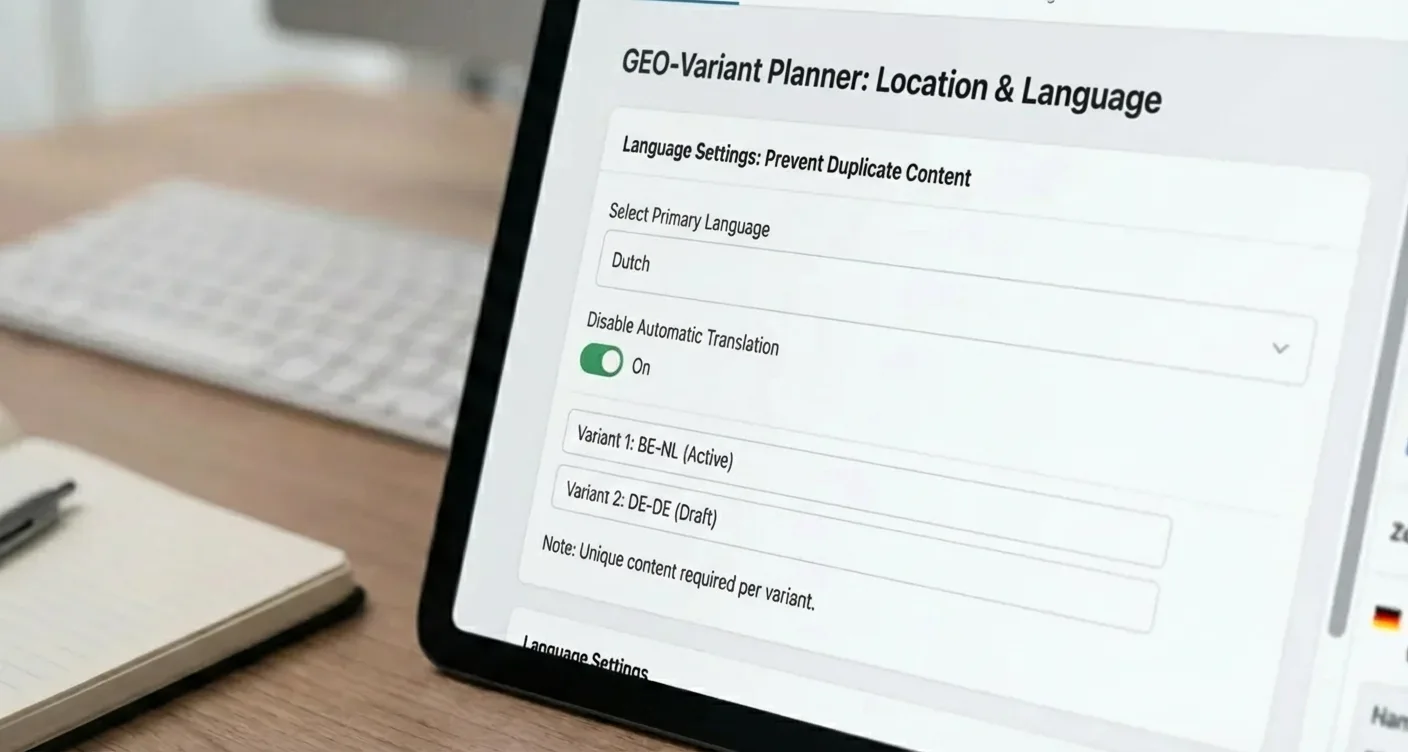
Strategic Implementation
To prevent search engines from deeming pages as duplicates, you must consider technical SEO elements. Use Google's official documentation to validate your multilingual structure. Key factors include:
- Correct use of hreflang tags for language differentiation.
- Integration of local customer reviews and case studies.
- Adding specific contact details for each region.
The secret lies in the details of the local user experience. Ultimately, this unique approach helps increase your domain authority across various regions.
Strategies for Unique Content Per Region and User Intent
Successfully managing international websites requires a deep understanding of local nuances. When marketers plan geo-targeted content (location, language, intent) without duplicate content, they must look beyond simple translations. It's about creating value specifically tailored to regional search demand and cultural context. By choosing unique angles, you prevent search engines from deeming pages identical, which is essential for organic growth.
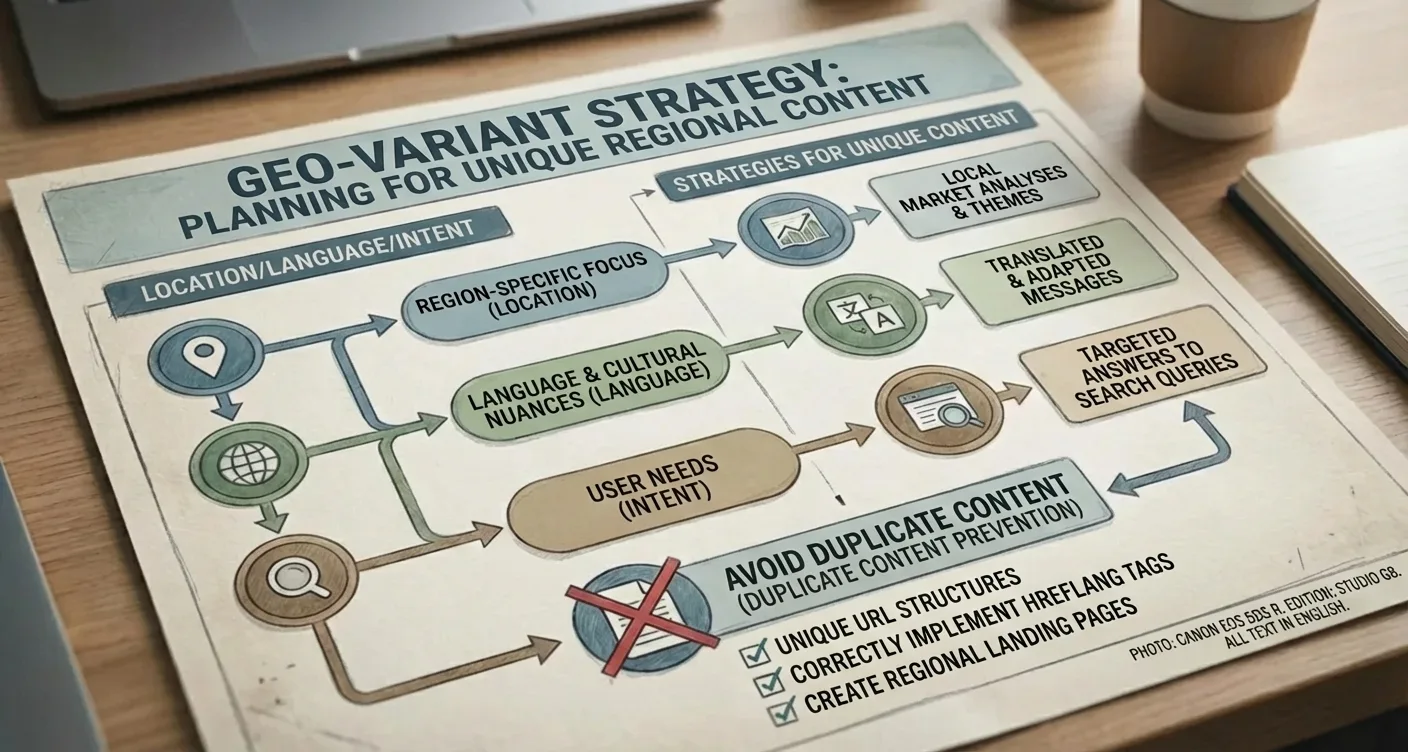
Effective content strategies begin with analyzing the specific user intent for each region. A visitor in the Netherlands often has different information needs than someone in Belgium, despite the shared language. By integrating local case studies and region-specific terminology, you significantly strengthen your domain authority.
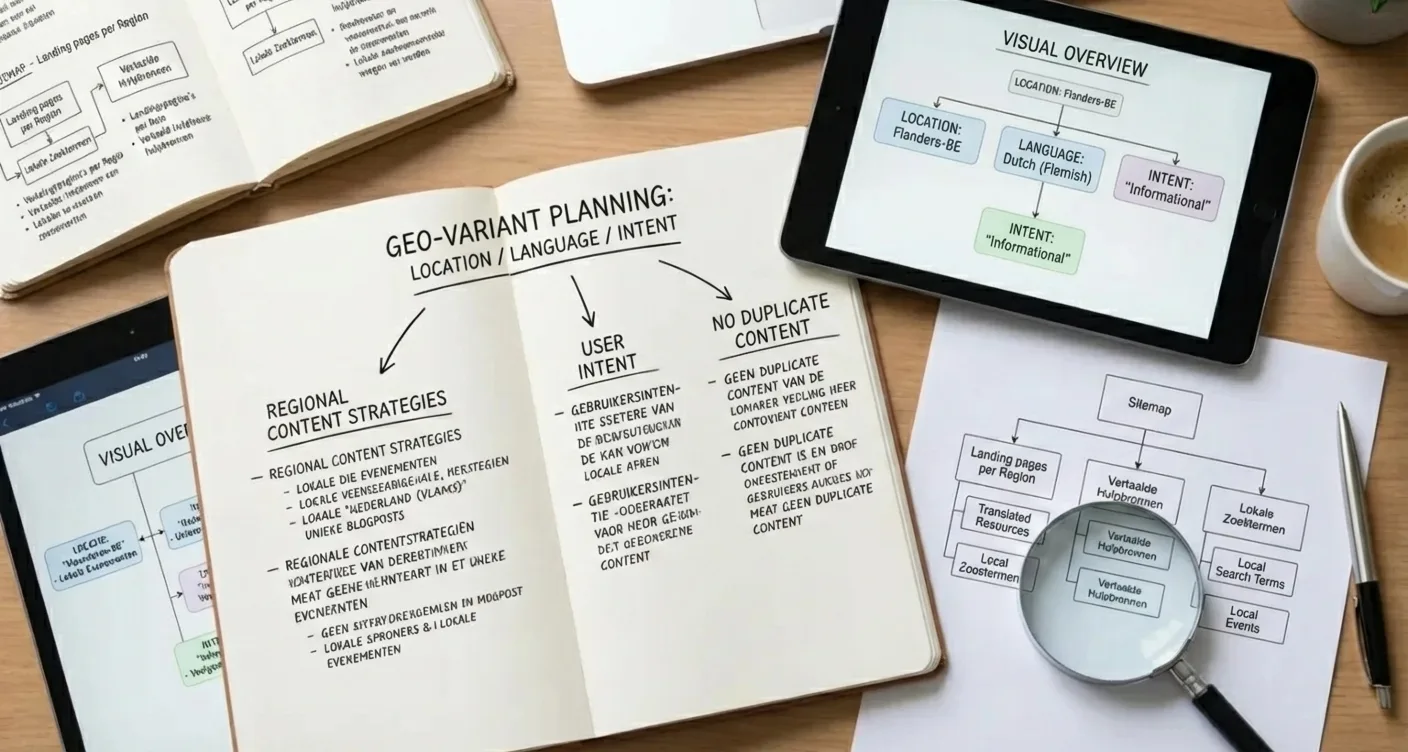
Simply copying texts to other regional domains harms your SEO performance. Therefore, always use local currency, units of measurement, and region-specific keywords in headings. Additionally, refer to local partners to increase relevance.
Finally, ensure a strong technical foundation through WordPress website design. A solid structure is indispensable when scaling internationally. Also, consult Google's official documentation for proper technical validation of your multiregional strategy.
Technical SEO Solutions and the Use of Hreflang Tags
Correctly implementing technical elements is essential for international growth. When you start planning geo-targeted content (location, language, intent) without duplicate content, you must explicitly tell Google which page is intended for which specific region. Hreflang tags form the backbone of your international structure. By precisely placing these tags in the HTML header, you prevent search engines from incorrectly marking different language versions as copies of each other. This process ensures that the right user always lands on the most relevant page, which increases conversion.
In the process of planning geo-targeted content (location, language, intent) without duplicate content, it's crucial to strategically deploy canonical links alongside your hreflang configuration. This prevents technical conflicts within your domain structure.

A well-thought-out folder structure aids in planning geo-targeted content (location, language, intent) without duplicate content. Use subfolders like /en-us/ or /en-gb/ to provide clarity for crawlers. Remember that advanced optimization also considers server locations and loading times. For an optimal foundation, you can look into SEO search engine optimization to strengthen your authority.
- Implement self-referencing hreflang tags for each language version.
- Validate your XML sitemaps via Search Console.
- Always match local content intent with relevant search volumes.
Consistency in your metadata is indispensable when successfully planning geo-targeted content (location, language, intent) without duplicate content for global visibility.
Strategically deploying local pages requires a strategic approach for sustainable success.
By finding the right balance between relevance and unique content, you can effectively plan geo-targeted content (location, language, intent) without duplicate content. Always focus on the specific needs of the local user and optimize technical signals.
Do you want to increase your website's organic visibility without the risk of search engine penalties? Start today by structuring your content strategy, implementing the correct canonical tags, and ensuring each page adds unique value for your target audience. Contact our specialists for a comprehensive audit of your current site structure and instantly discover new growth opportunities within your specific region or language area.
Frequently Asked Questions
What are Geo-Variants in the Context of SEO?
Geo-variants are specific pages optimized for different locations, languages, or user intents. The goal of planning geo-targeted content (location, language, intent) without duplicate content is to provide relevance to local searchers without harming website authority through repetitive texts.
How Do You Prevent Duplicate Content When Creating Location Pages?
You prevent duplicate content by providing each page with unique, local information, specific case studies, and region-specific keywords. When planning geo-targeted content (location, language, intent) without duplicate content, it is essential that the text value per page remains unique for the search engine.
Why is User Intent Important for Regional Optimization?
Users in different regions can have different needs or search habits, even if they speak the same language. By analyzing intent per location, you ensure that the content is not only unique but also genuinely addresses local customer demand.
When Should You Use Hreflang Tags for Geo-Variants?
Hreflang tags should be used when you offer the same content in different languages or for different regions with the same language. This helps search engines understand which version is intended for which user, preventing confusion about duplicate content.
How SEO Supercharged helps you here
SEO Supercharged is fully online, so you can use it from anywhere.
The platform is built for SME entrepreneurs with growth ambitions, Marketing managers at mid-sized organizations, E-commerce operators and webshop owners, SaaS companies and tech startups, B2B service providers and business consultants, Content and communication specialists, International exporters and global brands, Local entrepreneurs with a digital focus, Digital marketing agencies and agency owners.
You can use it for, among other things, Geo-Strategy & AI Audit, Hybrid SEO & Geo Content Creation, LLM Visibility Analysis, Structured Data & Schema Optimization, Brand Authority & Citation Building, E-E-A-T Content Optimization.
Want to tackle this directly? Plan your structure with the Sitemap Architect, or start a free SEO analysis.
Related articles
- Sitemap Architect: Build a Site Structure That Ranks (SEO, AI, GEO)
Learn to use Sitemap Architect for a content map boosting rankings, internal links, indexing & AI answers. Templates, checklists, pitfalls included.
- Why You Should Build a Sitemap and Website Structure First for SEO
While content is key, effective SEO starts earlier. Discover why building a solid sitemap and clear website structure is the foundational step for improved search rankings.
- Scalable SERP Meta Optimization: Titles and Descriptions that Drive Clicks
Master scalable SERP meta optimization. Learn to craft click-worthy titles & descriptions that boost CTR, improve SEO strategy, & drive organic traffic. Get.
- Why WordPress XML Import Best Practices (and Pitfalls) Are Essential
Learn everything about WordPress XML import. Discover best practices and common pitfalls. Prevent errors and optimize your data transfer today. Read our.
- Multilingual Sitemaps: URL Structure & Hreflang Strategy for Global SEO
Master multilingual sitemaps, URL structure, and hreflang strategy for superior international SEO. Optimize your global website to attract more visitors now!