Website vs Blog: Which Structure Drives Higher Conversions?
Website vs Blog: Optimal Site Structure for Conversions
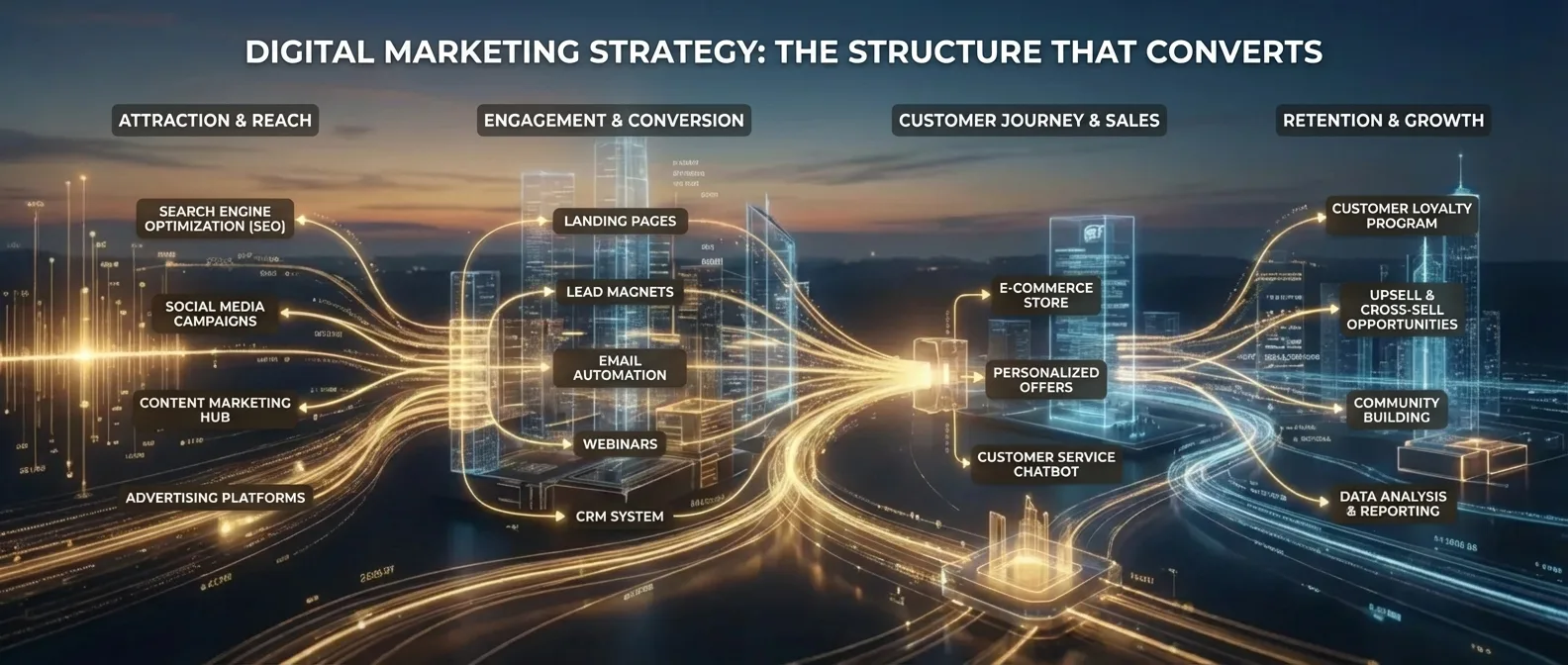
When defining your online strategy, you're likely asking yourself which website structure drives the highest conversions for your specific business goals. A key consideration often boils down to the fundamental difference between a static website and a dynamic blog. This 'Website vs Blog' dilemma is crucial, as in practice, a website with an integrated blog often proves superior to a static page. This is because relevant content directly addresses the search intent of potential customers and builds authority within your niche. By combining valuable information with clear navigation, you'll quickly discover which structure best fuels maximum online growth in your sector.
When defining your online strategy, you're likely asking yourself which website structure drives the highest conversions for your specific business goals. In practice, a website with an integrated blog often proves superior to a static page. This is because relevant content directly addresses the search intent of potential customers and builds authority within your niche. By combining valuable information with clear navigation, you'll quickly discover which structure best fuels maximum online growth in your sector.
Understanding which website structure converts best is crucial for allocating your marketing budget effectively.
- A blog more frequently attracts organic traffic through diverse search terms.
- Static pages offer focus and a clear path to sales.
- The combination builds trust and increases visitor engagement.
To determine which website structure converts effectively, regularly test your conversion paths and optimize them for the user. A hybrid model often provides the best balance between information and action.
The Fundamental Differences Between a Static Website and a Blog
When entrepreneurs enter the online world, they often face a crucial dilemma when setting up their digital presence. The fundamental choice between a static website and a dynamic blog determines not only the aesthetic but also the technical functionality of the platform. A static site typically acts as a digital business card where information rarely changes, while a blog thrives on constant updates and interaction. Understanding these nuances is essential to determine which structure converts most effectively for your specific business goals and long-term target audience needs.
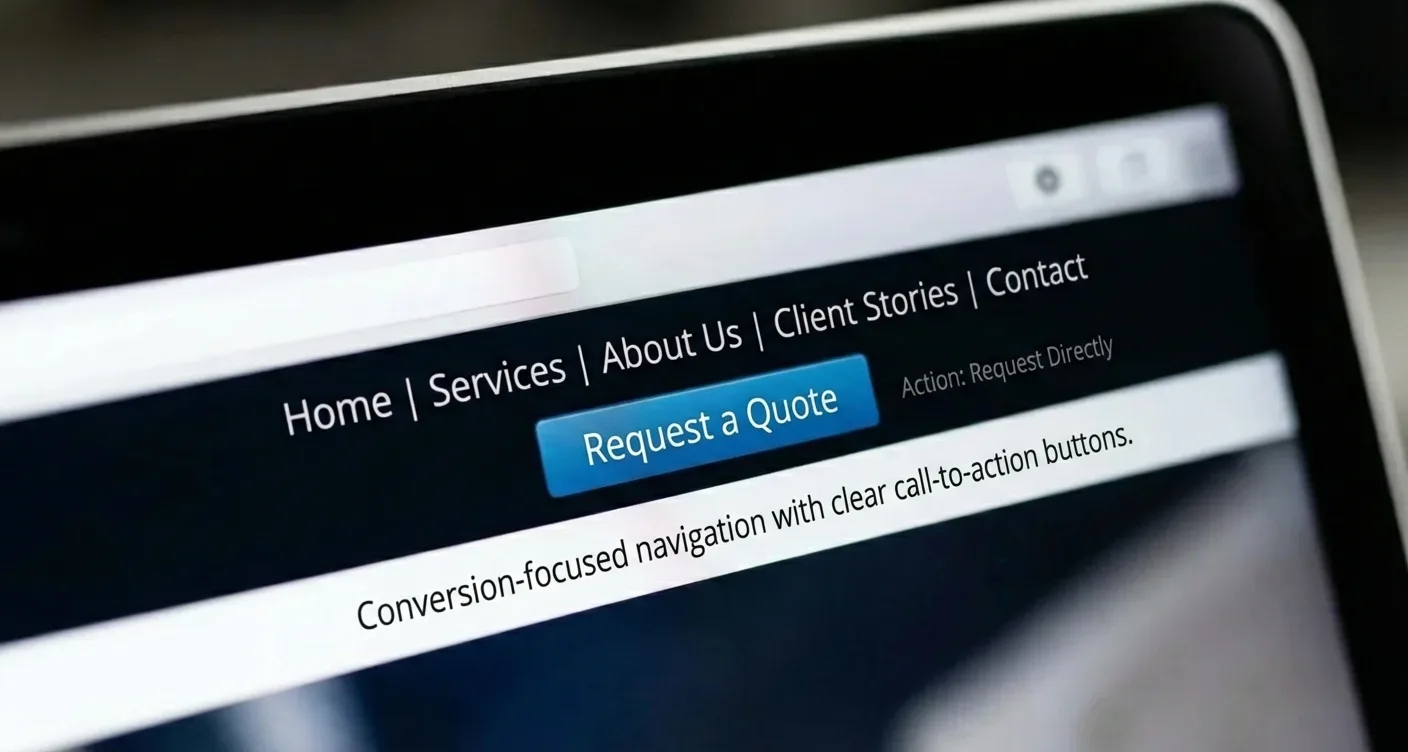
A static setup offers stability and a clear hierarchy for fixed services.
The architecture of a website directly influences how visitors move through the conversion funnel. With a static website, the focus is on a limited number of pages, such as the homepage, a services page, and a contact page. This setup is ideal for businesses that want to convey a consistent message without the need for daily content creation. However, the question of which website structure converts best for local businesses often depends on the extent to which one wants to build authority through information provision. A static structure is clear and concise but sometimes lacks the depth to comprehensively answer complex customer questions.
Dynamism vs. Stability in Web Design
A blog, on the other hand, is a living organism that continually grows through new articles and updates. This provides a chronological display of information, which search engines like Google greatly appreciate due to data freshness. For those wondering which structure best converts for informational search queries, the answer is often found in the blog section. By regularly sharing valuable insights, you build trust with the reader, which significantly lowers the barrier to a final purchase compared to a static presentation.
"The choice of a platform should be based on the customer journey: Is the visitor looking for direct facts or an educational path?"
Combining both elements can lead to a hybrid model that benefits from both authority and conversion power.
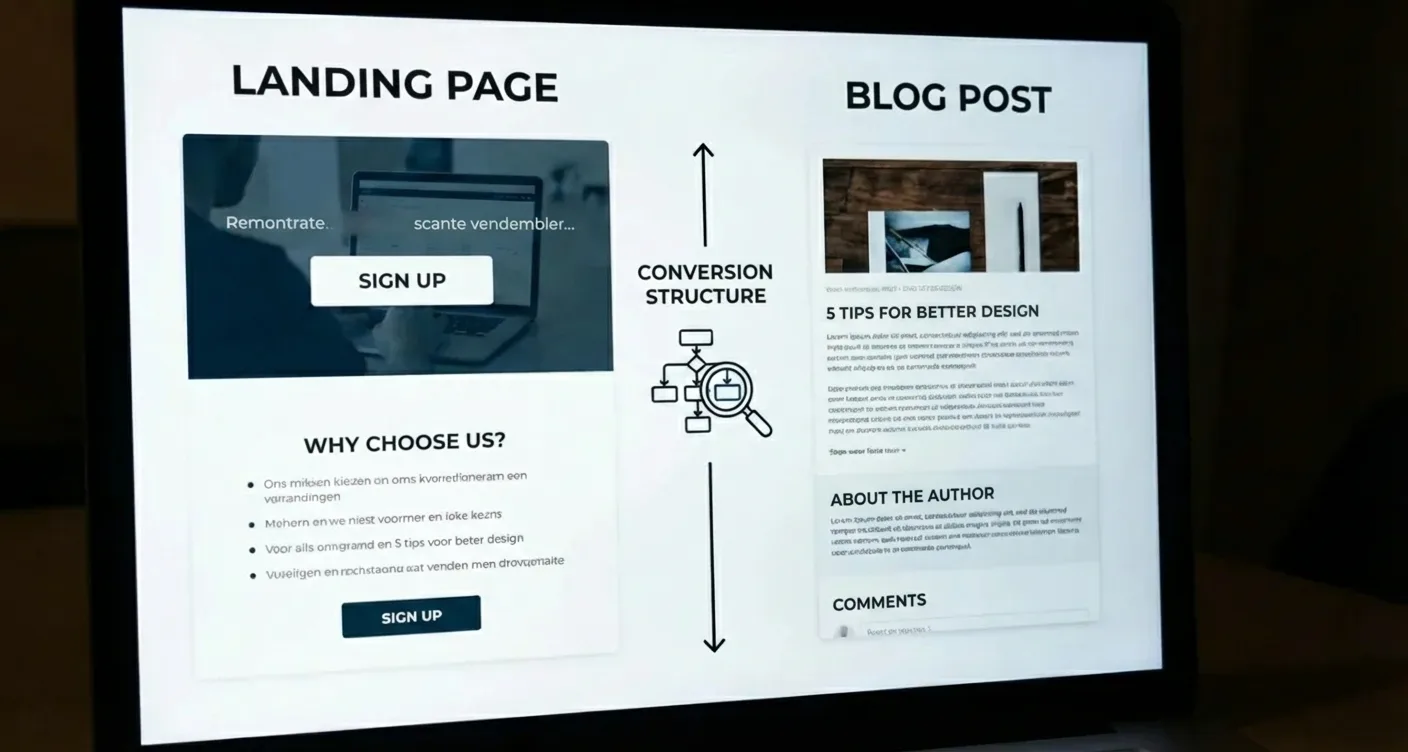
When analyzing which website structure variations drive business growth, we observe that the technical setup of a blog often provides more opportunities for internal linking. This is a crucial aspect of search engine optimization. A static website often has a limited internal link structure, which can hinder the distribution of link value. By integrating a blog, you create numerous entry points for potential customers who arrive via specific search terms. For more information on professional web development, visit seowebsites.be for expert advice on your online strategy.
There are several characteristics that determine how effective a structure is:
- The loading speed of static pages is often higher due to fewer database requests.
- Blogs generate more organic traffic through a wider range of keywords.
- Static pages offer an optimized user experience for direct sales.
- Interaction via blog comments increases community engagement.
- A hybrid format provides the highest conversion rate for complex services.
Ultimately, the discussion about which website structure converts best revolves around the balance between information and action.
Analysis: Which Structure Converts Better for Lead Generation?
When designing a digital environment for acquiring new customers, the fundamental question often arises: which setup yields the most results? It's not simply a matter of aesthetics but a deep psychological puzzle where the user is central. The way information is presented determines whether a visitor transforms into a valuable lead or leaves the page prematurely. In this analysis, we examine which website structure converts in a way that satisfies both search engines and human visitors, looking at the hierarchy of elements and the logical flow of the content.
An effective layout intuitively guides the visitor to the desired action without creating friction.
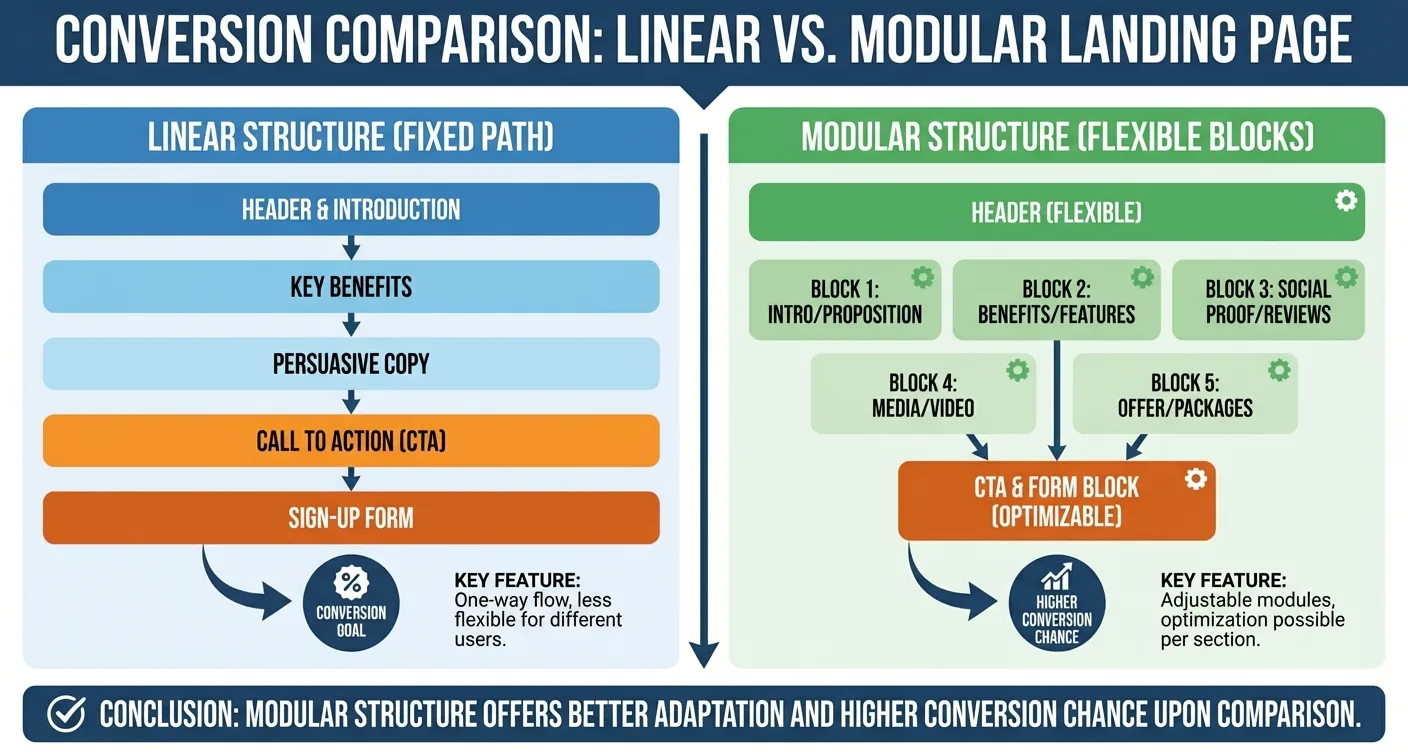
When we look at the technical side of things, we see that clear navigation and a strong value proposition form the foundation. Visitors often scan a page in an F-pattern or a Z-pattern, depending on the amount of text. To understand which website structure converts best for business services, we must recognize that trust is the most important currency. This means that proof points, such as customer reviews and certifications, must be strategically placed where user doubt is highest. A cluttered layout causes cognitive overload, which directly and negatively impacts the conversion rate in practice.
The Psychology Behind Conversion Architecture
The choice between a long landing page or a short, powerful page largely depends on the complexity of the offering. For simple products, a minimalist approach often works better, whereas for high-value B2B services, extensive explanations are necessary to build authority. It's essential to test which structure converts best for specific target audiences, as consumer needs drastically differ from those of a procurement manager at a large corporation. By utilizing an SEO website analysis, you can identify bottlenecks in your current setup and implement targeted improvements that optimize the user experience.
Consistency in design and messaging creates a professional appearance that significantly lowers the barrier to contact.
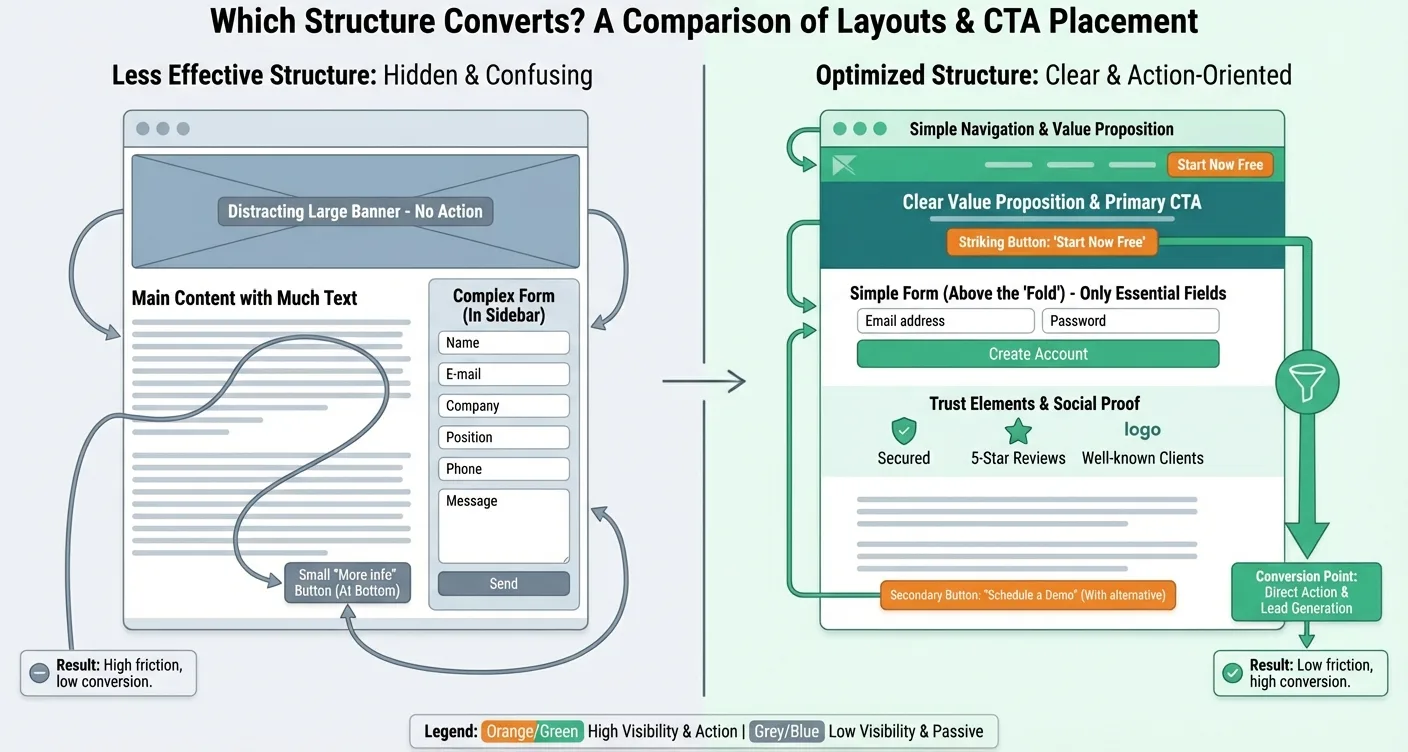
In practice, we see that certain elements universally contribute to a webpage's higher effectiveness. A logical structure usually begins with a strong headline, followed by a problem statement and the ultimate solution your company offers. Below is an overview of crucial components that determine which website structure converts best for long-term lead generation:
- A clear and immediately visible 'Call to Action' (CTA) above the fold.
- The use of white space to maintain focus on the most important information.
- Social proof in the form of logos from well-known partners or short testimonials.
- A short and concise contact form with as few required fields as possible.
- Visual cues, such as arrows or eye-tracking lines from people, pointing towards the conversion button.
"The best structure is one that answers the visitor's questions even before they're asked, creating a natural path to conversion."
Furthermore, it is crucial to consider mobile users, as a large portion of traffic now originates from smartphones.
The Power of Content Marketing for Higher Conversion Rates
Content marketing today is far more than just publishing text on a website; it's the backbone of a successful digital strategy. When we observe how visitors interact with information, the question often arises: which website structure converts most effectively in a competitive market? The answer lies in the balance between valuable information and a logical layout that guides the reader step-by-step towards the desired action. By addressing the specific needs of the target audience, you build a bond of trust that is essential for long-term commercial success.
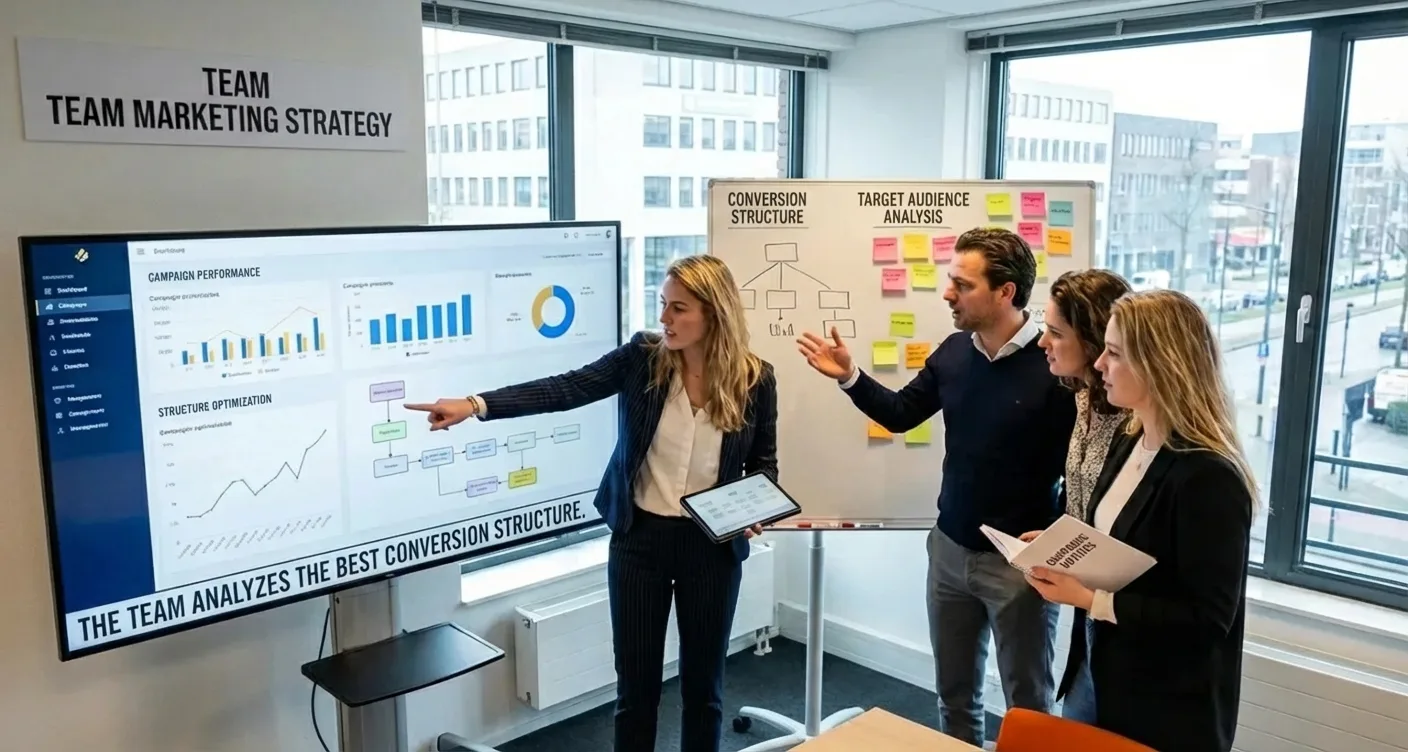
Effective content directly captivates the imagination and solves problems before the customer has even fully formulated them.
To understand which structure converts best for landing pages, we must examine the psychology behind reading behavior. Visitors often scan headings and subheadings before deciding to read the full text. Therefore, it's crucial that the main benefits of your product or service are immediately visible. A strong introduction sets the tone, while subsequent paragraphs substantiate the promise with facts and practical examples. The use of visual elements and white space helps increase readability and keeps the visitor's focus on your brand's core message.
The Psychology of Conversion-Oriented Structure
A well-thought-out layout ensures that visitors aren't overwhelmed by a wall of text but are instead encouraged to read further. In practice, we see that a clear information hierarchy often leads to higher engagement. It's important to experiment with different formats to discover which structure converts best for specific target audiences within your niche. Furthermore, by using an AI branding generator, you can strengthen the visual identity of your content, contributing to your business's recognizability and authority in the online environment.
Consistency in your message provides clarity and reassurance to potential customers, significantly lowering the barrier to conversion.

Beyond textual content, technical aspects and presentation play a significant role in determining which website structure converts in an online store or on an informative blog. Adding interactive elements or a clear list can significantly improve the user experience. Therefore, consider integrating the following elements into your content strategy to maximize effectiveness:
- Use clear subheadings that summarize the core of the paragraph.
- Short sentences that promote readability on mobile devices.
- Strategically place a conversion-optimized call-to-action at the end of relevant sections.
- Visual support through relevant images or infographics.
- Offer direct solutions to common customer pain points.
"Effective content marketing isn't about selling a product, but about providing the right solution at the right time through logical information delivery."
Ultimately, it's about understanding the visitor and presenting information in a way that feels natural. By consistently analyzing which structure converts best for your visitors, you can continually refine and optimize your strategy.
User Experience and Navigation Across Different Website Structures
The way a visitor moves through your digital environment largely determines the success of your online venture. A well-thought-out hierarchy ensures that potential customers don't get lost in a maze of pages but effortlessly find their way to the desired information or products. When we examine which website structure converts effectively, we see that intuitive navigation reduces the user's cognitive load. For instance, a flat structure can work for smaller sites, while a deep silo structure is essential for building authority on specific topics. Ultimately, it's about the balance between discoverability and usability, with the visitor always at the center of the design process.
Clear navigation is the backbone of a positive user experience and directly influences consumer decision-making.
When analyzing the question of which website structure converts best within e-commerce, it's evident that logical categorization is crucial for retention. Visitors expect to reach their goal within three clicks. If the architecture is too complex, they disengage and seek alternatives with competitors. Implementing breadcrumbs and a clear menu structure not only helps the user understand their location but also assists search engines in indexing relevant content. A strong internal linking strategy significantly amplifies this effect by increasing the authority of important pages and clarifying the relevance of interconnections for both humans and machines.
The Impact of Visual Hierarchy on Conversions
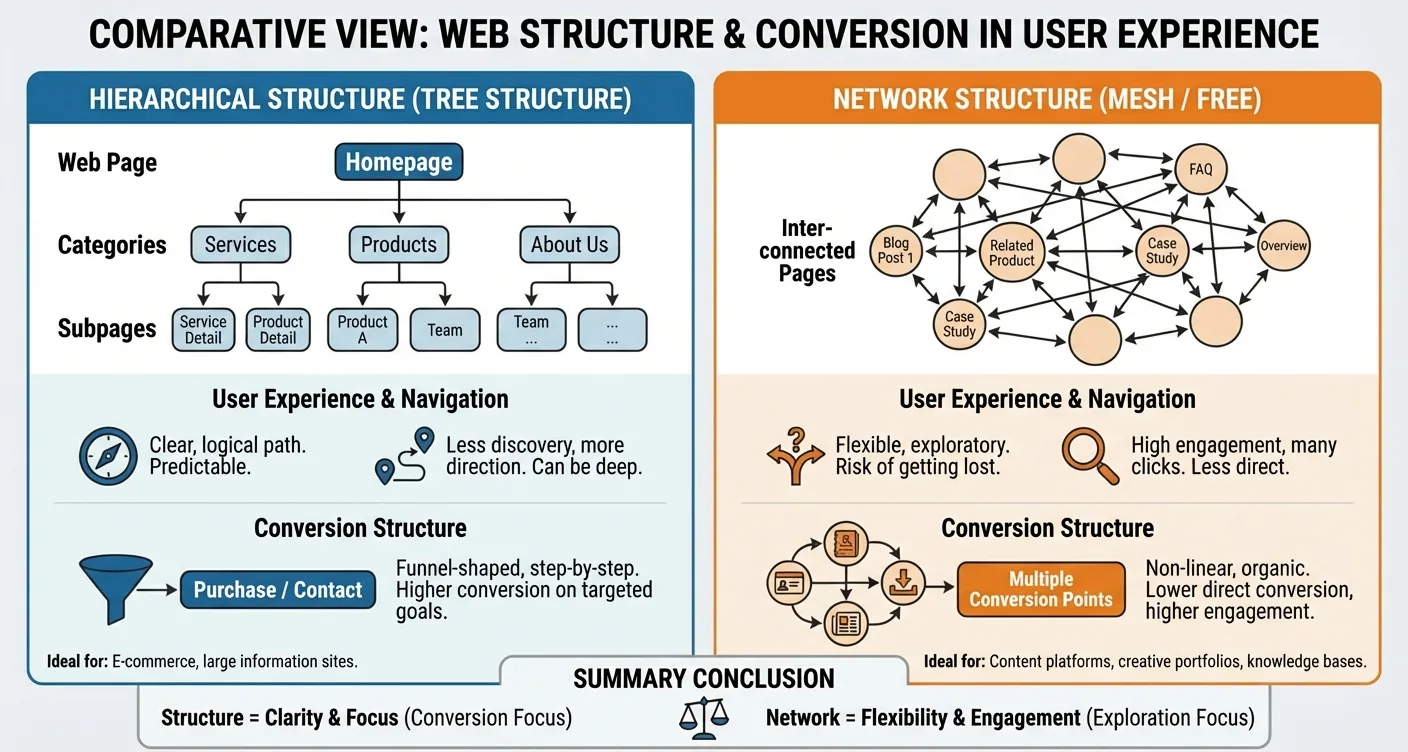
Visual hierarchy plays a key role in how information is consumed and what actions follow. By using contrasting colors, different font sizes, and strategic white space, you can direct the visitor's attention to the most important conversion points. In the context of which website structure converts best on landing pages, it's essential that the 'Call to Action' immediately stands out. A cluttered layout distracts from the main goal, while a minimalist approach often leads to a higher focus on the core message. Therefore, it's advisable to regularly test how different visual elements influence interaction and adjust the structure accordingly for optimal results.
It is advisable to experiment with which structure converts best for specific target audiences to find the most effective layout.
In addition to visual aspects, the technical speed of navigation is a decisive factor for end-user satisfaction. A slow website leads to frustration, regardless of how well the underlying logic is constructed. When considering which structure converts best on mobile devices, you must account for limited screen space and the need for thumb-friendly buttons. Mobile users often have different intentions and a greater need for speed than desktop users. A responsive design that seamlessly adapts to various screen sizes is no longer a luxury today, but an absolute necessity to remain relevant in the current market. For more information on generating relevant content for these structures, you can check out our AI blog generator.
Here below are some important elements that contribute to a converting website structure:
- A consistent main navigation that is accessible on every page.
- The use of search functions with relevant user suggestions.
- Clear categories that align with the target audience's search intent.
SEO Benefits of an Integrated Blog Strategy
A well-thought-out blog strategy forms the backbone of modern search engine optimization. By consistently publishing valuable content, you build authority not only with your target audience but also with search engines like Google. It's essential to understand which website structure converts effectively within your specific niche. When informational articles seamlessly connect with your commercial pages, a powerful ecosystem emerges that strengthens the relevance of your entire domain. This process ensures visitors stay longer on your website, sending a positive signal to algorithms about your platform's quality.
The Power of Internal Link Structures
Internal links are crucial for distributing link equity across your website. By linking from blog posts to service pages, you funnel authority to areas where the final transaction occurs.
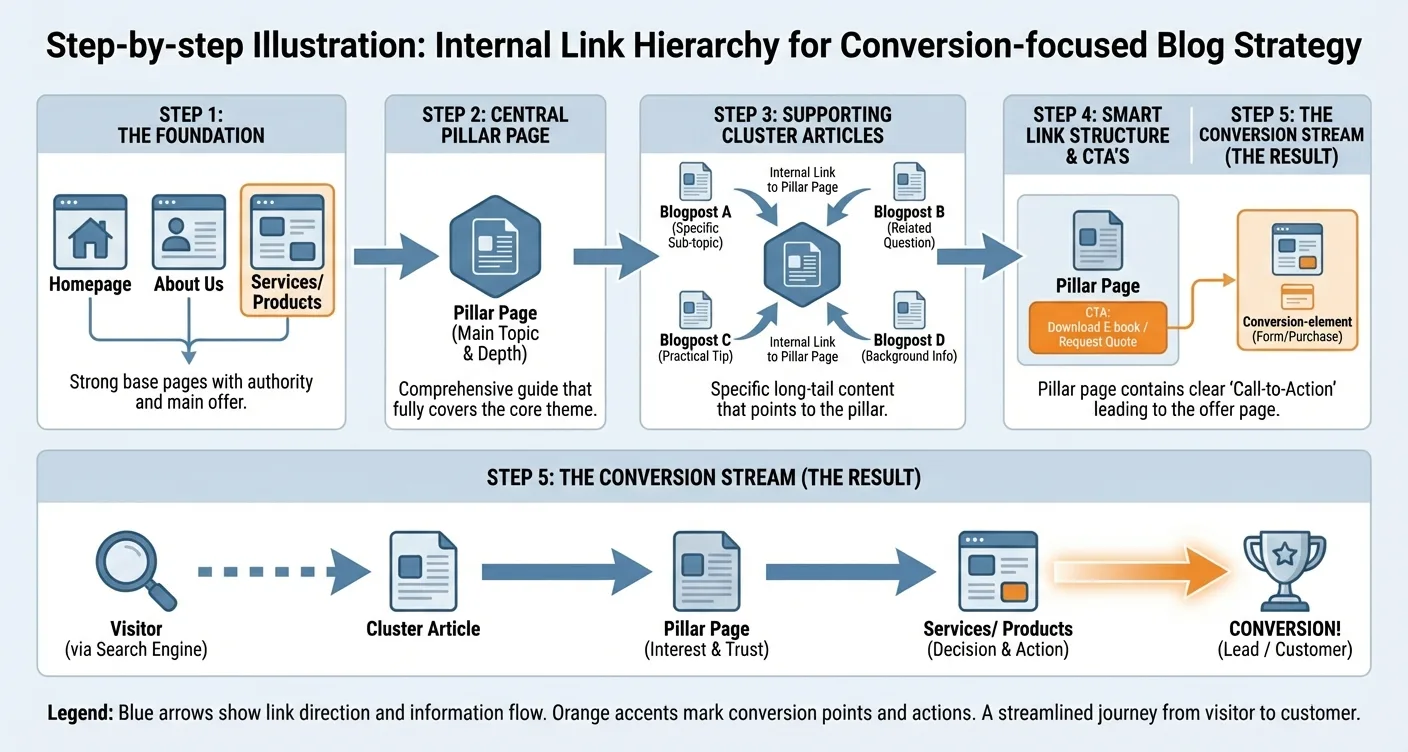
Determining which website structure converts best for SEO requires a deep dive into user behavior and search intent. An effective method is the 'topic cluster' approach, where one central page is supported by various sub-articles. In practice, we see that this method can significantly improve discoverability for long-tail keywords. The goal is to answer specific user questions while subtly guiding them toward the next step in the customer journey. Optimizing the blog structure for business conversions helps refine this course.
"Content marketing is not a standalone component, but the fuel that keeps your SEO engine running by continually creating new entry points for potential customers."
User Experience and Conversion Optimization
- Improved dwell time through engaging content.
- Lower bounce rates through relevant internal links.
- Higher authority score through a wide range of topics.
- Clear paths that demonstrate which website structure converts into leads.
Ultimately, the question of which website structure converts best revolves around the balance between technology and psychology. A page must be technically perfect but also resonate with the reader's emotions. By making data-driven decisions about your content structure, you create a sustainable flow of organic traffic. This traffic is often of higher quality because the visitor has already been warmed up to your offer via your blog. Therefore, it is advisable to regularly test which structure converts better for mobile users versus desktop visitors.
Conclusion: The Ideal Setup for Your Online Success
Determining the right hierarchy for your website is not a one-time task but a strategic process that directly impacts your business results. By understanding which structure converts most effectively, you can create an environment where visitors effortlessly find their way to their ultimate goal. A logical setup ensures that both search engines and users understand the essence of your offering. When navigation feels intuitive, the barrier to taking action significantly decreases, which is essential for sustainable growth in a competitive digital market.
The core question always remains: how does your design align with the specific needs of your target audience?
Optimization for the End-User
In practice, we see that a clear layout often makes the difference in retaining visitors on a page. It's not enough to merely display beautiful visuals; the technical and content layers must work seamlessly together. To discover which structure converts most effectively for e-commerce, you need to analyze data and continuously test different layouts. A strong focus on user-friendliness usually translates into higher authority within search results because signals like dwell time and interaction improve when the setup is logical.

Successful entrepreneurs understand that a website is a living organism that requires constant refinement. Implementing the optimal structure for maximum ROI demands a balance between aesthetics and functionality. The following points are crucial for a strong conclusion:
- Ensure fast loading times on all devices.
- Use clear, eye-catching call-to-action buttons.
- Keep navigation menus limited to the most important categories.
- Regularly monitor whether the chosen website structure converts effectively within your niche.
"The best structure is the one the user doesn't even notice because everything is exactly where they expect it to be."
Ultimately, it's about removing friction. If you know which structure converts most effectively on mobile devices, you'll have a huge advantage over the competition. Don't forget to manage your budget wisely by reviewing your credit top-up options for further optimization. A well-considered approach is the only path to a profitable online presence.
Keep experimenting and continually refine your strategy for the best results.
The choice between a static site and a dynamic blog is crucial for your online success.
When determining which structure converts best for your business, you need to look at the balance between authority and direct sales. While a blog certainly attracts more organic traffic through search engines, a streamlined website structure often leads to faster visitor decision-making. Combining both worlds offers the highest chance of sustainable growth for your customer base.
Ultimately, the ideal setup depends on your specific business goals and how your target audience consumes information. Do you want to discover how to optimize your current platform for maximum results? Contact our specialists today for a non-binding analysis of your site structure and immediately boost your conversion rate by implementing smart adjustments based on data and proven SEO strategies.
Frequently Asked Questions
What is the difference between a static website and a website with a blog for conversions?
A static website focuses purely on direct sales, while a website with a blog builds authority and attracts more organic traffic. When determining which structure converts best, we see that a blog helps persuade potential customers at an earlier stage of the customer journey.
How does a blog affect the conversion rate of my business website?
A blog increases the conversion rate by providing valuable information that builds visitor trust. By adding internal links to product pages, you discover which structure converts by effectively guiding visitors through the marketing funnel.
Why do many businesses opt for a hybrid website and blog structure?
Businesses choose this setup because it combines the SEO benefits of a blog with the clear calls-to-action of a commercial site. This approach ensures a constant stream of new leads who arrive via informative content and subsequently become customers.
When is it advisable to switch to a website with a blog section?
It's advisable to switch when you notice your organic growth stagnating or when you need to provide more education around your product. A blog is essential if you want to increase visibility in search engines and build a long-term relationship with your target audience.
How SEO Supercharged helps you here
SEO Supercharged is fully online (service area: in the cloud), so you can use it from anywhere.
The platform is built for Self-employed service providers, SME entrepreneurs, Web designers and agencies, E-commerce owners, Content marketers, Marketing managers at medium-sized companies, Start-up founders in the tech sector, Coaches and online trainers, B2B sales professionals, Affiliate marketers.
You can use it for, among other things, Conversion Structure Analysis, Blog Integration Strategy, Content Architecture Review, Lead Generation Structure Scan, SEO Performance Audit, A/B Test Structure Plan.
Want to tackle this directly? Plan your structure with the Sitemap Architect, or start a free SEO analysis.
The Fundamental Differences: Website vs Blog Structures
Ultimately, the discussion about the optimal Website vs Blog structure for conversions revolves around the balance between information and action.
When designing a digital environment for acquiring new customers, the fundamental question often arises regarding the Website vs Blog choice: which setup yields the most results? It's not simply a matter of aesthetics but a deep psychological puzzle where the user is central. The way information is presented determines whether a visitor transforms into a valuable lead or leaves the page prematurely. In this analysis, we examine which website structure converts in a way that satisfies both search engines and human visitors, looking at the hierarchy of elements and the logical flow of the content.
The fundamental choice in the Website vs Blog discussion, between a static website and a dynamic blog, determines not only the aesthetic but also the technical functionality of the platform.
Ultimately, the Website vs Blog discussion about which structure converts best revolves around the balance between information and action.
When designing a digital environment for acquiring new customers, the fundamental question often arises: which setup yields the most results? This often circles back to the core Website vs Blog debate. It's not simply a matter of aesthetics but a deep psychological puzzle where the user is central.
Related articles
- Sitemap Architect: Build a Site Structure That Ranks (SEO, AI, GEO)
Learn to use Sitemap Architect for a content map boosting rankings, internal links, indexing & AI answers. Templates, checklists, pitfalls included.
- Why You Should Build a Sitemap and Website Structure First for SEO
While content is key, effective SEO starts earlier. Discover why building a solid sitemap and clear website structure is the foundational step for improved search rankings.
- Scalable SERP Meta Optimization: Titles and Descriptions that Drive Clicks
Master scalable SERP meta optimization. Learn to craft click-worthy titles & descriptions that boost CTR, improve SEO strategy, & drive organic traffic. Get.
- Why WordPress XML Import Best Practices (and Pitfalls) Are Essential
Learn everything about WordPress XML import. Discover best practices and common pitfalls. Prevent errors and optimize your data transfer today. Read our.
- Multilingual Sitemaps: URL Structure & Hreflang Strategy for Global SEO
Master multilingual sitemaps, URL structure, and hreflang strategy for superior international SEO. Optimize your global website to attract more visitors now!